1. Marigold-Gold Curtain Backdrop with Mirror Corners
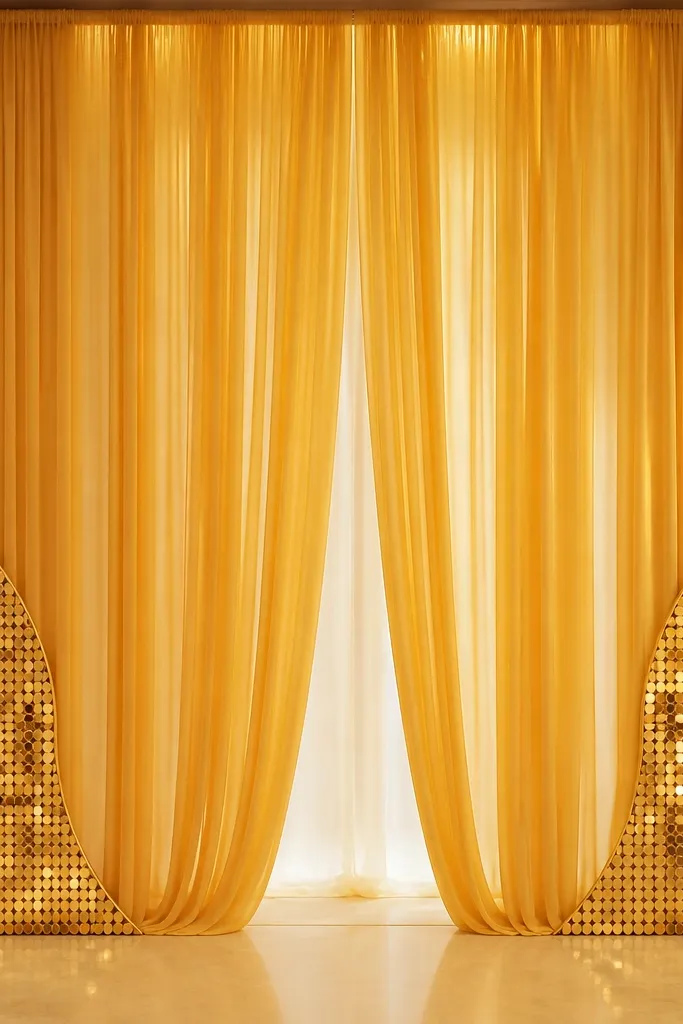
This setup is for stages that need instant warmth without looking heavy. I use a marigold-gold base in matte or lightly shimmer fabric so it doesn't glare under spotlights. At the two top corners, I add mirror-work panels - not full mirror walls, just curved corner arcs - which catch light and make the backdrop look taller. It flatters warm skin tones and works with both traditional reds and modern pastel lehengas because the gold ties everything together. The styling principle is simple: keep the center readable and let the corners do the sparkle.
Start by hanging 3 layers of sheer curtains behind the couple: one marigold, one champagne-gold, and one thin gold mesh. Leave a 2 to 3 foot vertical gap in the center so the couple's outfits stay the focus. Then mount mirror-work corner panels on stands or directly on the frame - keep them angled slightly inward so they reflect stage lights back to the camera. Finish with a low border of marigold garlands along the stage edge, spaced about 6 inches apart, so it looks full even from the back row.
Try thisIf your venue lighting is cool, swap the champagne-gold layer for warm gold satin so it doesn't turn grey in photos.
Common mistakeAvoid using only glitter fabric - it looks patchy when lights hit and can look cheap on camera.
2. Peach Rose Wall with Greenery Grid
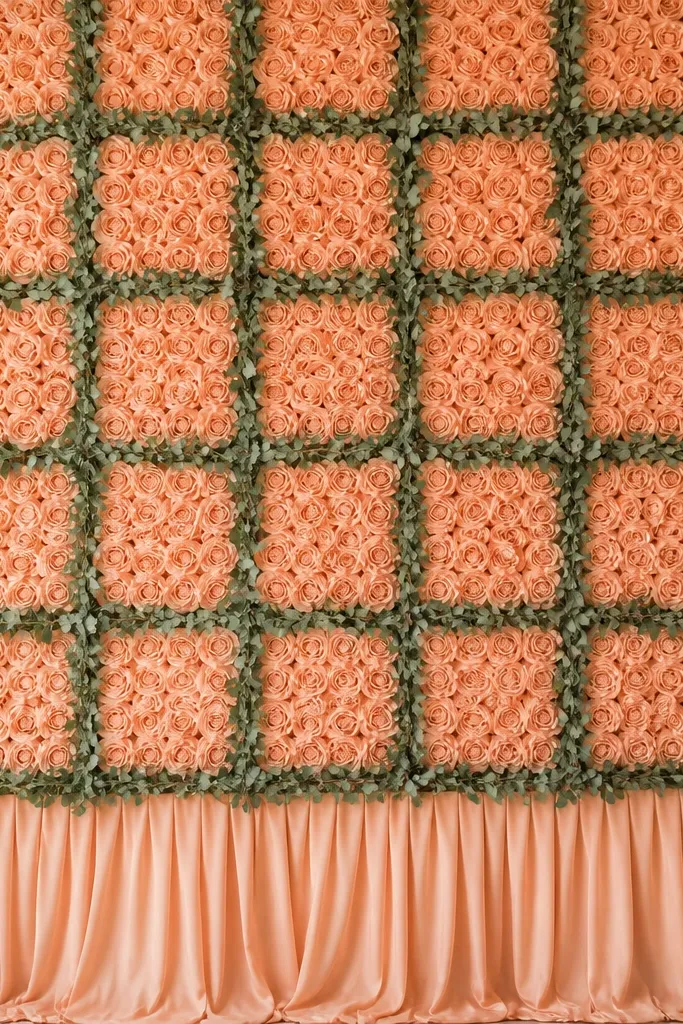
This is the clean, romantic look that still photographs well. Peach roses read soft and flattering, especially for ivory, blush, and champagne outfits, and the greenery grid gives structure so it doesn't look like loose decoration. I like eucalyptus or similar long-leaf greenery because it creates thin lines that mimic a trellis. It suits most body and outfit styles because the wall stays neutral and doesn't compete with the couple's jewelry. The principle is structure through spacing - tight floral blocks plus crisp leaf lines.
Start with a pre-made 6x8 foot mesh or lattice frame so the roses have a reliable base. Attach peach rose clusters in rows, spacing them 1 to 2 inches apart for a full wall without gaps. Add greenery grid lines by weaving long leaves vertically every 8 to 10 inches and then connecting with shorter clusters horizontally. Finish with a 1.5 foot peach fabric drape at the bottom edge, keeping it slightly gathered so it hides the stand legs.
Try thisUse a mix of matte peach and one or two satin-finish rose sprays so the wall has light-and-shadow variation.
Common mistakeDon't use one huge rose size everywhere; it creates uneven texture and looks like a sticker wall.
3. Emerald Velvet Drapes with Gold Foil Backdrop
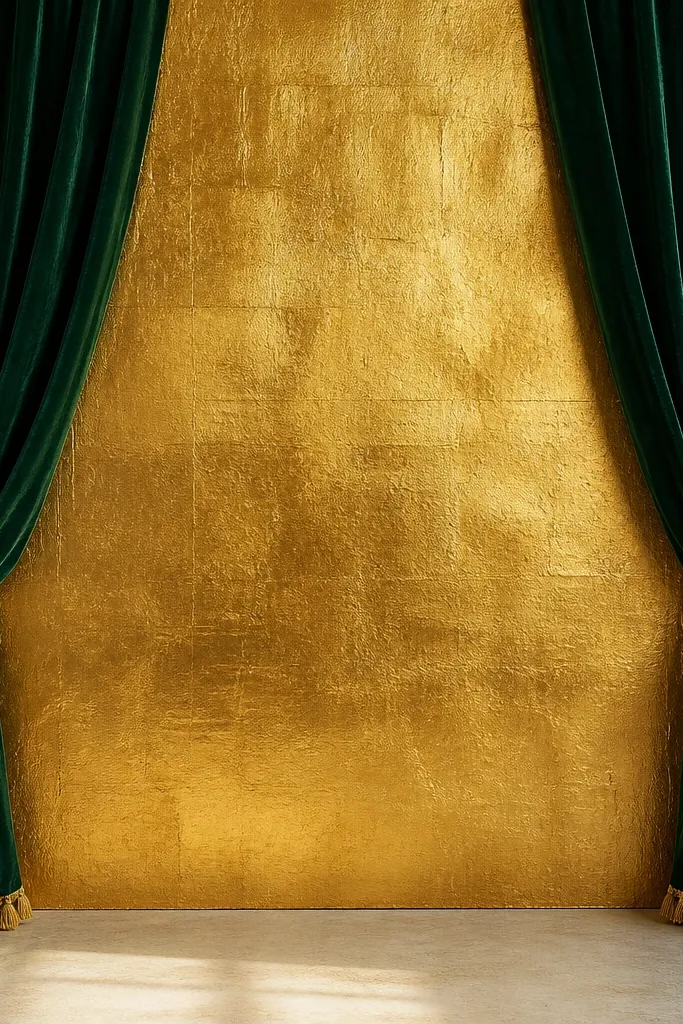
If you want a stage that looks expensive under spotlights, emerald velvet is the move. Velvet absorbs light in a flattering way and makes gold accents look brighter without turning harsh. The gold foil backdrop gives a reflective center that makes the couple stand out even when the floor lighting is dim. This look is especially flattering for outfits with gold embroidery, deep wine, and cream tones. The styling principle is contrast: a heavy matte fabric on the sides and a controlled reflective surface behind.
Hang 2 wide emerald velvet panels on either side of the stage center, then pull them inward with tie-backs at about chest height (roughly 4 feet). Place a gold foil or metallic laminate panel at center behind the couple at full height of the frame. Add a thin gold chain garland along the top edge where the velvet meets the gold so the transition looks intentional. For the base, run tassel trim across the front edge, keeping the tassels aligned every 6 inches so it reads neat in photos.
Try thisPress velvet panels with steam before setup and keep them smooth - wrinkles show up fast under stage lights.
Common mistakeAvoid cheap shiny foil on the entire stage; it glares and blows out faces in camera.
4. White Orchids with Silver Bead Fringe Panel
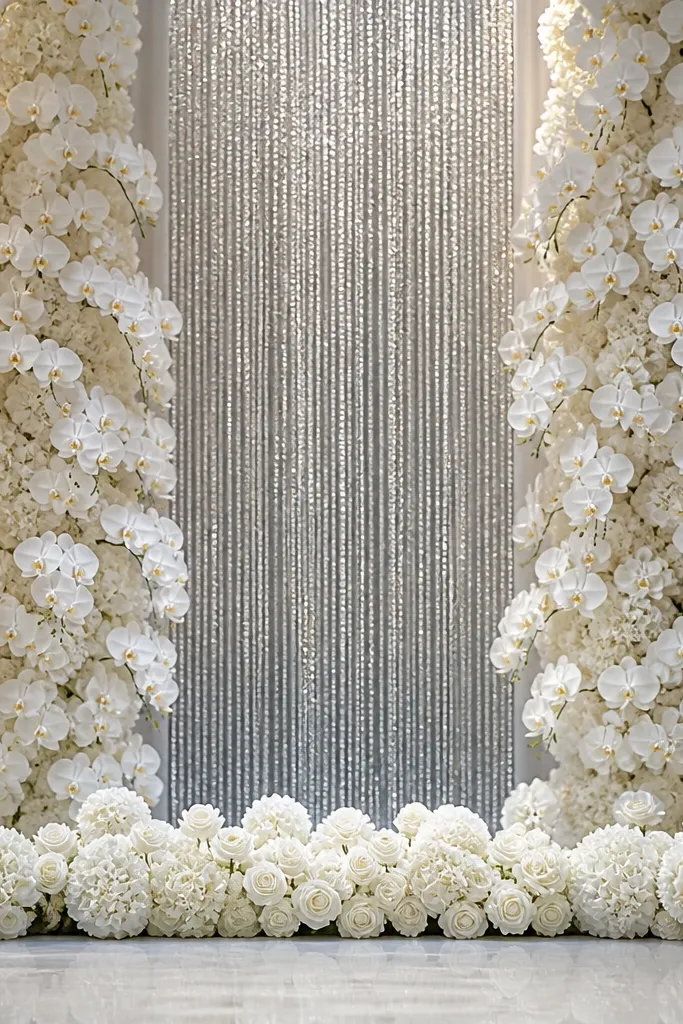
This is for brides and grooms who want a modern, airy stage without losing the wedding feel. White orchids look crisp against silver and keep the stage looking clean even in busy photo angles. The silver bead fringe adds motion - even a slight breeze or fan creates sparkle that cameras love. It flatters cooler skin tones and pairs beautifully with grey-silver, ivory, and soft lilac outfits. The styling principle is vertical rhythm: orchids build height, and fringe adds a shimmering center line.
Start by placing orchid clusters in vertical columns on a frame: 3 columns across the width, each about 2 feet wide. Leave small gaps between columns so the backdrop doesn't turn into a solid block. Hang a silver bead fringe curtain in the center from the top crossbar down to the mid-height of the stage, roughly 6 to 7 feet tall. Add a low border of white flowers at the front edge, keeping the height under 2 feet so shoes and lower outfits stay visible. Finish with a few loose orchid stems at the base to soften the transition.
Try thisTest the fringe with a small handheld fan for 30 seconds - if beads don't sway, they're too heavy and won't sparkle in videos.
Common mistakeSkip all-white with no reflective element; it can look flat and washed out under bright lights.
5. Red Dahlia Pom-Pom Border with Fabric Canopy
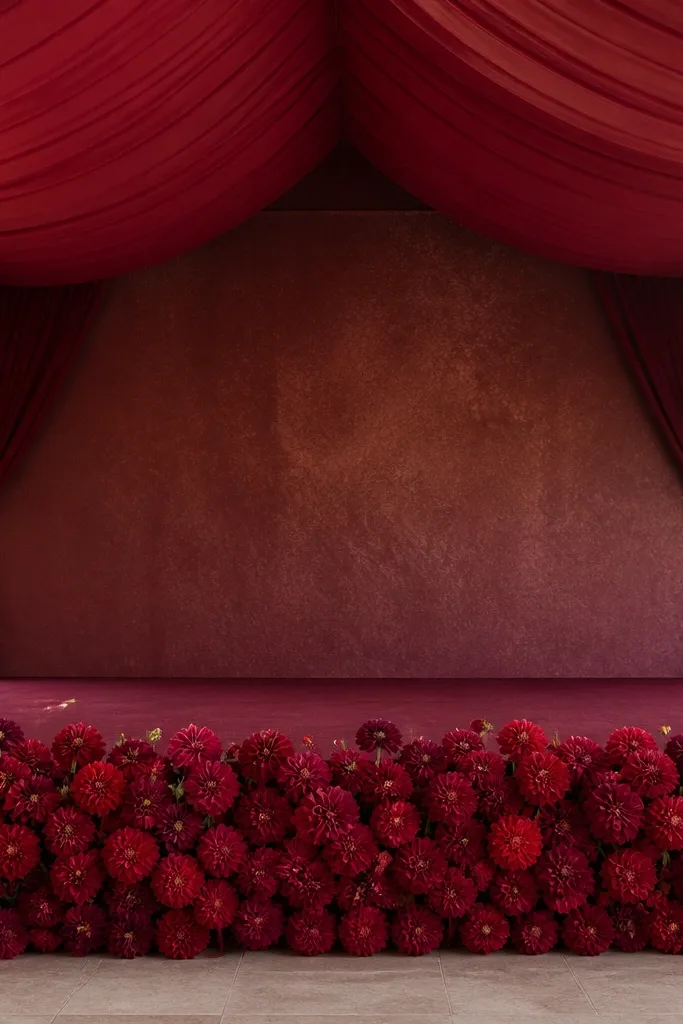
This design gives you a strong "front impact" even if your venue has a plain back wall. The dense red dahlia pom-poms create a thick, plush look at eye level and help frame the couple's seated or standing photos. The fabric canopy above adds height and makes the stage feel complete without crowding the center. It flatters warm undertones and looks striking with gold jewelry, cream outfits, and black accents. The principle is focus on the foreground and top edge, leaving the center backdrop calmer.
Build the border first: attach pom-pom clusters to a lightweight front frame, keeping the pom-poms touching with almost no gaps. Use deep red and a small amount of wine to avoid a one-tone look. Then stretch a fabric canopy across the top - I use two layers so it holds shape: one velvet-like fabric and one sheer layer underneath for depth. Keep the center backdrop as a simple textured panel (jute, raw silk, or a plain floral sheet) so the border stays the hero. Add a narrow garland line on both sides to guide the eye toward the couple.
Try thisIf you're doing multiple functions, wrap the border clusters in breathable fabric and store them flat so pom-poms don't crush.
Common mistakeDon't make the border too tall; anything over 2.5 feet starts to hide outfits and looks crowded.
6. Pastel Patchwork Fabric Backdrop with Twinkle Rope
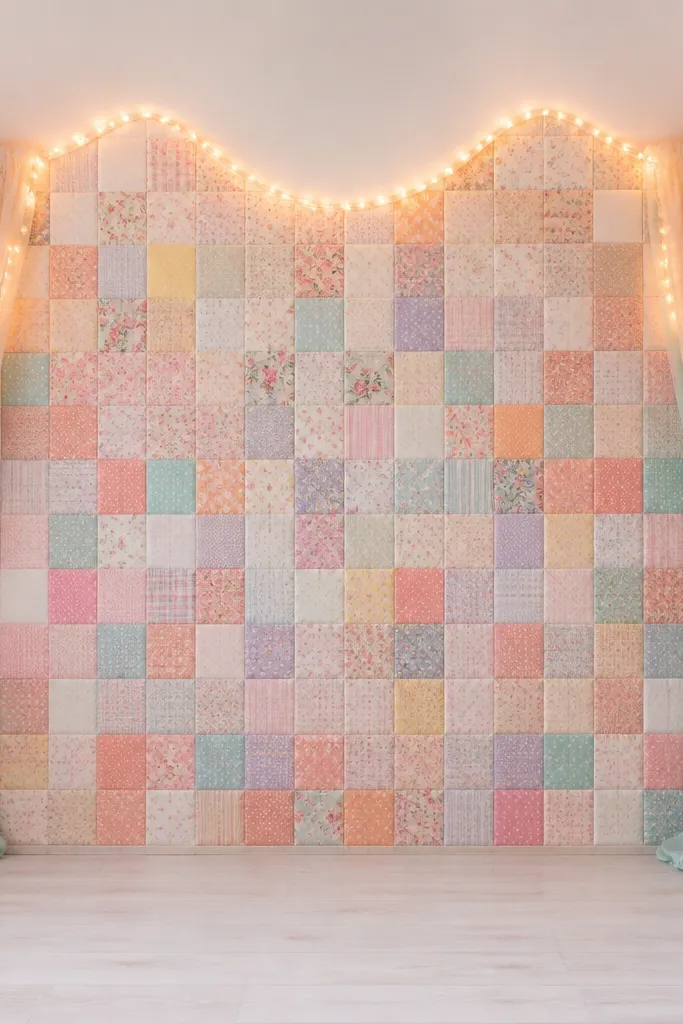
This is a fun, modern stage idea that works great for engagements and daytime wedding events. Pastel patchwork reads playful and keeps photos from feeling too heavy, and the twinkle rope adds a gentle glow without looking like a carnival. It flatters light-colored outfits and also makes darker outfits pop because the background stays soft. I've used this when the venue lighting is bright and harsh - patchwork helps break up glare. The principle is controlled chaos: small patterns plus a single line of sparkle.
Start by building a patchwork panel on a backing sheet - 2-foot wide sections stitched together so you can transport it. Use fabric types that don't wrinkle the same way: organza, cotton voile, and light satin, in 5 to 6 pastel tones. Add a twinkle rope along the top curve of the frame only - keep it to one line so it doesn't compete with outfits. On the sides, hang matching pastel drapes in two layers, pulling them into gentle folds. Place a low floral or fabric runner at the stage front so the patchwork doesn't look like it ends mid-air.
Try thisChoose pastel fabrics with slightly different textures; matching textures look flat in photos.
Common mistakeAvoid using thin, see-through fabric alone; it can show stage structure and wiring behind.
7. Jute-and-Marigold Rustic Arch with White Sheer Drapes
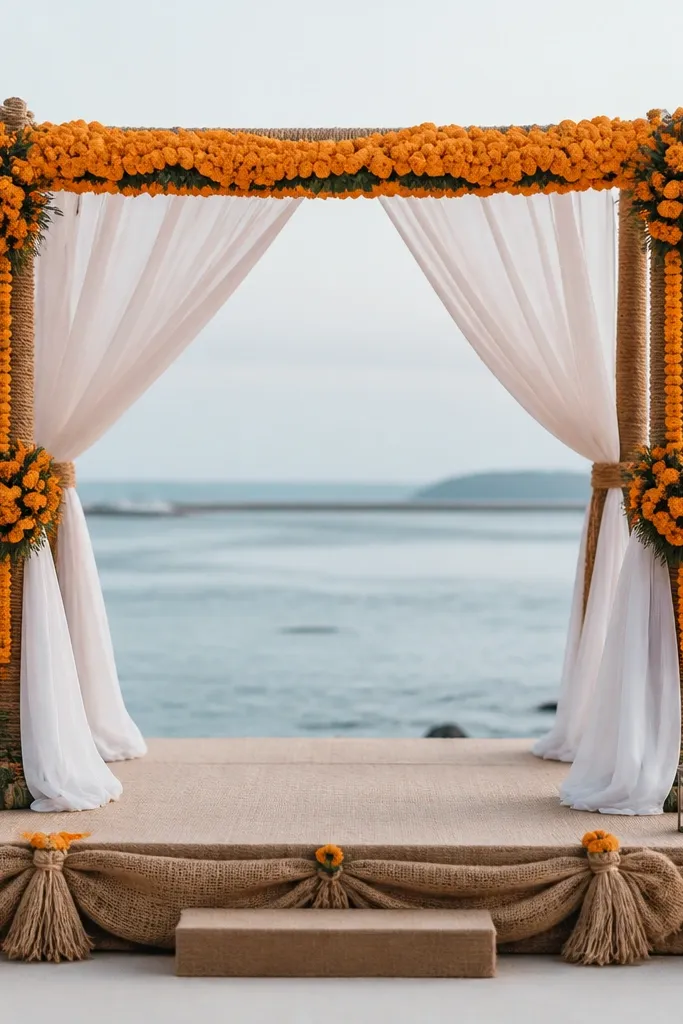
If your venue feels too sterile, this makes the stage feel warm and grounded. Jute adds texture and hides minor frame imperfections, while marigolds bring the wedding color punch. White sheer drapes soften the rough texture so the stage still looks bridal and not like a countryside set. This works beautifully for couples who want a traditional vibe but hate overly glossy decor. The principle is texture balance: rough base materials plus soft airflow-friendly fabric.
Start by building a simple arch on two side stands, then wrap the frame with jute rope in tight spirals. Attach marigold garlands around the arch in three bands: top, middle, bottom, each about 10 to 12 inches wide. Hang white sheer drapes from the arch crossbar and let them fall to about 3 feet off the stage - enough to show movement in photos. For the stage front, tie jute ribbons into bows at 2 to 3 foot intervals and add two small lantern props on each side. Keep the center backdrop plain so the arch doesn't fight with the couple's outfits.
Try thisSpray sheer fabric with anti-static before setup; it drapes cleaner and looks less clingy under lights.
Common mistakeSkip brown-on-brown without bright flowers; it can look dull and underlit.
8. Tropical Green Backdrop with Yellow Flower Clusters
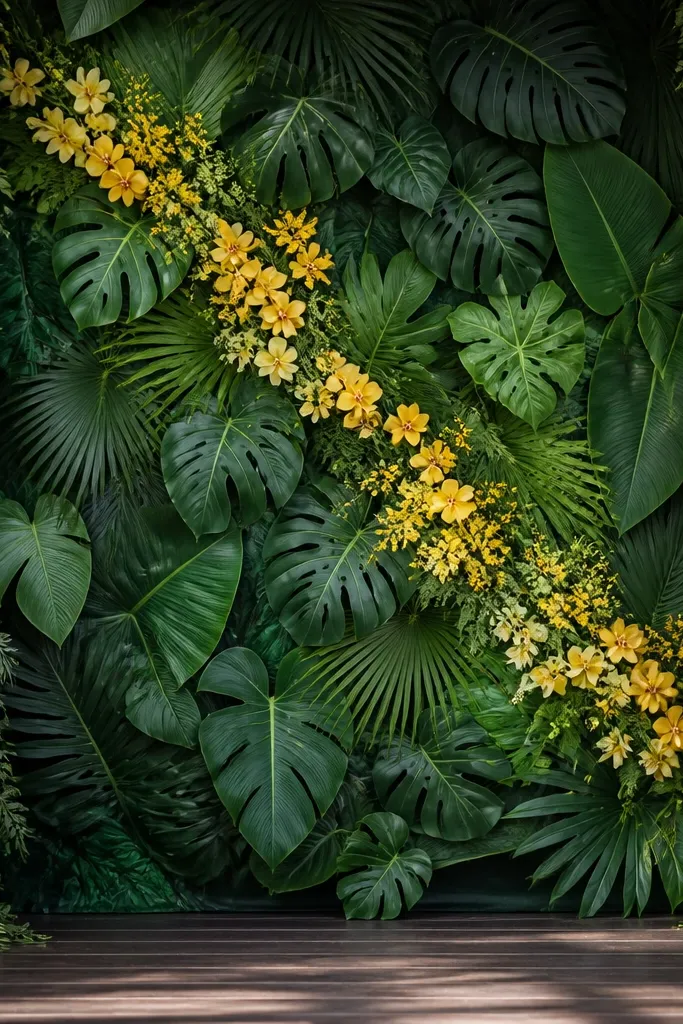
This gives you energy and makes the couple's outfits pop without going loud. The greens create depth and hide frame gaps, while yellow flower clusters add the color hit that reads clearly from far away. I like this when the wedding theme is "fresh" or when you want fewer reds and more modern tones. It flatters olive and warm undertones and also looks great with white, beige, and gold outfits. The principle is negative space: leave some green open so the yellow clusters look intentional.
Start by covering the back frame with tropical leaves in layers, overlapping each leaf by about half its width. Then place yellow flower clusters in a diagonal flow from the lower left toward the upper right - aim for 7 to 9 clusters total across the width. Add a thin rope of fairy lights behind the leaves only if your venue is dim; keep it subtle so it doesn't look like a party backdrop. On the sides, hang leaf garlands vertically to create continuity. Finish with a low border of scattered yellow petals or small flower heads along the stage edge.
Try thisUse leaves with different leaf sizes; all-same-size foliage looks artificial and flat.
Common mistakeDon't cover every inch with flowers; a fully packed wall makes yellow look muddy.
9. Black Velvet Panels with Pink Floral Sprayline
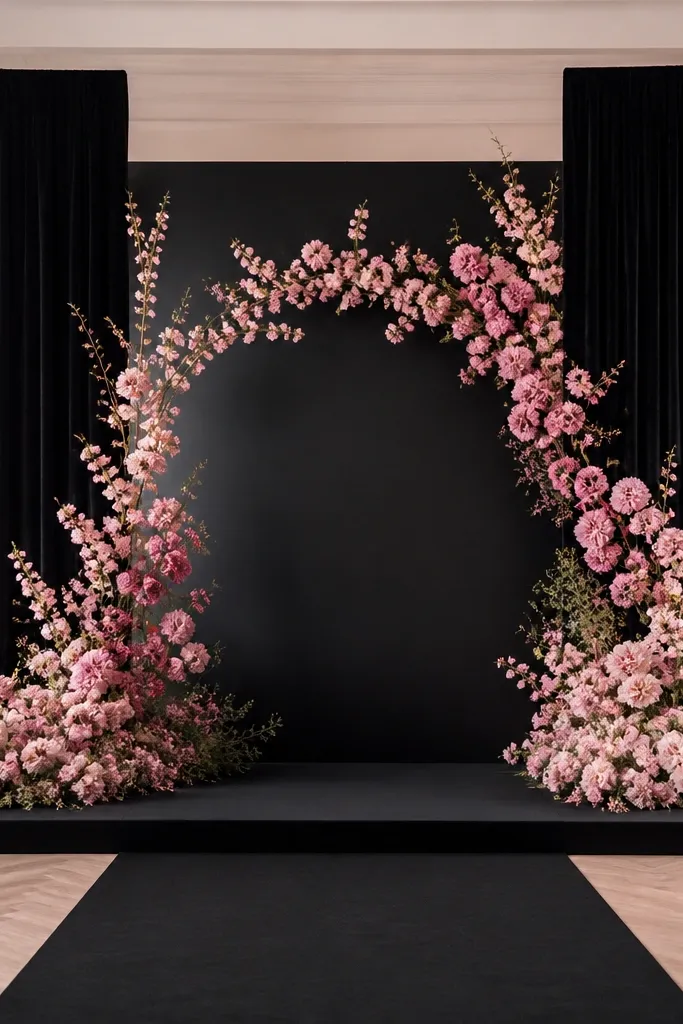
This is dramatic and photo-friendly, especially for sangeet functions where you want high contrast. Black velvet makes pink florals look saturated, and it also hides shadows from stage lighting that can ruin lighter backdrops. I've used this with magenta, hot pink, and fuchsia outfits and it always reads bold on camera. It's flattering for a wide range of skin tones because black gives a clean frame around faces. The principle is contrast control: black base plus one sweeping color line, not scattered blooms everywhere.
Hang black velvet panels on the sides first, then cover the center with a matte black backdrop sheet. Arrange pink floral sprays in an arc pattern so the line ends near the right side of the couple - keep the center area less crowded. Secure sprays with zip ties or floral wire to a grid so they don't droop. Add a slim black runner on the stage front, and place two small pink lantern props on each side at floor level. Finish with one short greenery line under the arc to connect the look to the base.
Try thisMatch shoe colors to the stage: black or metallic shoes look intentional against black velvet backdrops.
Common mistakeAvoid shiny black satin; it reflects spotlights and can blow out the center.
10. Ivory Fabric Drapes with Gold Sequin Border
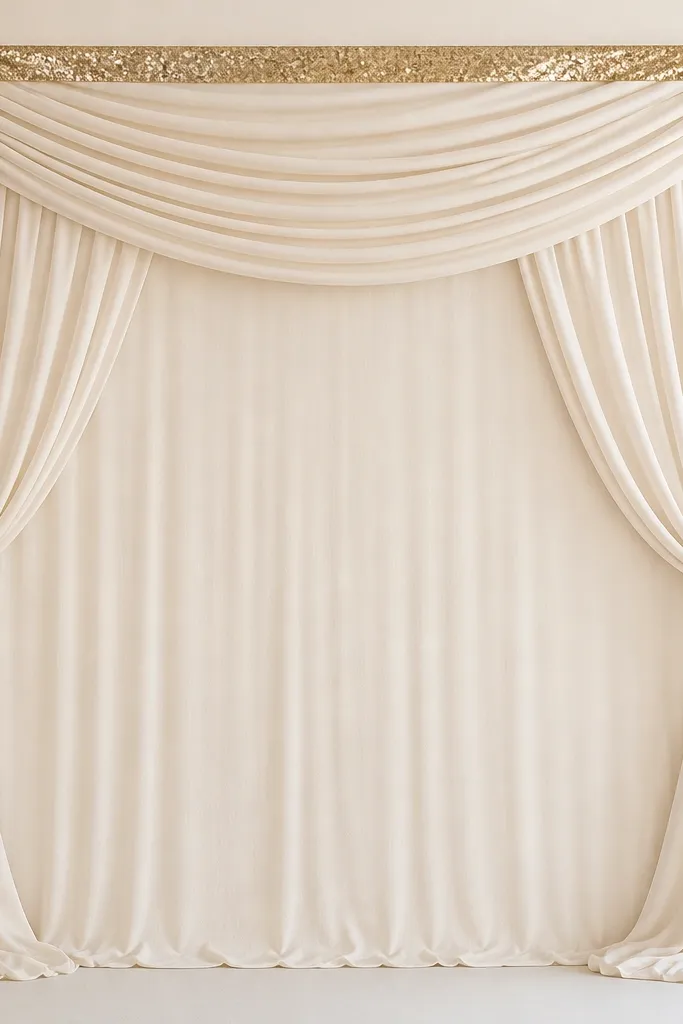
This is a safe choice when you want the stage to feel classic and not trendy. Ivory drapes create a soft, flattering background that works with almost any outfit color, from red to blue to pastel. The gold sequin border adds sparkle without covering the whole stage, so your photos don't look overdone. It's especially flattering for brides who wear heavy embroidery because the background stays calm. The principle is keep the center clean and use sparkle as a frame, not a full covering.
Start by hanging two wide ivory drapes on either side with a slight inward curve, leaving the center open. Add a gold sequin trim along the top edge of the frame and then run it down both sides to about 6 feet tall. Place a plain ivory panel behind the couple so the sequin border reads like a picture frame. For the stage front, use a simple garland line or a thin ribbon runner - don't add extra height. If you're doing a mandap setup, keep the sequin border above the mandap edge so it doesn't clash with religious decor.
Try thisUse matte ivory fabric for the drapes and keep sequins only on the frame - it stops glare on camera.
Common mistakeAvoid mixing multiple glitter types (sequins + glitter net + rhinestones); it turns the stage into a noisy blur.
11. Blue Hydrangea Look with Silver Balloon Clusters
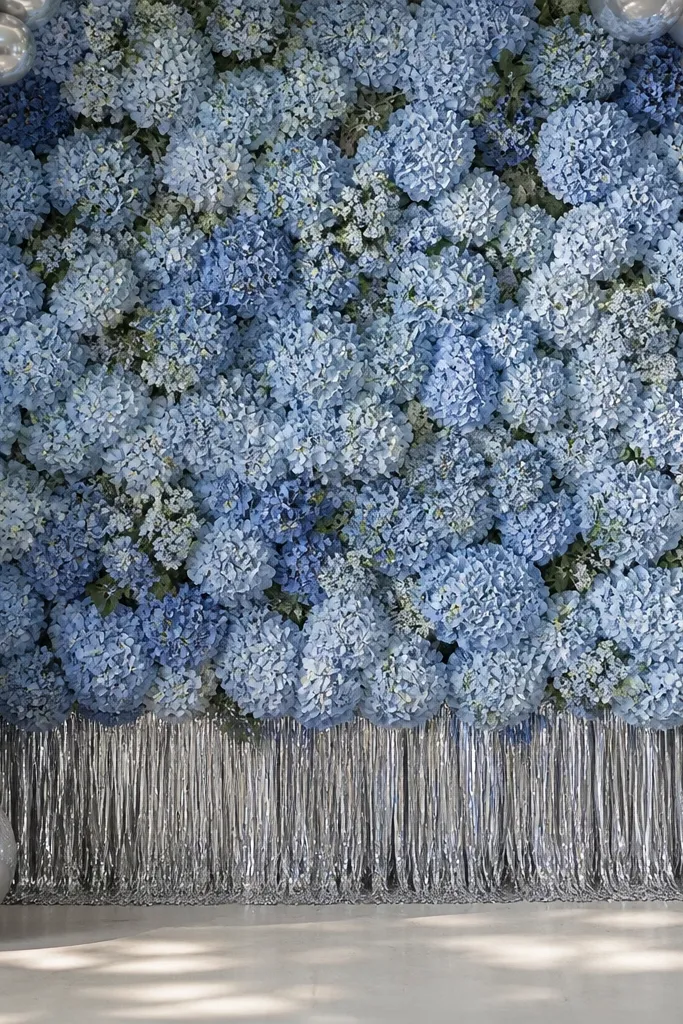
This one is for venues where you want a modern party feel, especially for cocktail-style wedding events. Blue hydrangea clusters look full and structured, and silver balloon clusters add height and a clean metallic contrast. The silver fringe at the bottom gives movement when people walk in front. It's flattering for outfits in white, navy, silver, and even warm gold because silver bridges the tones. The styling principle is mixing organic texture (flowers) with smooth reflective shapes (balloons).
Build the blue floral backdrop on a frame using hydrangea-style clusters - aim for 4 to 5 big clusters across the width, then fill gaps with smaller sprays. Place silver balloon clusters at both upper corners, 3 to 5 balloons per cluster, and secure them to base weights or hidden stands. Add a thin silver fringe curtain along the bottom edge of the backdrop so it creates a soft line at floor level. Keep the center area clear for entrances and photos. Finish with a low scatter of blue petals or small blue flowers at the stage front, under 2 feet high.
Try thisUse balloon clusters with matte silver balloons; glossy ones can create harsh reflections on faces.
Common mistakeDon't overfill the stage with balloons - more than two corner clusters starts looking like a photo booth.
12. Genda Phool Toran with Hanging Paper Fans
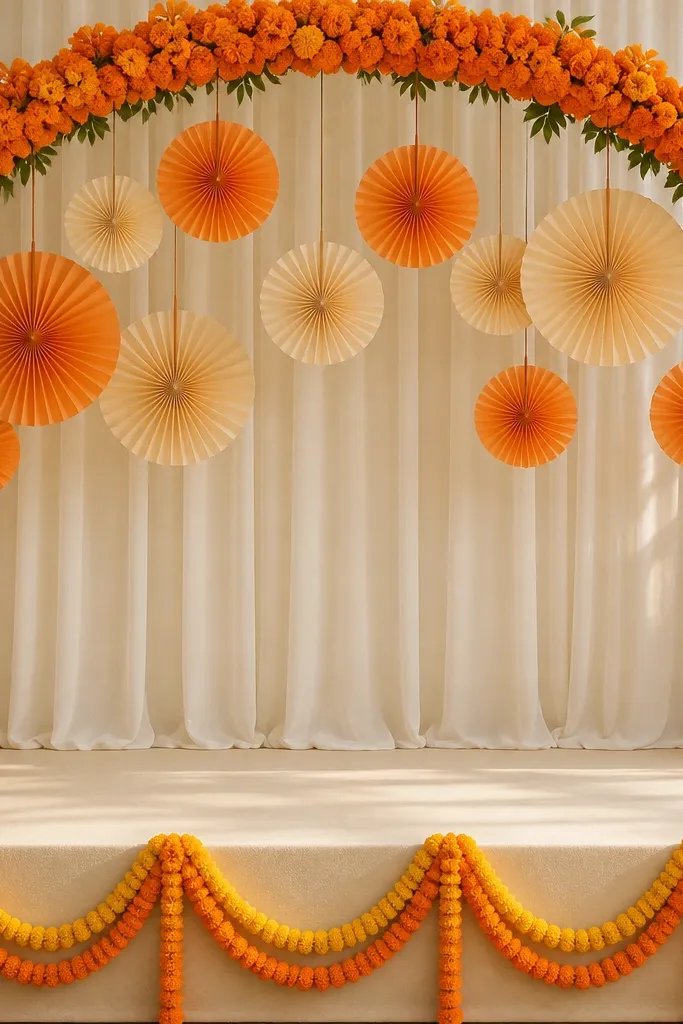
This is the stage decor I recommend for an airy, energetic feel. Genda phool toran gives the classic wedding flavor, and hanging paper fans add a light, moving element that looks great on video. The orange and cream fan colors keep it warm without becoming too heavy. It flatters both bright and neutral outfits because the fans create a soft background texture. The principle is motion: keep the main flowers fixed and let the fans sway.
Start by installing the toran arch at the stage center - position it so the couple can walk directly under it. Create fan strings from lightweight paper fans and hang them from the arch crossbar at staggered heights, roughly from 5 feet down to 3 feet. Use orange and cream fans in an alternating pattern so it doesn't look random. Add marigold garlands along the stage front edge, spaced every 8 inches. Keep the backdrop behind the toran simple (plain cloth or a small floral strip) so the fans and garlands stay the focus.
Try thisUse thin fishing line for hanging fans so they move smoothly and don't show thick cords in photos.
Common mistakeAvoid using heavy cardstock fans; they droop and stop moving in the breeze.
13. White Floral Columns with Gold Ring Stand
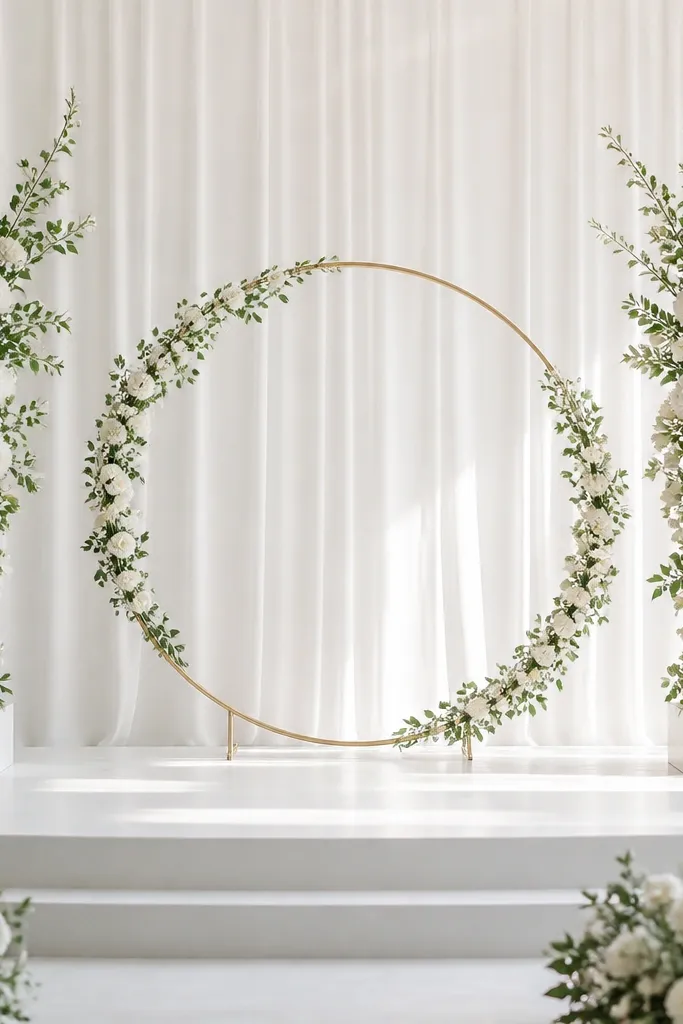
Columns frame the couple and make the stage feel taller, and the gold ring adds a clean focal shape. White floral columns look crisp and bridal, especially with gold jewelry and ivory outfits. The ring stand gives you a photo moment without needing a full backdrop wall, which is helpful for venues with limited space. It flatters most skin tones because white brightens the area around faces. The principle is geometry: tall verticals plus one strong circle.
Start by building two vertical stands (about 7 feet tall) and wrap them with white flowers in dense layers from top to bottom. Keep the column width around 18 to 24 inches so it reads clearly without blocking the couple. Place a gold ring stand at center behind the couple - keep the ring diameter about 3.5 to 4 feet so it frames heads and shoulders in photos. Wrap small white flowers around the ring evenly, then secure with floral tape. Add a low white runner or scattered petals at the stage front for continuity.
Try thisMatch the ring finish to the couple's metallics; brushed gold looks calmer than bright chrome.
Common mistakeDon't place columns too close together; if the gap under 3 feet, the couple looks boxed in.
14. Rose and Candle Lantern Side Wall
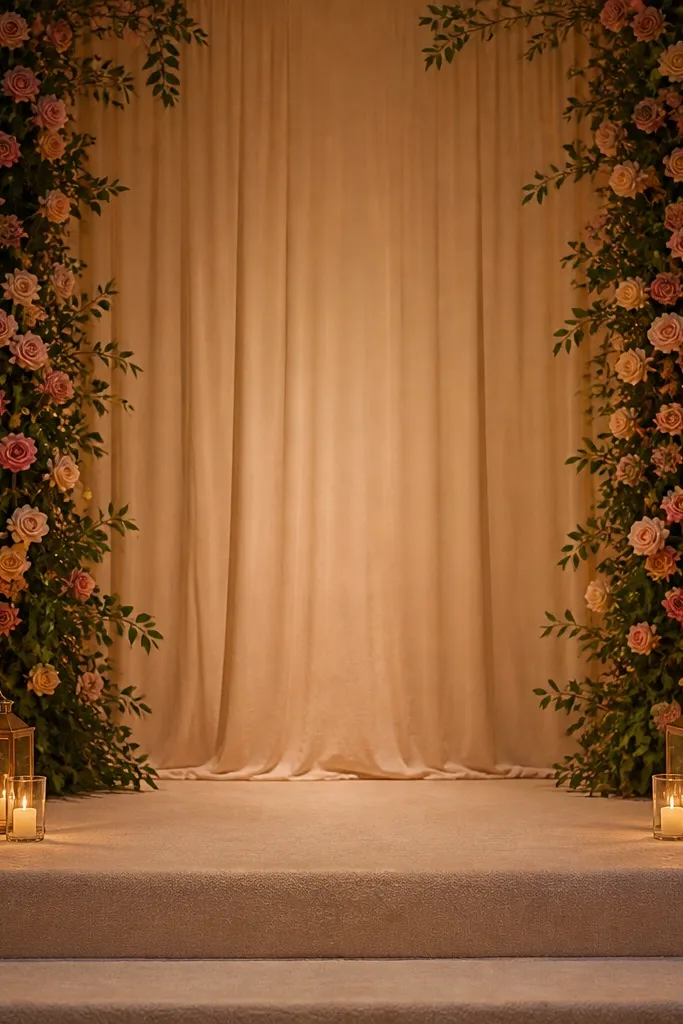
Lantern side walls give warmth and depth without building a massive floral wall. The rose garlands create soft texture, and candle lanterns add real glow that looks natural in photos. This is a great choice when you have a decent backdrop already but need the stage to feel complete and "alive." It flatters deep reds, blush pinks, and gold outfits because the amber light makes skin tones look warm. The principle is lighting + texture: let the lanterns do the mood, and keep flowers as the frame.
Hang rose garlands on vertical strings or on side frames, keeping them around 6 to 7 feet tall. Place candle lanterns on the floor at both sides, with lantern spacing about 18 to 24 inches apart so it doesn't look like a line. Use LED candles if the venue has restrictions, but pick flicker-style ones so they mimic real candles. Keep the center backdrop as a simple fabric panel or a minimal floral strip so the lantern glow stays the hero. Finish with a low rose border at the front edge, only 1.5 to 2 feet high.
Try thisIf you're shooting photos yourself, take one test shot from the back - lantern glow often needs a warmer white setting on camera.
Common mistakeAvoid placing lanterns too close to the couple's feet; shadows can cut across lower outfits.
15. Sunflower and Marigold Combo with Wooden Crates
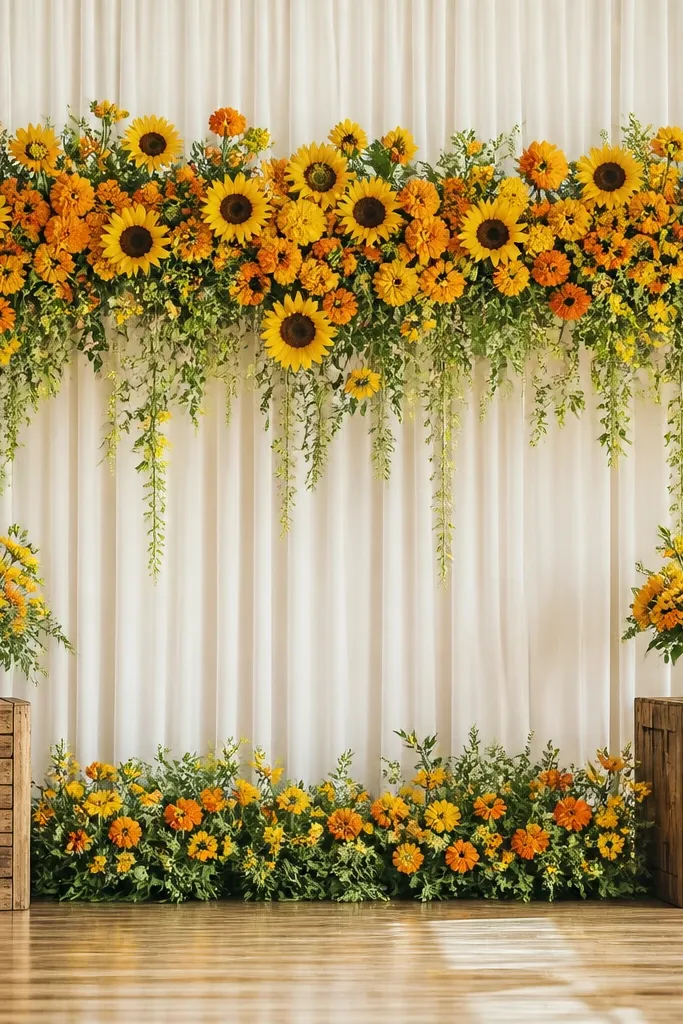
This is a cheerful, daytime-friendly stage look that still feels wedding-ready. Sunflowers add bold yellow energy, and marigolds keep it grounded in Indian wedding color language. Using wooden crates as risers gives height without needing tall stands everywhere, and it looks great in candid photos. It flatters warm undertones and works well with mustard, rust, denim-blue, and cream outfits. The principle is practical props: use furniture and florals together so it looks styled, not pasted.
Start by covering the backdrop base with a warm neutral cloth, then pin sunflower clusters in the center and marigolds around them to fill gaps. Build a side composition using two wooden crates on each side of the stage, each crate about 18 inches tall. Top the crates with smaller mixed bunches of sunflowers and marigolds, and add a thin garland trailing down the front edge of each crate. Keep the center line clean for movement. Add a low garland runner across the front of the stage, spaced evenly so it reads from a distance.
Try thisSeal the crates with a clear matte layer if they're raw wood; it prevents dust and makes them look cleaner under lights.
Common mistakeAvoid using only loose flowers on the floor; the stage edge should look intentional, not scattered.
16. White Net Backdrop with Pearl Bead Strands
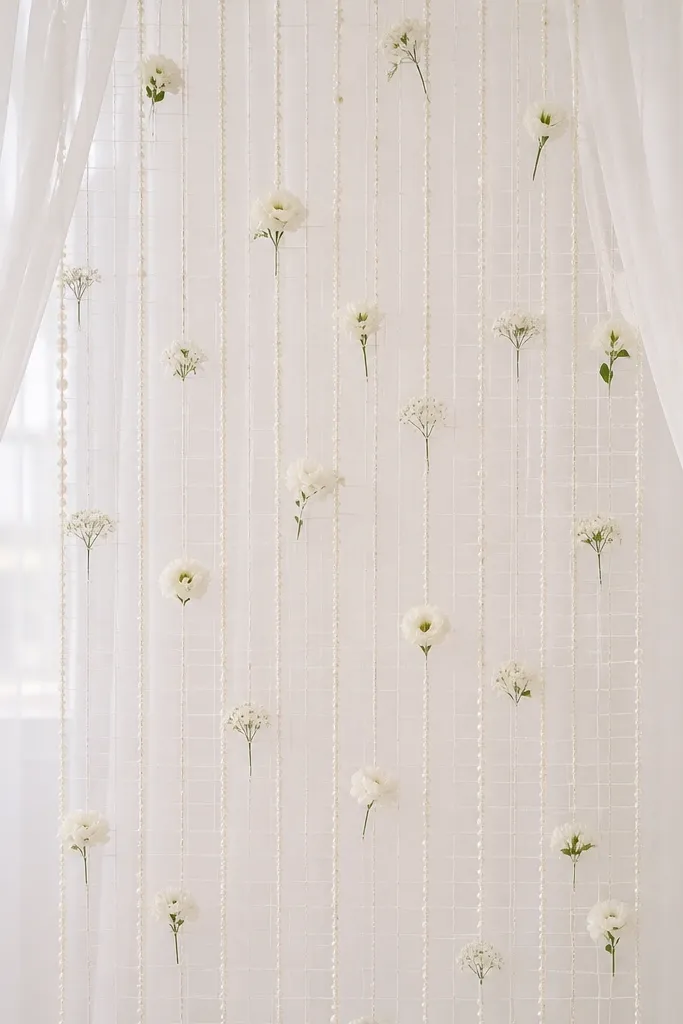
This look is for brides who want soft glam that doesn't look like a disco. White net gives a gentle texture and hides minor backdrop issues, while pearl bead strands add a refined sparkle that stays delicate on camera. It flatters fair and medium skin tones because it brightens the area around the face without strong color contrast. I've used it for weddings where the couple's outfit already has heavy work - this decor lets the outfit stay the star. The principle is controlled shimmer: net for softness, pearls for highlights, florals for structure.
Drape a white net sheet across the frame and secure it tight enough that it doesn't sag in waves. Hang pearl bead strands vertically in the center and slightly off-center, with each strand spaced 10 to 14 inches apart. Add small white floral sprays at the top and mid points of the strands so the pearls look anchored, not floating. On the sides, use sheer white curtains to create a layered look behind the couple. Finish with a low border of white blooms or pearl-like garland along the stage front edge, keeping it under 2 feet high.
Try thisUse a fabric-safe anti-static spray on net so it lays smoother and looks less messy in photos.
Common mistakeAvoid tangled bead strands - if they knot during setup, they'll look sloppy and uneven.
17. Gold and Terracotta Terraced Flower Steps
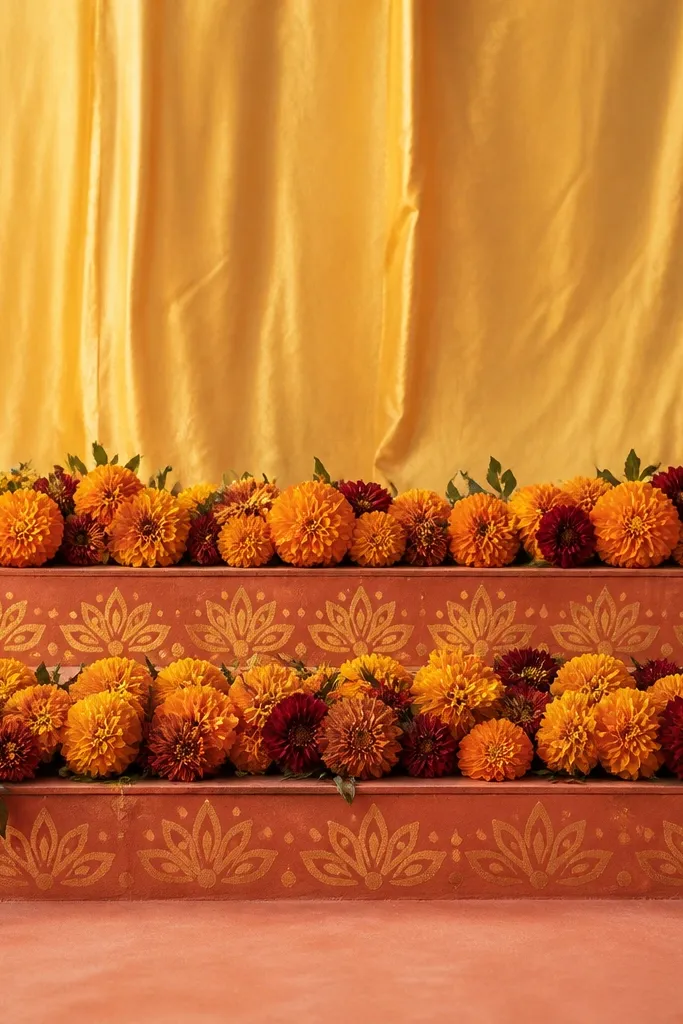
Flower steps make the stage feel like a platform, not a flat backdrop. Terracotta and gold reads warm and premium, and terraced height gives you a natural place for photos where the couple stands elevated. This look flatters outfits with copper, bronze, and deep red embroidery because the colors echo each other. It also works well for ceremonies where people sit or gather at the front. The principle is tiering: build height in the front so the stage looks dimensional even from the side.
Start by creating two tiers at the stage front using sturdy risers or platforms, keeping the top tier about 14 to 18 inches high and the lower tier about 8 to 10 inches. Cover each tier with terracotta fabric or textured cloth, then layer flowers: marigolds and small maroon blooms on the edges, and gold-toned filler in the center. Keep the flower density higher at the front corners so it reads from the audience. Add a plain golden fabric backdrop behind to avoid color overload. For the final touch, wrap a thin golden ribbon along the tier edges for clean lines.
Try thisIf you're renting risers, check the top surface texture - glossy tops reflect light and can look like glare in videos.
Common mistakeDon't make the top tier too wide; it can block the couple's lower outfit and hide footwear.
18. Coconut Shell and Floral Garland Stage Corners
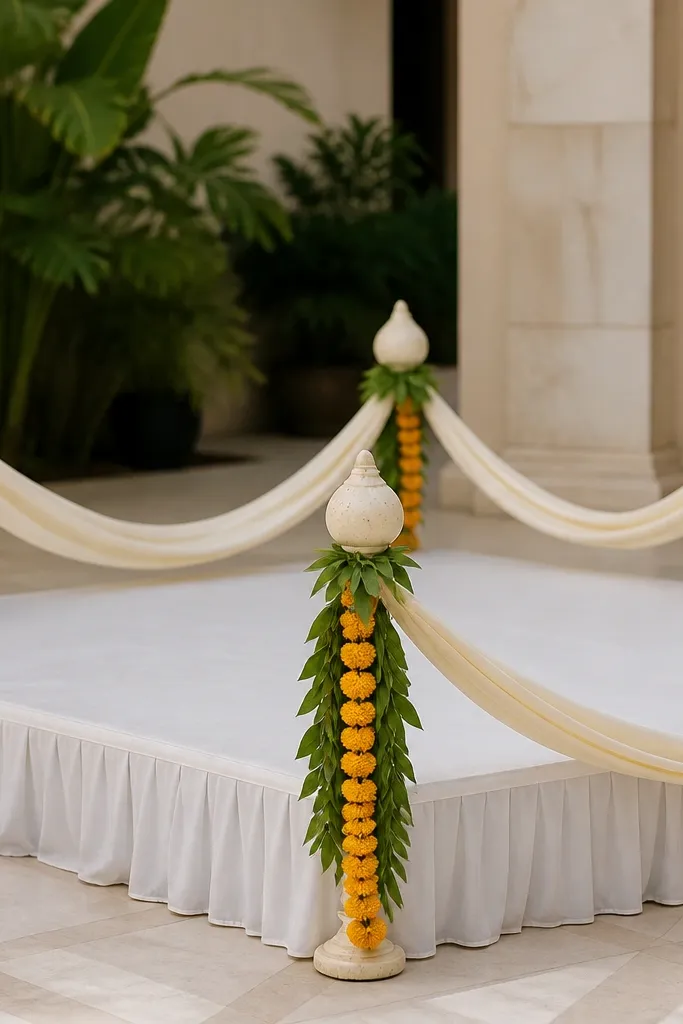
This is a subtle, traditional corner treatment that makes the stage feel rooted without covering the whole wall. Coconut-shell accents add texture and a handmade vibe, and marigolds bring the wedding color. I like placing these only at the corners because it keeps the stage elegant and stops it from looking like a themed set. It flatters both classic and modern outfits because the off-white shell tone stays neutral. The principle is corner focus: small, meaningful props in the frame corners instead of everywhere.
Start by preparing off-white coconut shells - paint them matte and let them dry fully so they don't look glossy under lights. Wrap each shell with a small garland of marigold and attach a few green leaves around the sides. Place these at the stage corners at about 2.5 to 3 feet height, securing them to stands or corner frames. Connect the corner pieces with a thin fabric drape in a warm neutral like cream or champagne. Keep the main backdrop simple so these corner details show clearly when people take side photos.
Try thisUse matte paint and avoid metallic spray on shells; metallic reflections can look harsh on camera.
Common mistakeAvoid placing too many corner props; crowding the corners makes the stage look cluttered.
19. Color-Block Draped Backdrop with Matching Floral Ledges

Color-blocking is the quickest way to make a stage look designed, not assembled. The saffron-cream-teal combo gives warmth plus a cool accent, which reads well in both daylight and indoor stage lights. Floral ledges add depth and stop the fabric blocks from looking flat. This works with a lot of outfit palettes because you're not forcing one single dominant color - you're giving the decor options to harmonize. The principle is clean geometry: sharp color zones with floral texture as a connecting layer.
Hang fabric in three vertical sections across the backdrop frame, each section about one-third of the width. Use drapes that fall with weight - satin or heavy organza - so the edges stay defined. Add floral ledges horizontally: one ledge across the center at about 5 feet high and another ledge lower at about 3.5 feet. Keep the floral ledges aligned with the color blocks so the flowers match each section: marigold tones for saffron, white or champagne for cream, and teal-green foliage for teal. Finish by adding a low floral runner at the stage front in only one color (usually cream) to anchor the look.
Try thisTake a test photo in the same lighting you'll use on stage; if one block looks grey, swap that fabric for a warmer shade immediately.
Common mistakeAvoid mixing too many shades within each block; it turns color-blocking into random patchwork.
20. Saffron Silk Saree Drapes with Mirror-Glass Rangoli Floor
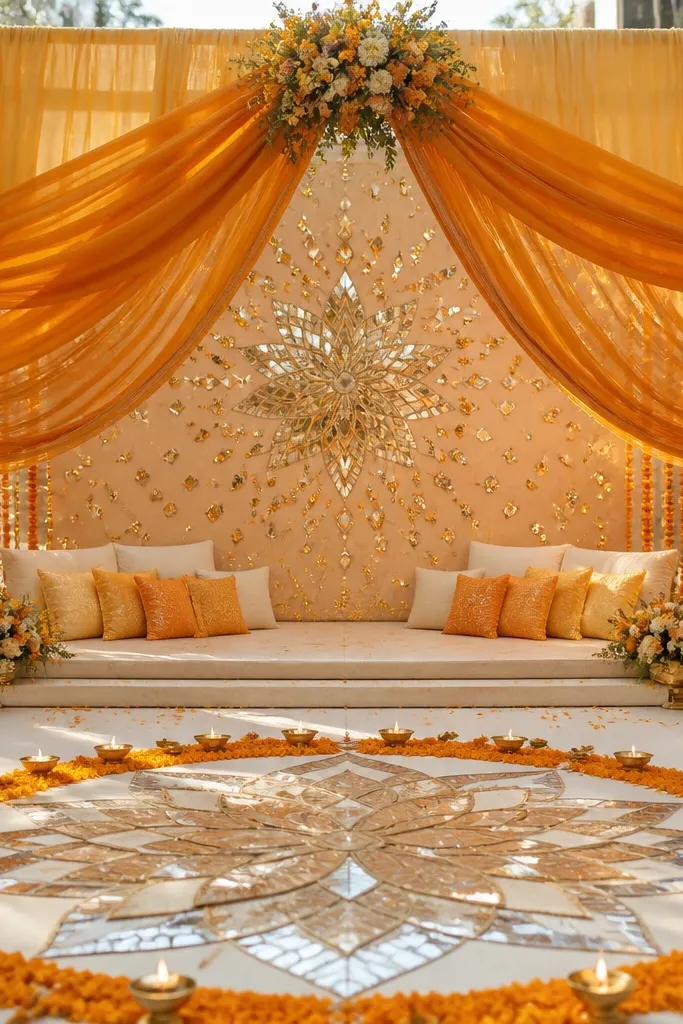
This setup looks expensive because the saffron silk gives you that warm, ceremonial glow even when the lights are basic. I've used saffron and turmeric tones together and the stage photographs like it has spotlighting built in. The mirror-glass rangoli on the floor adds movement in photos because it throws tiny highlights as people walk past. It also frames the couple's feet and makes the center of the stage feel intentional, not like a flat backdrop. If your stage is on a slightly reflective surface, the mirror-glass pattern reads even better.
Step one is to build the drape structure before you hang fabric. Use a lightweight truss or strong backdrop frame and attach 3 vertical lengths of saffron silk-like fabric (raw silk look, not shiny satin) at equal spacing, then tie the ends into loose knots so the folds fall naturally. Step two is to add mirror detail on the backdrop. Place small square mirror tiles (or mirror stickers on a thin backing sheet) in a lotus-and-petals layout, keeping the pattern tighter around the center and looser as it moves outward. Step three is to lay the rangoli on the floor using mirror-glass pieces. Arrange clear mirror shards into a lotus outline with curved petal shapes, then border with marigold petals and a thin line of white rangoli powder so the edges show up on camera. Step four is to set brass tea lights just outside the mirror border, not on top of shards, and keep the flame area separated from the mirror pieces for safety.
Try thisBring a cheap flashlight and shine it across the mirror-glass arrangement from the side you expect the camera to use. If you see a clean sparkle line, you're aligned; if it looks flat, shift the rangoli orientation by about 10-15 degrees.
Common mistakeAvoid using very shiny satin for the drapes - it blows out highlights and turns the saffron into one flat glare on phone cameras.