1. Marigold Petal Ring on a White Charger
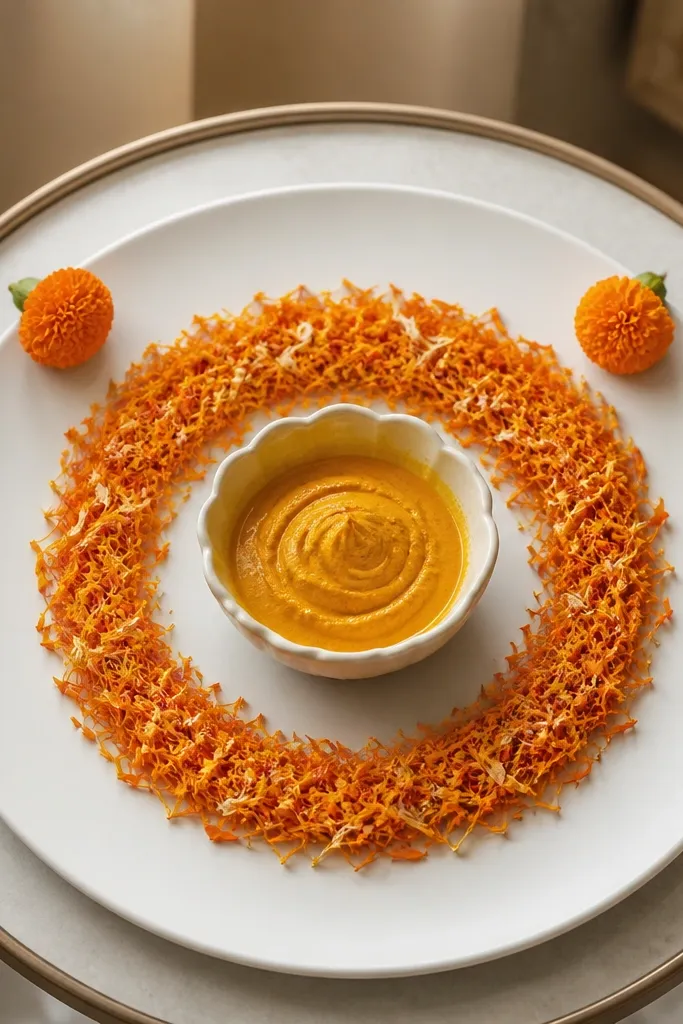
This setup is the quickest way to make a small haldi plate look "complete." The white charger makes the yellow haldi pop without needing extra clutter, and the marigold petal ring gives you a clear frame that reads well from above. I've used this on dining tables where there isn't room for a full rangoli - the petals act like the ring that would take up more space. It looks best on medium to fair skin tones because the warm orange tones brighten the scene, and it also works for bold or minimal outfit palettes since marigold sits in the middle of most color schemes.
Start by placing a thick white charger (or a white placemat folded into a firm circle) on your table. Center the haldi bowl on the charger and keep a 3 to 4 inch margin around it for the ring. Then make a tight petal ring using fresh or faux marigolds, pressing petals lightly so there's no gap. Finish with two small bud clusters on opposite sides, not more than 1 inch wide each. If your room lighting is dim, add one battery LED tea light in a clear glass cup at the edge of the charger, angled slightly outward for a warm glow.
Try thisUse faux petals if you're decorating hours ahead - fresh petals wilt and spread unevenly.
Common mistakeDon't scatter petals all over the charger; it looks like leftovers instead of a frame.
2. Sage Green Satin Runner + Gold Foil Dots
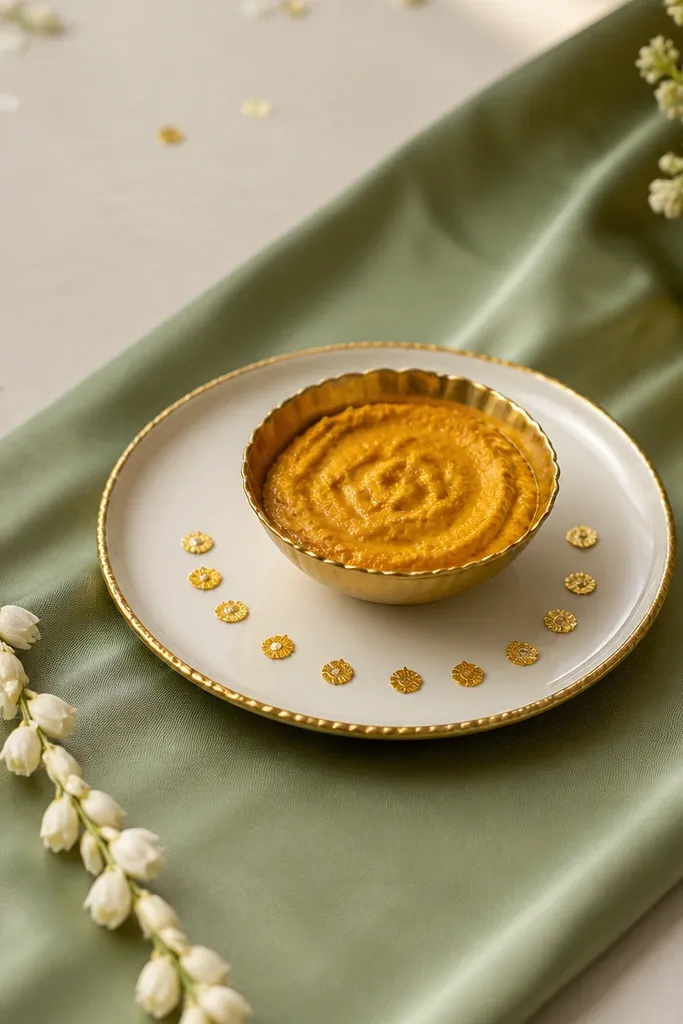
If you want haldi decor that looks clean and expensive in a small space, this is the one I keep coming back to. The sage satin runner adds a soft, calm backdrop and makes the turmeric gold look intentional rather than chaotic. I like gold foil dots because they catch light without taking up physical space, so you still get sparkle even on a narrow counter. This style flatters people with cooler undertones because sage balances yellow, but it also works for warm undertones since gold ties it together.
Lay the sage satin runner flat so it forms a straight base under the plate, with about 2 inches of fabric visible on the front side. Place a gold-rimmed charger or a metallic gold paper base under the haldi bowl. Around the bowl, place 10 to 16 small gold foil dots in an arc, keeping them within a 4 to 5 inch radius so the design stays tight. Add one thin jasmine strand along the runner edge near the front corner. Keep all loose ends tucked under the runner so the satin doesn't look wrinkled.
Try thisPress the runner with steam for 10 seconds before use so it falls in crisp folds.
Common mistakeDon't use a patterned runner with busy prints; it fights the gold arc.
3. Mini Rangoli Circle with Colored Rice
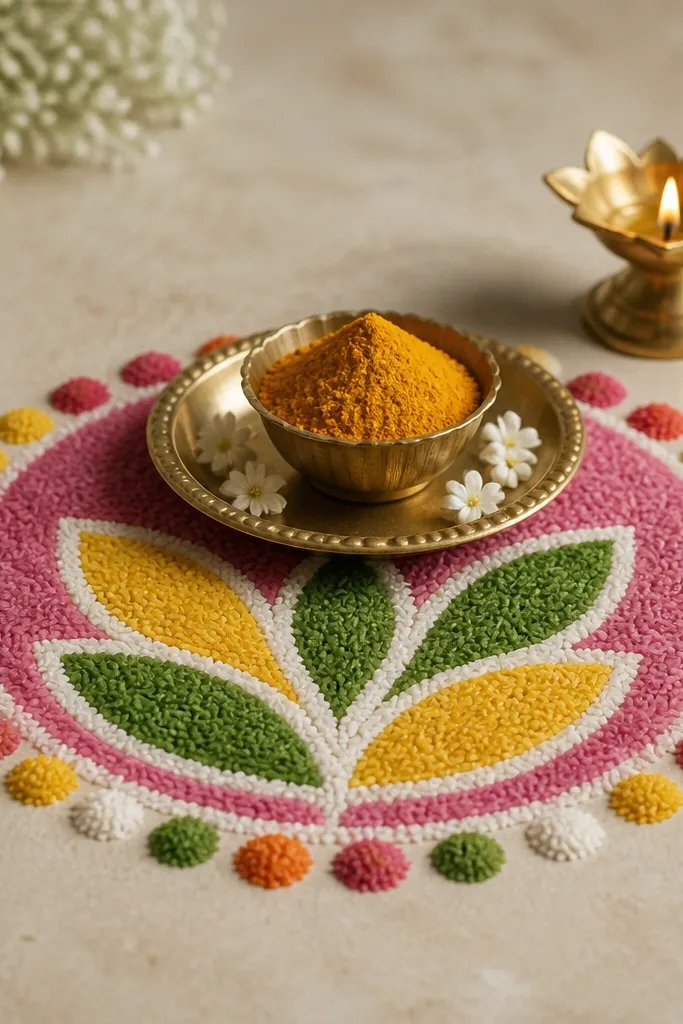
This is the "small space" rangoli solution that looks hand-drawn without needing floor space. Colored rice gives you crisp lines, and the ring framing keeps the design readable even from close-up photos. I've done it on a balcony table where there's no room for big rangoli powder - the rice stays contained in a circle. It looks great with both maroon and pastel outfits because the colors are controlled, and the brass diya adds a warm traditional anchor.
Start with a shallow tray or a thick plate base, and center your haldi bowl on it. Sprinkle a thin outer ring of white rice first to form a clean boundary, then trace a leaf motif using colored rice (green for leaves, red for dots). Keep the entire design within a 6 inch diameter around the bowl. Then place a small brass diya at the back edge of the tray, not touching the rice ring. Finish by adding 6 to 8 tiny rice dots as a dotted border around the ring.
Try thisUse a small spoon for rice placement so your lines stay tight.
Common mistakeDon't overfill the rice lines; packed rice looks chunky and cheap.
4. Two-Side Leaf Arches with Mango Leaves
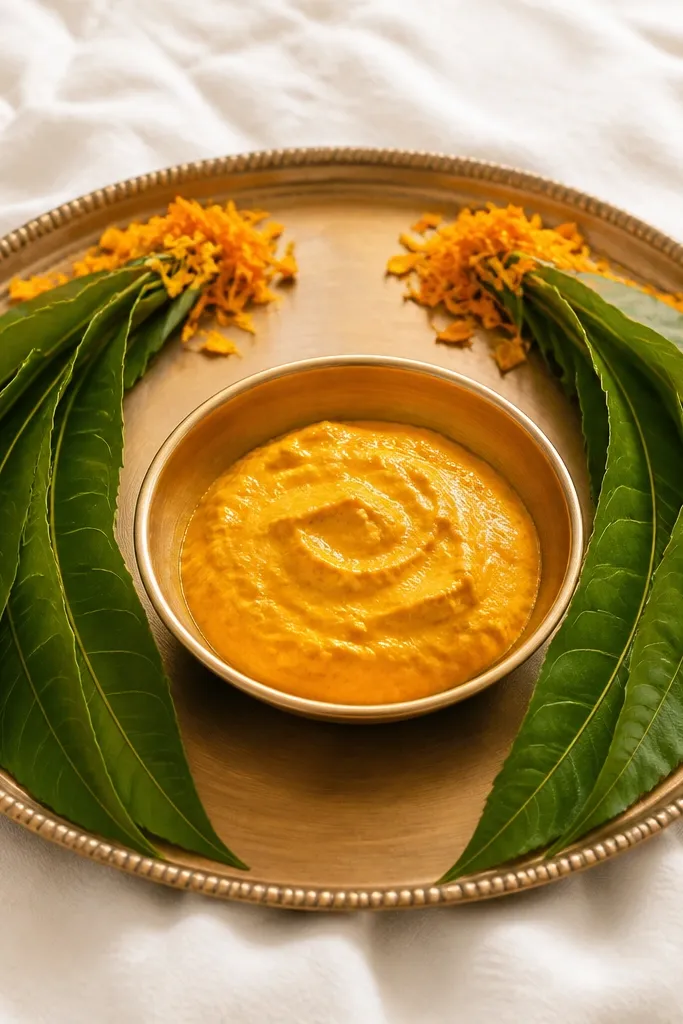
Mango leaf arches make a small haldi setup feel ceremonial without adding height or clutter. The symmetry is what sells it - your eyes immediately find the center because both sides point inward. I've used this when tables are too small for big garlands, and it still looks like a proper haldi mandap moment. This style also suits most skin tones because the green leaves add contrast to turmeric yellow and gold jewelry.
Lay a white cloth or a plain cotton mat under your tray so the green leaves pop. Place the haldi bowl in the center, leaving 3 to 4 inches of space on both sides. Create two arches by folding mango leaves into a gentle curve and tying the base with thin thread or tape. Lean the arches inward so they frame the bowl, then tuck one marigold petal at the top curve of each arch. Keep the arches at the same height so the frame looks balanced.
Try thisSoak mango leaves for 5 minutes if they feel stiff - they bend cleaner.
Common mistakeDon't let the arches cross the bowl line; crossing makes it look messy.
5. Coconut Shell Haldi Bowl with Brown Jute Base
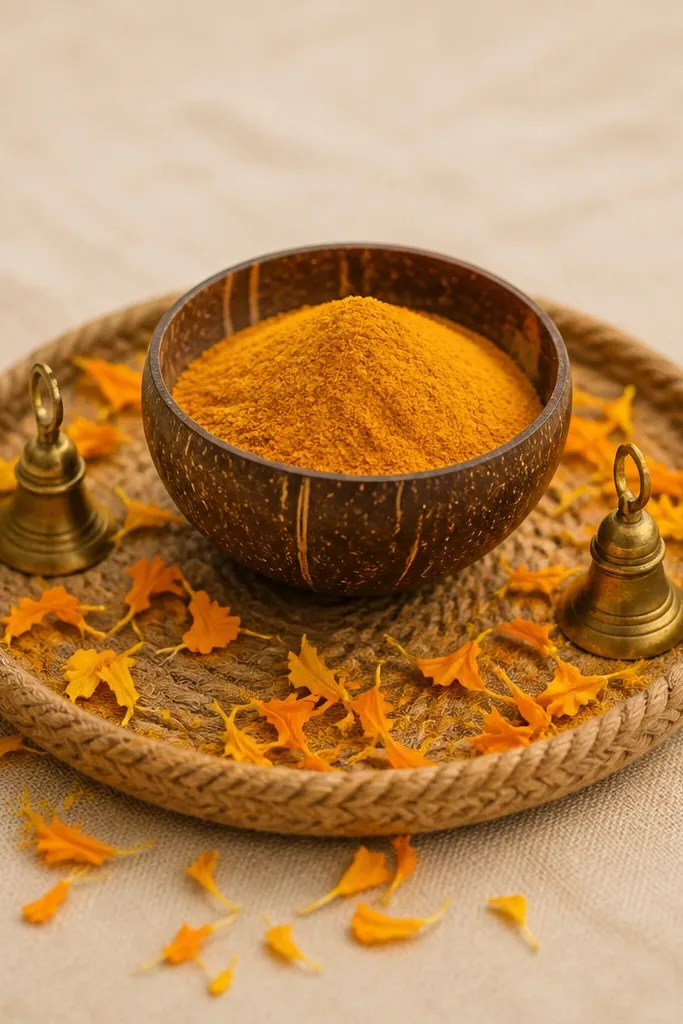
This one looks grounded and handmade, and it works beautifully in small spaces because the coconut shell already has shape. The brown jute base adds texture and hides small table scratches, which matters more than people think when you're working with limited surface area. I've set this up on kitchen counters where the background is busy, and the texture keeps the plate looking styled instead of floating. It flatters deeper outfits and looks warm on all skin tones because the earthy browns balance the bright turmeric.
Wrap a small tray with jute so the wrap is tight and flat, then secure it with a hot glue gun or fabric tape on the underside. Place the coconut shell haldi bowl in the center and keep the shell rim clean. Scatter 8 to 12 marigold petals around the shell but stop before the tray edges so it stays contained. Add one small brass bell on the left and one on the right, each about 2 inches from the bowl. Finish by tying a thin jute ribbon bow near the back edge of the tray.
Try thisWipe the coconut shell with a dry cloth - haldi stains show fast in photos.
Common mistakeDon't use lots of loose twine - it tangles and makes the tray look chaotic.
6. Tea-Light Halo with Glass Candle Cups
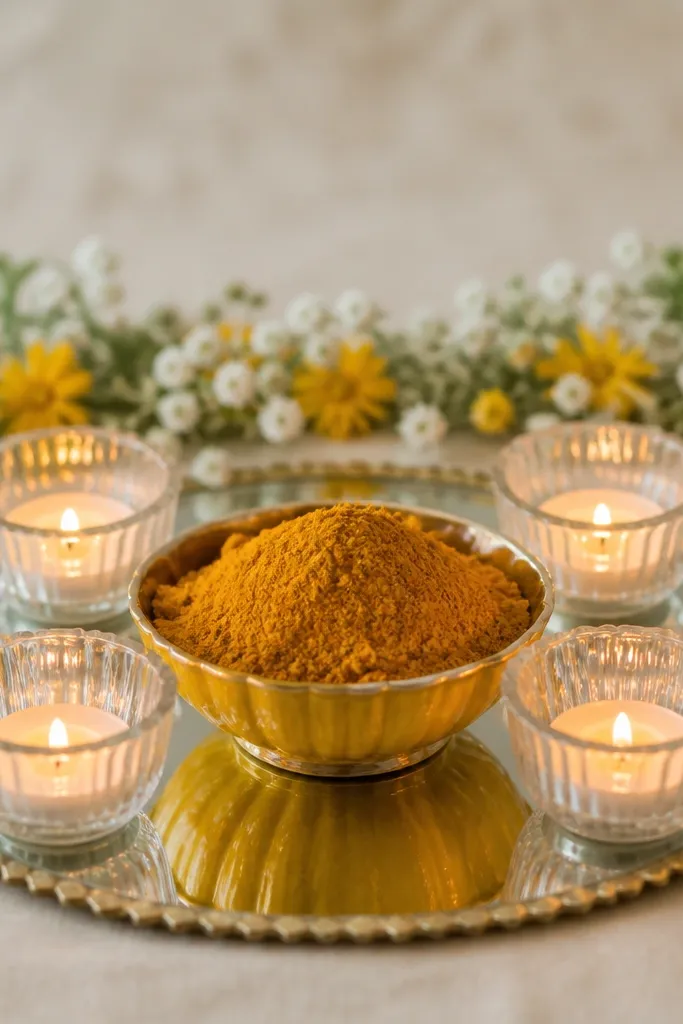
This is the "evening haldi" look that still works when you're tight on space. Glass candle cups give you light without extra height, and the halo pattern frames the bowl automatically. I've used it when there's no room for a full floral arrangement, and it photographs like a centerpiece because the reflections bounce light. The warm flame color matches turmeric and gold, so it flatters people with both warm and cool undertones.
Place a small mirrored tray or silver charger on the table, then center the haldi bowl. Set four glass tea-light cups around the bowl at equal spacing - aim for about 2 to 3 inches from the bowl edge. If you have a garland, tuck a thin line of marigold behind the bowl so it doesn't spill into the cups. Turn on the tea lights and keep the brightness low so the bowl stays the focal point. Add one small leaf or faux jasmine sprig at the front edge of the tray for a clean finish.
Try thisUse flameless LEDs if you're decorating during daytime - they stay neat and safe.
Common mistakeDon't place cups too close to the bowl; it looks cluttered and can cast uneven shadows.
7. Maroon Velvet Runner with Pearl-Edge Plate
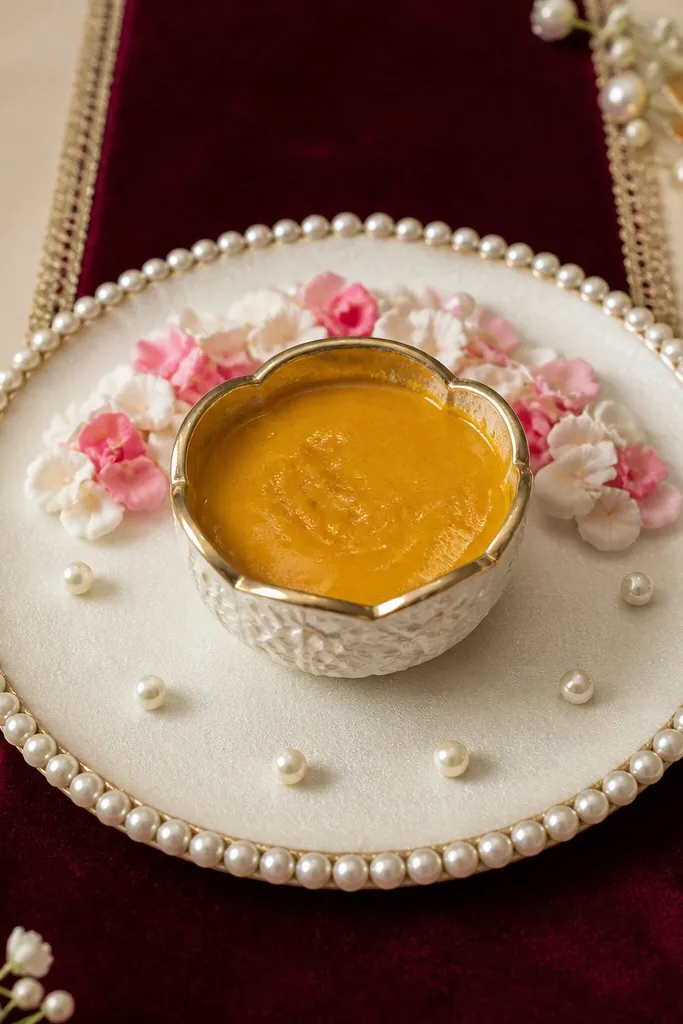
Velvet makes haldi decoration look richer even in a small frame, and maroon pairs perfectly with turmeric gold. The pearl-edge effect ties it to wedding jewelry without needing more objects. This setup looks best when the haldi plate is photographed close-up, because velvet texture and pearls show in detail. It's flattering for medium to deep skin tones because maroon adds depth and the white pearls brighten the scene.
Cut a maroon velvet strip about 10 to 12 inches long and 3 to 4 inches wide, then place it under the haldi plate so it shows from the front. Use a plate with a pearl or pearl-like rim (even a DIY paper rim works if it's smooth). Center the haldi bowl and keep the space around it clean. Create a crescent of faux rose petals behind the bowl, then dot 12 to 18 small pearls in a loose curve around the rim. Finish with one tiny gold charm or foil star near the back edge.
Try thisUse a lint roller on velvet right before the function - it shows every speck in photos.
Common mistakeDon't mix too many flower types; two textures max looks intentional.
8. Lemon and Turmeric Slice Garnish Ring

This is the "fresh and different" look that still reads like haldi decoration. Citrus slices add a clean, bright border and make the plate look like it belongs on a food styling set, not a crowded table. I like it when the rest of the room is neutral, because the yellow slices match turmeric and create harmony. It also works for people who want a more modern aesthetic - no heavy garlands needed.
Use a light wood tray or a beige charger so the lemon slices look crisp. Center the haldi bowl, then place thin lemon slices around it in a tight ring about 1 inch away from the bowl. Add 2 to 3 small turmeric roots laid lengthwise as accents, not as a full layer. Tuck tiny herb leaves like mint or basil between slices for green contrast. Put one marigold petal at the front so it keeps a traditional touch.
Try thisIf slices start to dry, replace them right before photos - the ring looks best fresh.
Common mistakeDon't add too many wet items; watery slices can smear the tray and look messy.
9. Printed Silk Scarf Knot Around the Tray
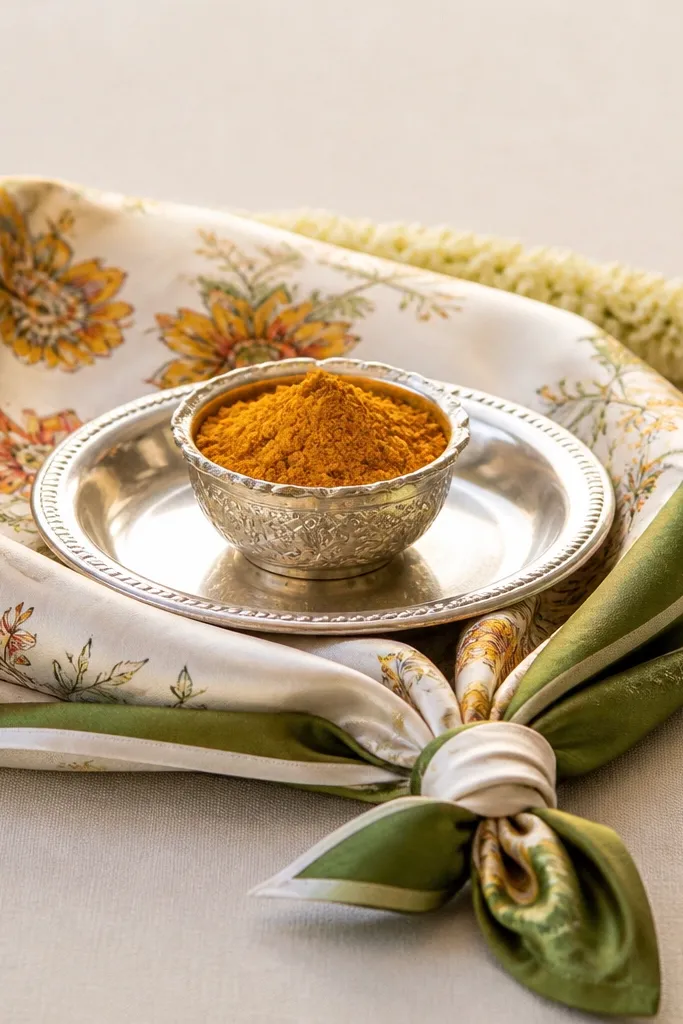
A silk scarf trick saves you when you don't have space for multiple decor pieces. The knot gives structure, so the tray doesn't look like it's sitting on bare table. I've done this in small apartments where the background is cluttered, and the scarf pulls the eye into a neat frame. Choose prints with one dominant color - turmeric gold with maroon or teal - so the scarf supports the haldi rather than competing.
Lay the scarf flat and center the tray on it. Pull the scarf's front corner up and tie a small knot, keeping it about 2 inches high so it stays compact. Place a simple silver or matte gold plate on top of the tray, then center the haldi bowl. Add a thin garland line behind the bowl so it forms a backdrop, not a pile. Finish by tucking two petals near the knot for a small "repeat" of the flower color.
Try thisUse a scarf with a smooth edge; frayed edges look messy in close photos.
Common mistakeDon't use a scarf with loud multi-color prints; it makes the plate look busy.
10. Marigold + Baby's Breath in a Micro Bouquet
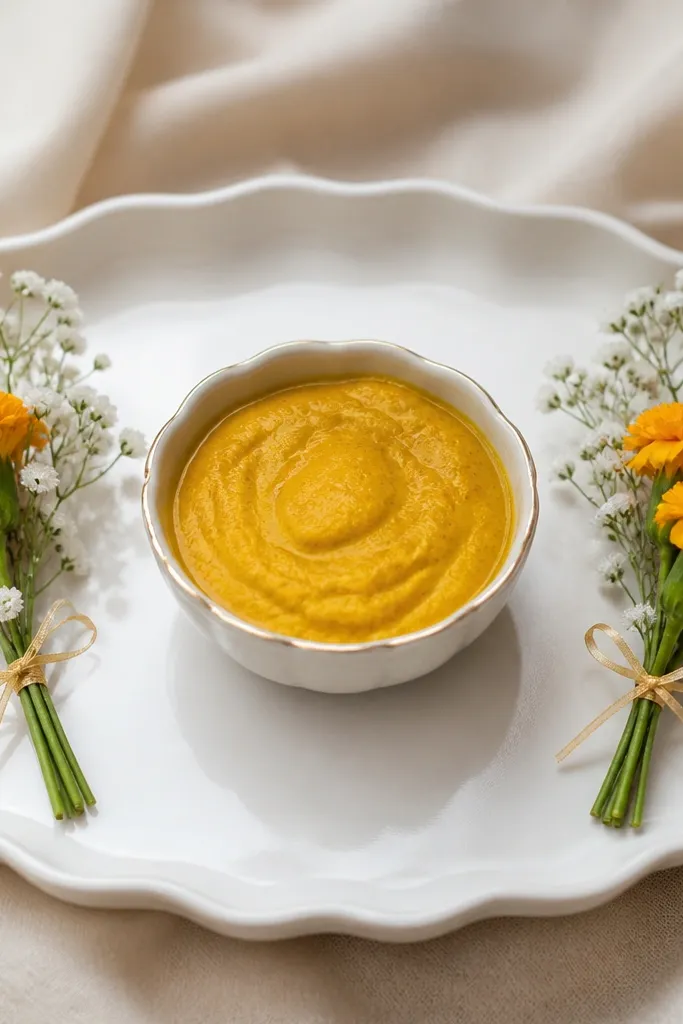
If you want flowers but don't want a big garland, micro bouquets give you the same "wow" with way less space. Baby's breath adds airy softness, and marigold keeps the tradition strong. I've used this when the haldi plate is on a narrow console table and the room is already full of other decor. It looks flattering in both bright and neutral settings because the white baby's breath balances turmeric and keeps the palette light.
Use a white tray and place the haldi bowl in the center. Make two tiny bouquets using 3 marigold buds each and 4 to 6 baby's breath stems, tied with thin ribbon. Place one bouquet on the left and one on the right, leaning them slightly inward so they frame the bowl. Keep the ribbon ends trimmed so they don't hang into the tray. Add two small loose marigold petals at the front edge to connect the bouquets to the center.
Try thisMist baby's breath lightly with water and wrap stems in tissue to keep them from wilting fast.
Common mistakeDon't make bouquets tall; anything higher than the bowl rim looks top-heavy.
11. Mirror Work Border on a Black Tray
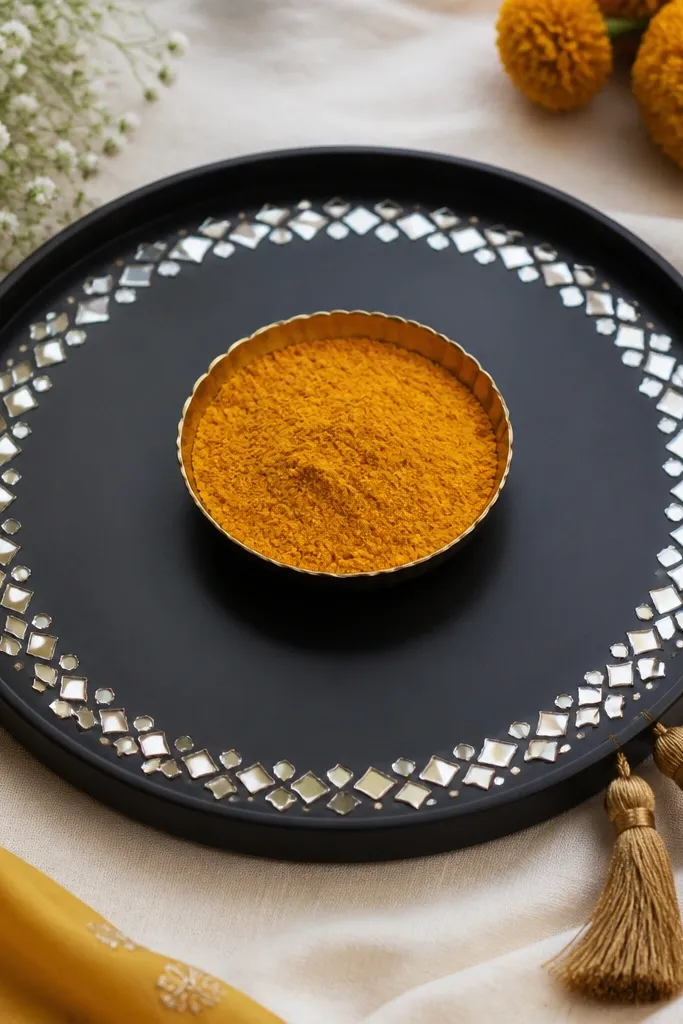
Mirror work on a black base is my go-to when I need drama in a tiny setup. The mirror pieces reflect light and make the haldi look more festive without adding more flowers. I like this for evening functions because the reflections show even under warm indoor lighting. It also flatters deeper skin tones and works with both gold and oxidized jewelry because the mirror gives the shine.
Place a black tray on the table and center the haldi bowl. Create a ring border using small mirror-work tiles or mirror-sticker pieces, keeping them within a 5 inch radius of the bowl. Arrange the mirrors in a repeating pattern (like diamond then gap) so it looks designed, not random. Add two small jute tassels at opposite edges of the tray, each about 2 inches from the center. Finish with one tiny gold foil dot near the front so you get a second sparkle source.
Try thisWipe mirror pieces with a dry microfiber cloth so fingerprints don't show on camera.
Common mistakeDon't use mirror on a glossy black plate without contrast; glare can wash out the bowl.
12. Red Rose Petal Scatter with a Brass Bow
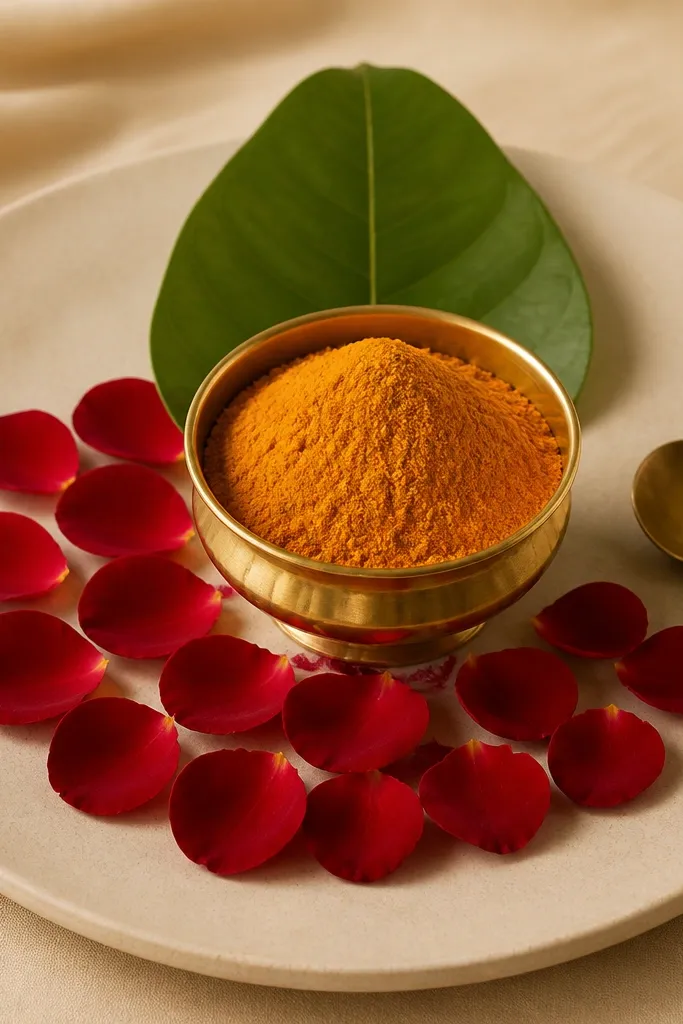
This is romantic haldi decor that still stays compact. Red rose petals give you a strong color story, and the brass bowl makes it look intentional even if the rest of the table is simple. I've used this in homes where the couple's wedding theme is red and gold, and it matches without needing extra garlands. It flatters fair to medium skin tones because red adds warmth, and the green leaf keeps the palette from looking flat.
Start with a cream charger or a light base so red petals stand out. Place the brass bowl at the center and keep the rim clean. Scatter rose petals in a fan shape on one side and lightly mirror a few petals on the opposite side so it looks balanced. Add a single green leaf behind the bowl for a backdrop effect. Place one small brass spoon or mini katori at the side, about 2 inches away from the bowl, so it looks like styling, not clutter.
Try thisUse petals that are dry on the edges; wet petals clump and look uneven.
Common mistakeDon't scatter petals in all directions; that looks like a mess on a small surface.
13. Khadi Cotton Base with Threaded Tassel Corners
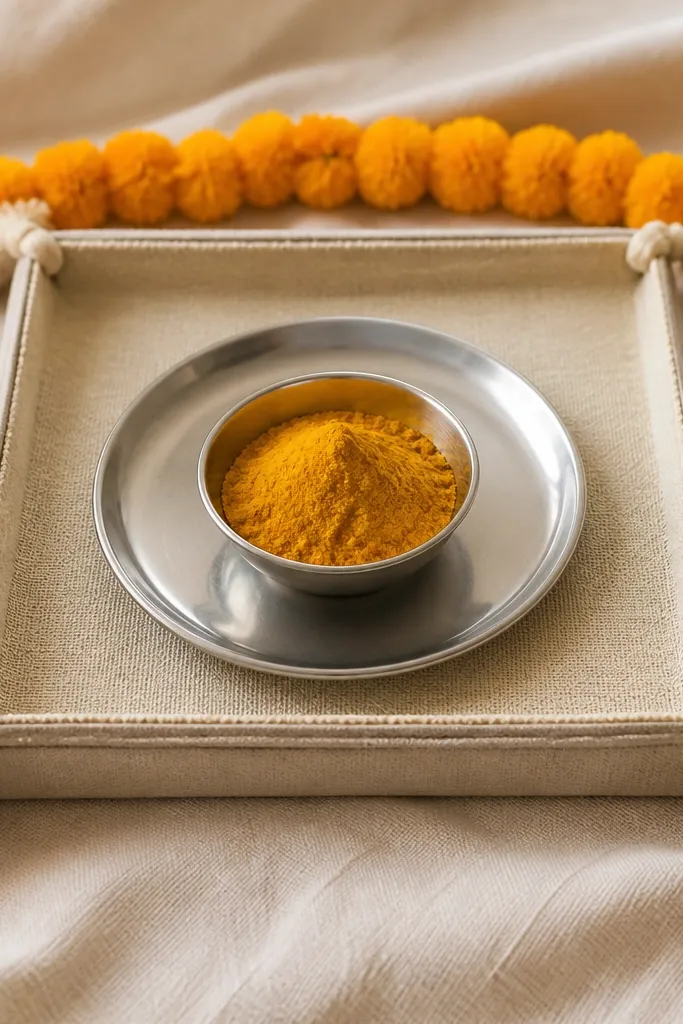
Khadi cotton gives you a matte, textured foundation that makes haldi look grounded and classy. Tassel corners add detail without taking up space, and steel or matte plates keep the look clean. I use this when the table background is a wall with cables or outlets - the cloth hides messy edges and makes the arrangement look finished. It flatters everyone because neutral beige works with any outfit color, and the steel reflects light softly without looking shiny.
Cut a square of khadi cotton slightly larger than your tray. Place the tray on top and pull the cloth edges tight underneath so it doesn't wrinkle. Tie tiny tassels at two visible corners using beige thread bundles - keep each tassel about 1.5 inches long. Center the haldi bowl on a steel plate inside the tray. Add a thin marigold line at the back edge of the tray, then tuck the ends under so nothing hangs.
Try thisIron the cloth lightly on low heat so the surface stays smooth under the bowl.
Common mistakeDon't use glossy satin cloth; it wrinkles and looks cheap next to steel.
14. Rainbow Rangoli Dot Strip on the Front Edge
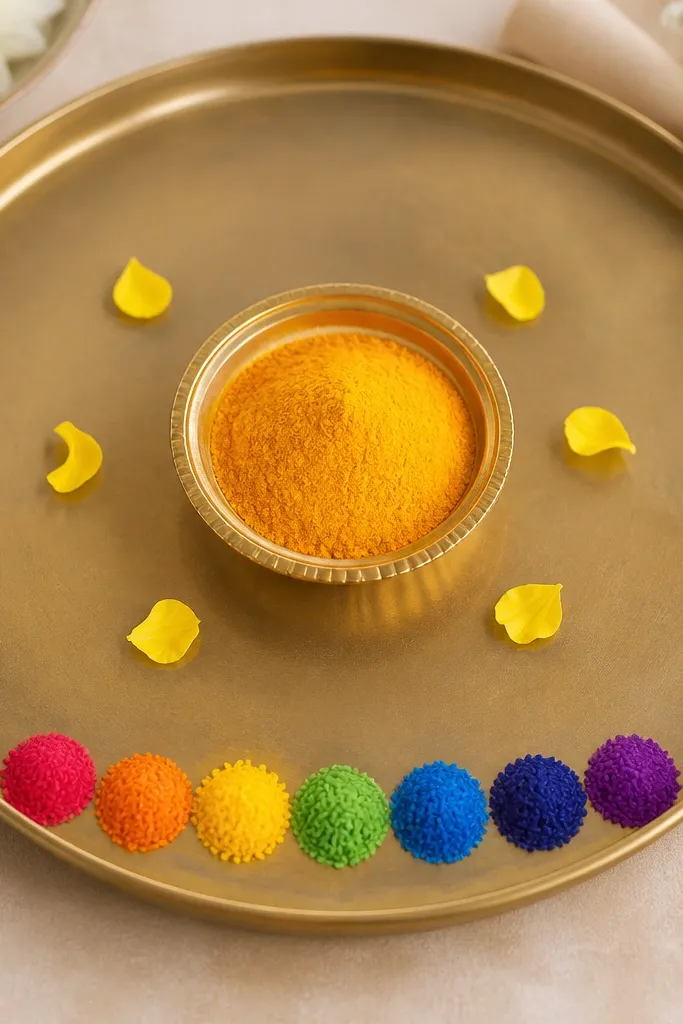
This one is a smart trick when you don't have room for full rangoli but still want color. The dot strip stays on the front edge, acting like a border that frames the plate instantly. I've used it on small kitchen counters where the sides are cluttered - keeping the design to one edge makes it look neat. It works for any skin tone because the colors are controlled and the center stays calm.
Place your haldi bowl centered on a tray or charger. Leave the top area around the bowl mostly empty - just 6 to 10 petals max. On the front edge of the tray, create a straight rainbow dot strip using colored rice or powder: red, orange, yellow, green, blue, purple in small dots. Keep the strip length about the tray width minus 1 inch on each side. Add one tiny gold element near the bowl center, like a small foil star, so the palette doesn't feel purely playful.
Try thisMake the dot strip with a toothpick for consistent dot size.
Common mistakeDon't color the entire tray - the center needs breathing room.
15. Gold Tambourine Foil Frame Around the Plate
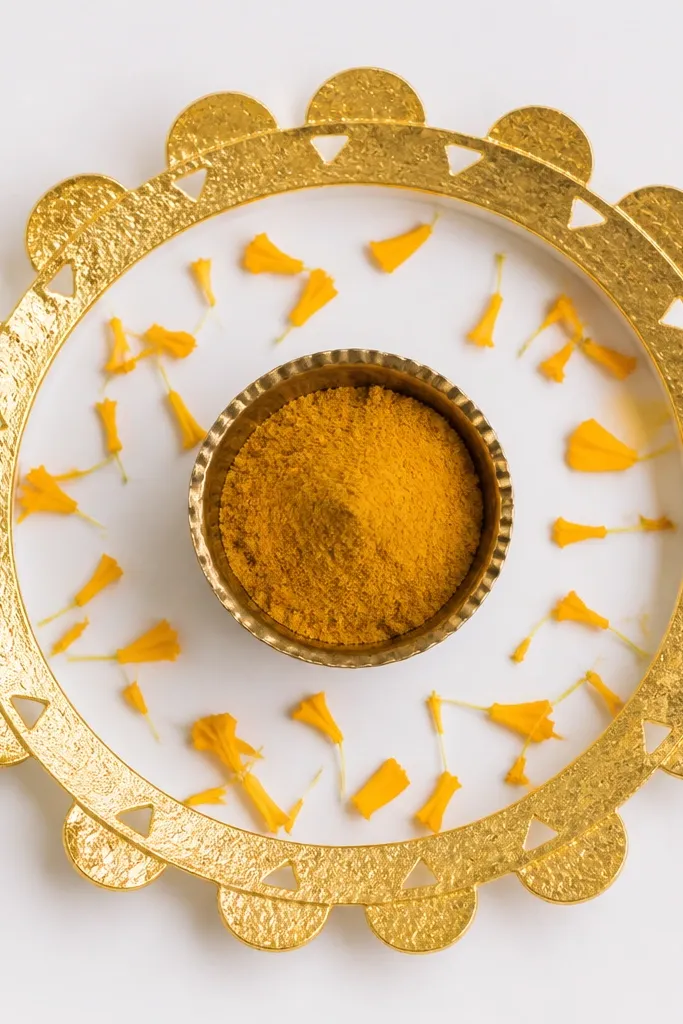
Foil frames make small haldi decoration look like a planned set because they create a hard boundary. The tambourine style cutouts reflect light and make the plate look more dimensional without adding height. I use this when the room lighting is harsh or flat - foil adds contrast and makes the bowl look brighter. It also works with warm and cool outfit palettes since gold sits in the middle and repeats jewelry tones.
Start with a plain white base under your tray or plate. Center the haldi bowl and place a gold foil circle frame around it, leaving a 1.5 to 2 inch gap between bowl and foil. If the foil is stiff, angle it slightly so it catches overhead light. Scatter 8 to 12 marigold petals inside the foil circle only. Add a single green leaf at the front edge of the bowl for contrast, then tuck any loose foil ends flat.
Try thisIf you're using DIY foil, rub it with a clean cloth to remove creases before placing.
Common mistakeDon't use foil plus heavy garlands; it turns into too many textures fighting.
16. Single Long Marigold Garland Loop
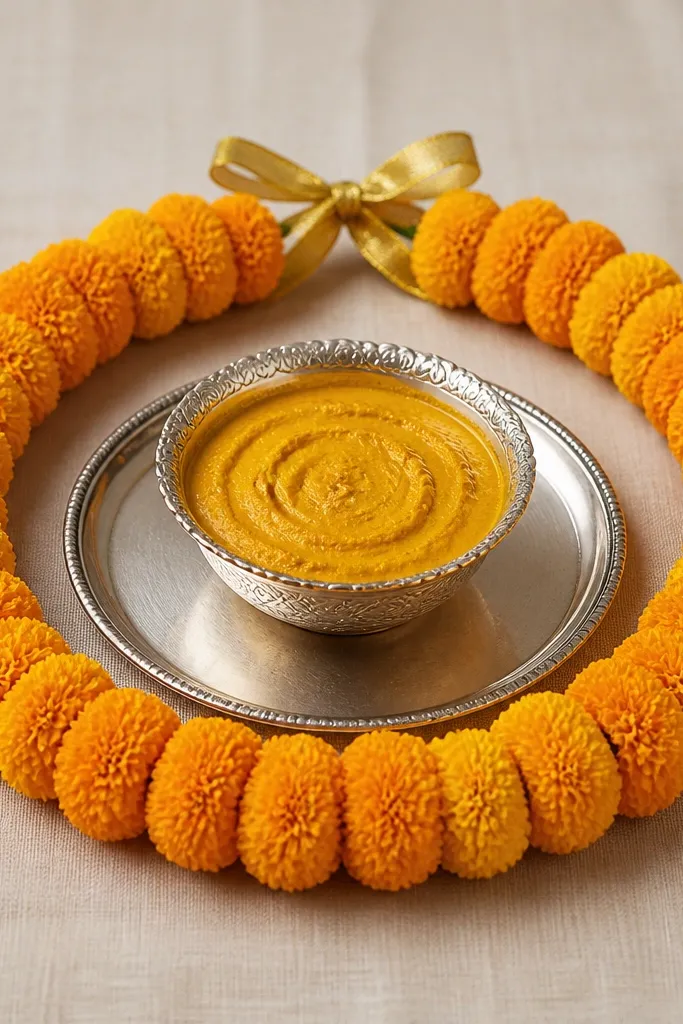
One clean garland loop is the simplest way to get a festive frame in limited space. You get the traditional marigold look, but you avoid the bulky stack that eats table area. I've used this on narrow side tables where there's literally no room for multiple props, and it still looks like a centerpiece. This style flatters most outfits because it's one color and one shape - it doesn't compete with jewelry or clothing.
Place a silver plate on your table and center the haldi bowl. Take a long marigold garland and loop it into a circle around the bowl, keeping the loop diameter about 8 inches. Tie the garland ends at the back with a small gold ribbon or thread. Make sure petals face outward so the garland looks fuller in photos. Add two tiny petals on the front edge to connect the loop to the bowl without crowding.
Try thisUse a garland that's slightly long - extra length lets you keep spacing even.
Common mistakeDon't bunch the garland in one spot; uneven gaps look sloppy.
17. Pastel Balloon-Style Flower Ring with Paper
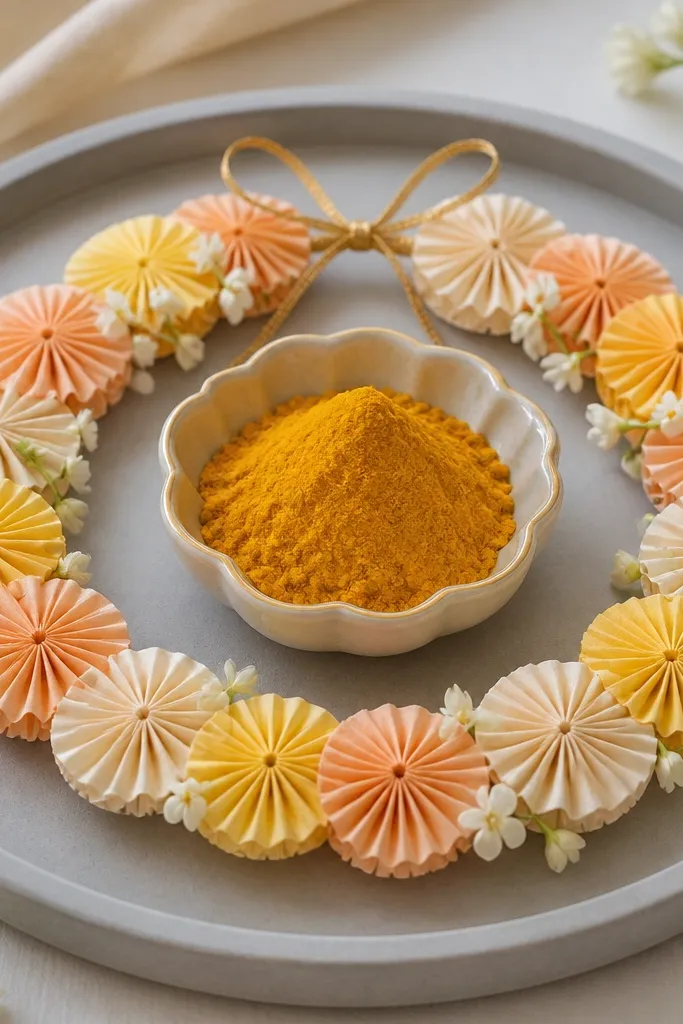
Paper rosettes sound like a kids' craft until you place them like this - then they look like a styled party prop. The pastel ring creates a soft halo around the haldi bowl and makes the turmeric look brighter against grey or white tables. I like this when you're working in a small space with no fresh flowers, because paper holds its shape and stays neat for hours. It flatters fair to medium skin tones because pastels are gentle and don't overpower the scene.
Use a light grey tray or matte white charger as the base. Center the haldi bowl and keep the area around it clean. Make or buy small paper rosettes and arrange them in a circle around the bowl, aiming for a 7 to 8 inch diameter ring. Tie the ring at the back with a thin gold ribbon so the rosettes stay snug. Add 2 to 3 faux jasmine sprigs behind the bowl to give a little organic texture.
Try thisDust paper rosettes with a tiny amount of glitter glue spray - just a light mist, not heavy sparkle.
Common mistakeDon't pack rosettes too tight; gaps make it look handmade in a good way.
18. Banana Leaf Base with Marigold Corner Clusters
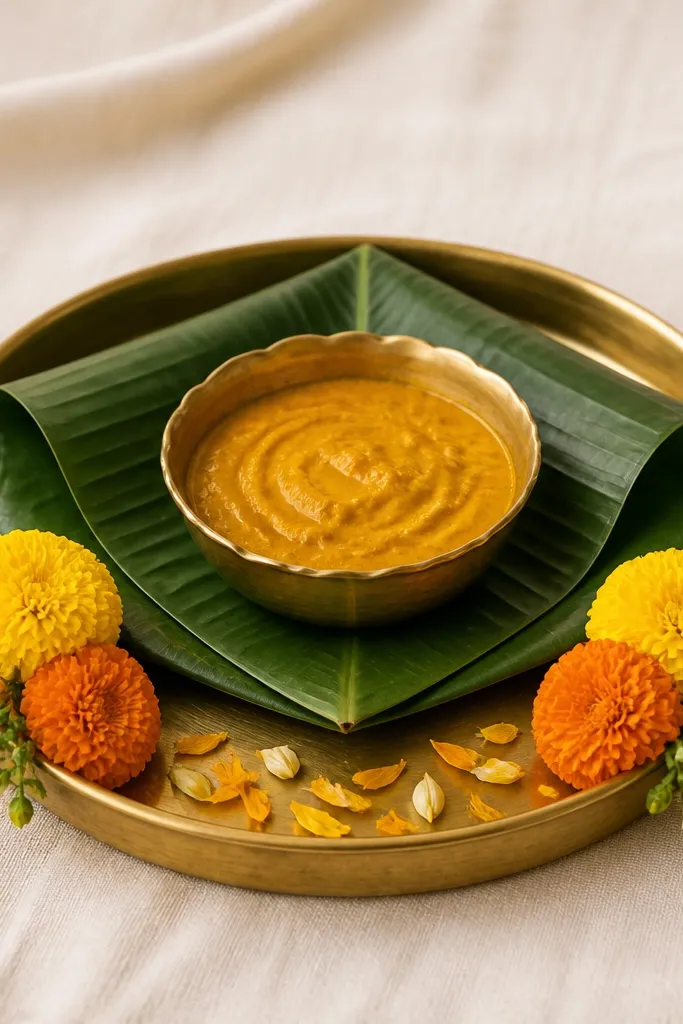
Banana leaf gives you that authentic haldi feel and it also solves a practical problem: it covers the tray base so you don't need extra fabric. The leaf texture looks good in close photos and makes the haldi bowl feel grounded. I use this when the table is too small for a runner and you still want tradition visible. It works for all skin tones because the green balances turmeric and makes the gold jewelry look shinier.
Place a banana leaf flat and fold its edges up slightly to form a shallow bowl shape. Put the banana leaf on a small tray and center the haldi bowl on top of it. Add marigold corner clusters on the front left and front right - each cluster should be no bigger than a walnut. Scatter a few petals between the clusters but keep the center open around the bowl. If you have, place one small leaf behind the bowl as a backdrop so the center looks framed.
Try thisWipe the leaf with a dry cloth to remove any sticky residue before you place haldi.
Common mistakeDon't overlap too many leaves; overlapping can look like a pile instead of a base.
19. White Linen Folded Napkin Frame
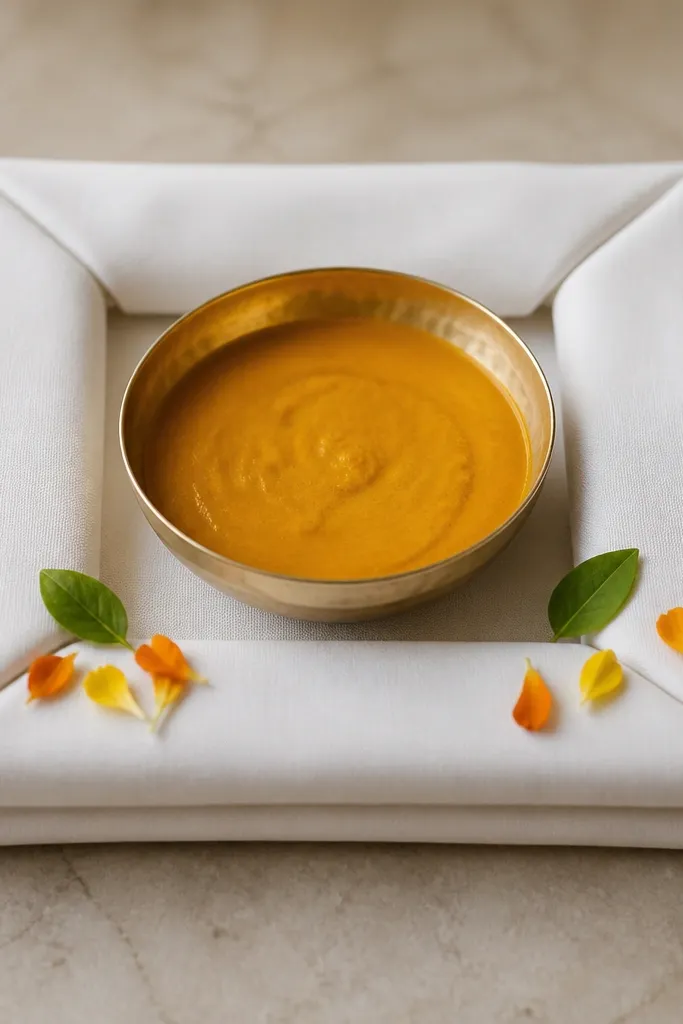
Crisp linen frames are the small-space cheat code when you want a modern, clean look. The sharp folds create structure so the plate doesn't feel like it's floating on a bare table. I use this when the function is in a venue with busy lighting or patterned tablecloths - linen edges still look tidy in photos. It flatters everyone because it's neutral and lets turmeric and gold do the talking.
Place a white linen napkin under your haldi tray and fold it into a square frame with edges about 2 inches wide. Center the haldi bowl on the plate so it sits directly in the napkin opening. Add two small green leaves at the left and right front edge and 6 to 10 marigold petals near the front only. Keep the back side plain so it doesn't look crowded. If you want a sparkle, place one small gold foil confetti dot near the napkin front corner, not around the bowl.
Try thisUse a fabric steamer or iron on low so the folds stay crisp.
Common mistakeDon't use soft, wrinkled linen; it makes the whole setup look rushed.
20. Rangoli Thali with Brass Bowls on One Side
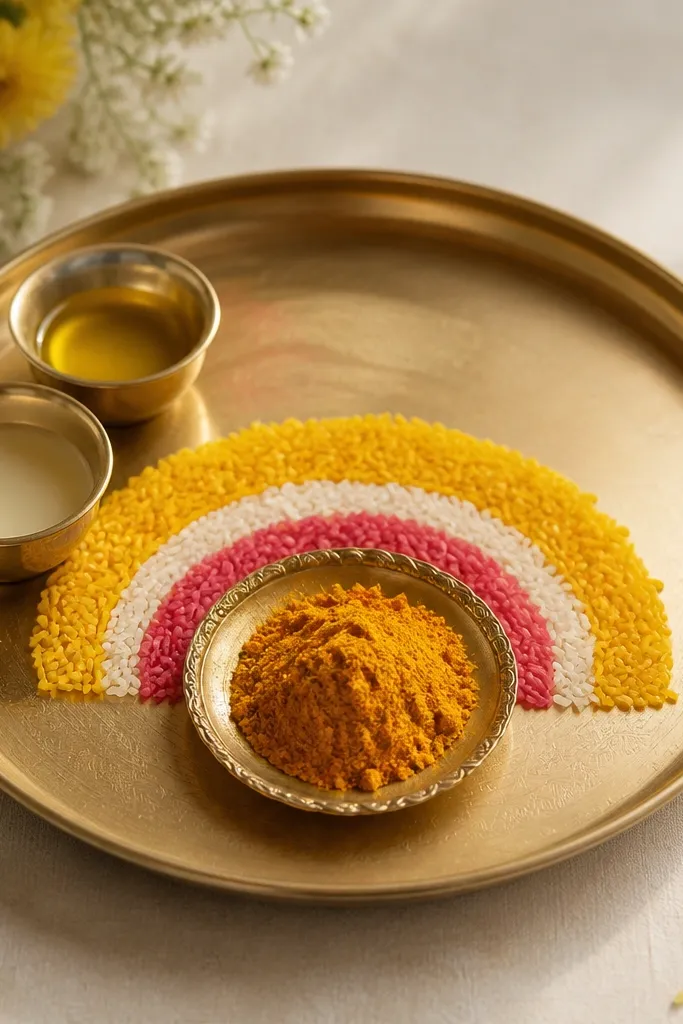
This is a layout trick that looks balanced even on tiny tables: you add extra elements to one side only. The colored rice arc gives you a traditional feel, while the paired brass bowls add richness without cluttering the center. I've used this when I'm decorating in a corner of the room and need the plate to look full from one main viewing angle. It flatters people with statement jewelry because brass and turmeric match gold bangles and earrings.
Use a thali or round tray as your base and place the haldi bowl in the center. Behind the bowl, draw a partial arc with colored rice - about 6 inches wide and 2 inches tall. On the right side of the tray, place two small brass bowls close together, aligned vertically so they don't spread. On the left side, keep it mostly empty except for 5 to 8 petals near the front. Finish by adding one small marigold bud at the top of the rice arc for a clean focal point.
Try thisKeep the rice arc airy - thin lines look more premium than thick piles.
Common mistakeDon't mirror the extra bowls on both sides; symmetry on a small tray can look overcrowded.
21. Velvet Maroon Mini Arch + Single Pearl Drop
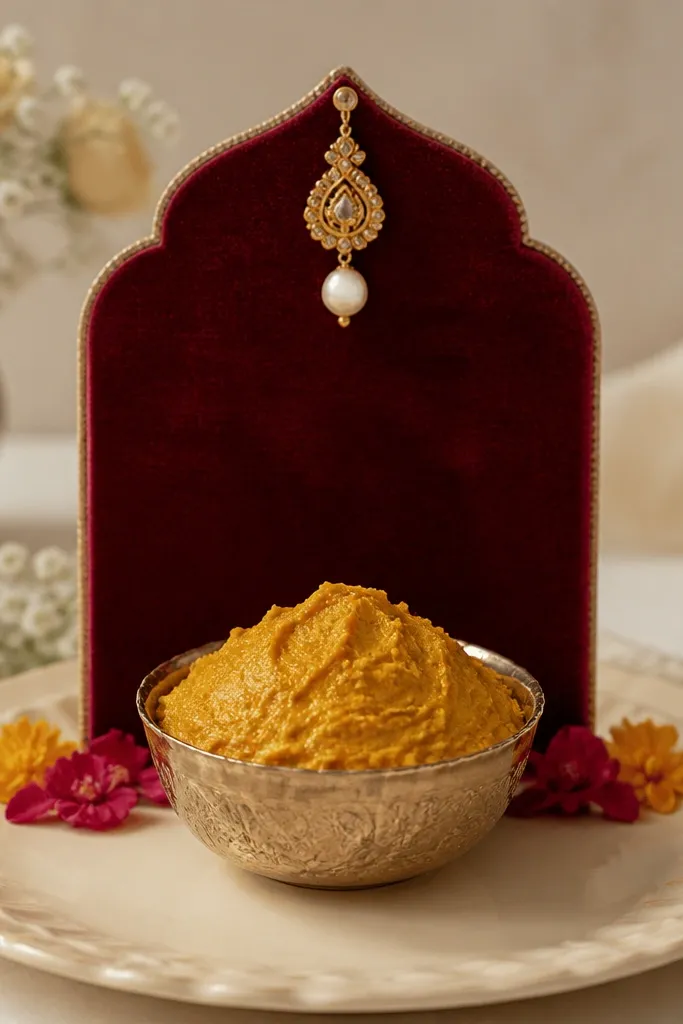
A mini arch gives you depth even when you can't add height with tall decor. Velvet looks plush and hides small gaps in your arrangement, and the single pearl drop creates a focal sparkle without needing many ornaments. I like this for indoor haldi when the background is plain - the arch makes the plate feel like it's in a frame. It flatters medium to deep skin tones because maroon is a strong match for gold and turmeric, and the pearl drop brightens the center.
Place a cream plate or charger on the table and center the haldi bowl. Cut a small maroon velvet piece and pin it into an arch shape behind the bowl, about 7 inches wide and 5 inches tall. Make sure the arch doesn't touch the bowl - keep a 2 inch gap. Add a single pearl drop ornament at the arch center, then place 6 to 8 petals at the base of the bowl. If you want extra polish, add one tiny gold foil star on the left side of the arch base.
Try thisUse double-sided tape for the arch base so it stays firm during photos.
Common mistakeDon't use multiple pearl drops; one looks intentional, many looks like costume jewelry.
22. Turmeric Ribbon Bow with Green Leaf Confetti
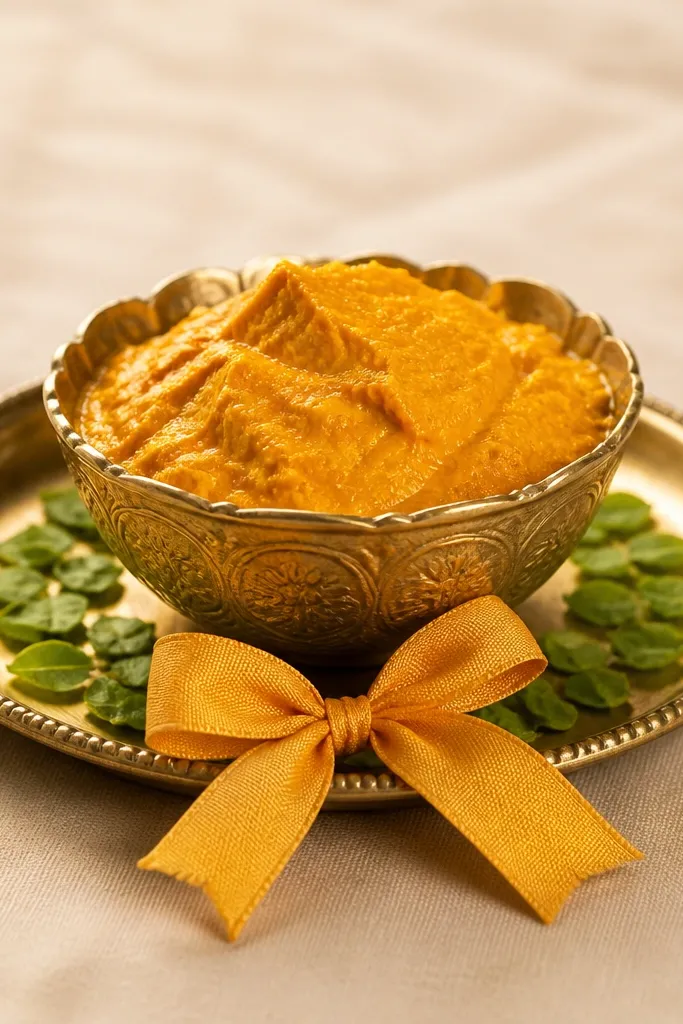
This is a sweet, simple look that makes the haldi plate feel styled even if you have almost nothing else on the table. A turmeric-gold ribbon bow gives you a clear "present" shape, and green leaf confetti adds natural contrast without taking up space. I use it when I want the decor to match saree borders or lehenga dupattas - the ribbon color repeats the outfit. It flatters all skin tones because beige and green are neutral and the gold ribbon ties to jewelry.
Place a beige cloth or plain neutral mat under a small tray. Center the haldi bowl on a simple plate and keep the space around it clean. Tie a turmeric-gold ribbon bow at the front edge of the tray, with loops about 3 inches wide. Scatter 12 to 16 tiny green leaf confetti pieces or cut mint leaves (if clean and dry) around the bowl base, staying within a 5 inch radius. Add one marigold petal at the back edge near the ribbon so it looks connected.
Try thisCut leaf confetti from faux silk or use thin green felt so it doesn't wilt.
Common mistakeDon't use a ribbon that's too shiny; glossy ribbon can look like cheap gift wrap in close photos.
23. Gold Bracelet Chain Loop Frame
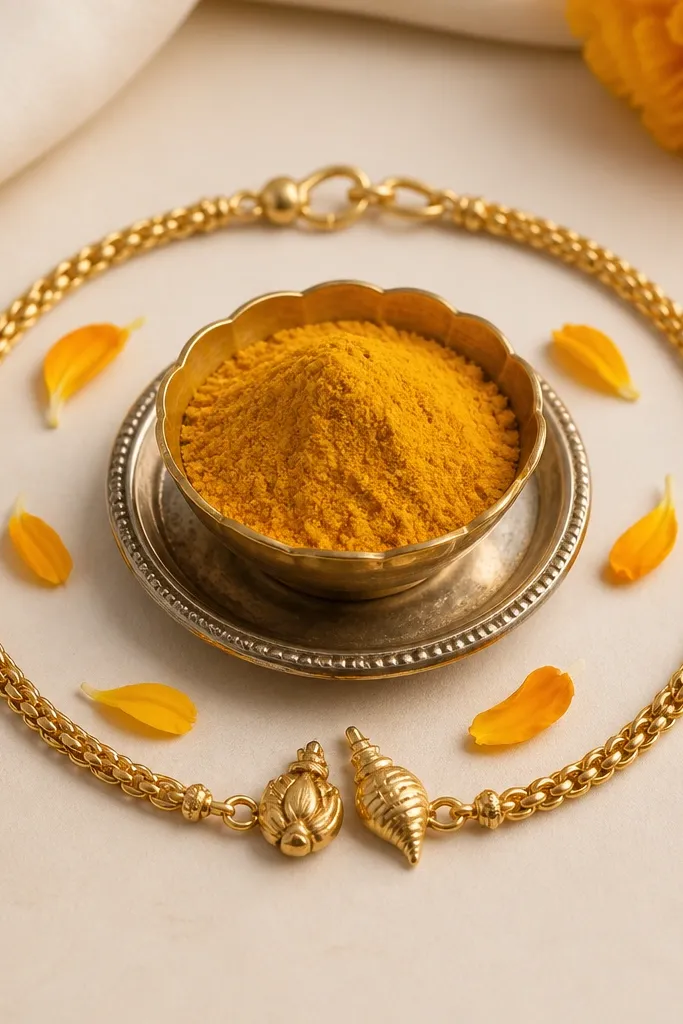
This is one of my favorite "limited space" tricks because jewelry materials already look decorative. A gold bracelet chain laid in a loop creates a clean boundary, and the charms add sparkle without extra bulk. I've done this for haldi in small bedrooms where the table is barely wide enough for the plate - the chain frame makes it look like a styled set. It flatters everyone because gold matches turmeric and most outfit jewelry tones.
Set your silver or matte gold plate on the table and center the haldi bowl. Lay the gold bracelet chain in a circle around the bowl, leaving about 1.5 to 2 inches of gap from the bowl edge. If the chain has clasps, tuck them at the back so the front looks smooth. Add 8 to 12 marigold petals inside the circle only, keeping them evenly spaced. Place two tiny gold charms near the front edge of the chain circle, not on the bowl rim.
Try thisUse a chain with flat links - round links can shift and break the circle shape.
Common mistakeDon't let the chain touch the plate surface directly; it can slide and look accidental.
24. Banana Leaf + Rose Bud Backdrop Line
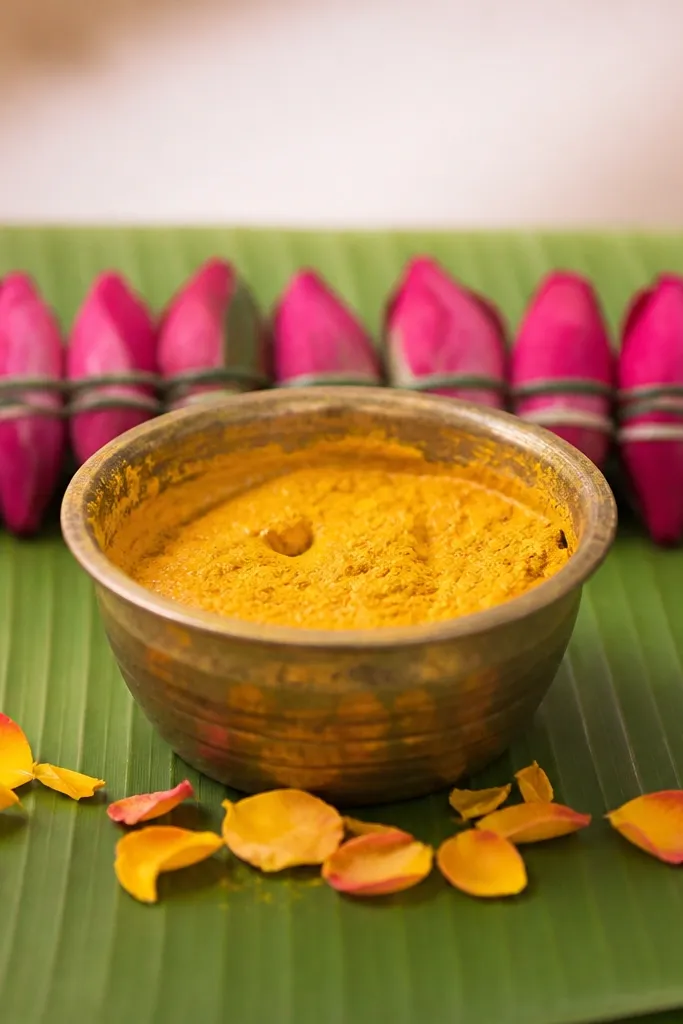
This is a clean hybrid when you want traditional leaf texture plus a floral backdrop without filling the table. The banana leaf anchors the bowl, and the straight rose bud strip creates depth like a mini wall behind the center. I like it for small spaces because the rose buds stay in a line, so you don't lose table space or clutter the frame. It flatters medium and deep skin tones because rose pink/red adds a strong contrast to turmeric yellow and green leaf.
Fold a banana leaf into a shallow base on your tray and place the haldi bowl centered. Create a rose bud strip by tying 5 to 7 rose buds together with thin thread, then place it behind the bowl so it forms a straight backdrop. Add 6 to 10 petals at the front base of the bowl only. Keep the sides of the tray mostly empty. If you want a small sparkle, tuck one tiny gold foil leaf at the lower edge of the rose strip.
Try thisCut banana leaf edges cleanly so they don't look jagged in close-up shots.
Common mistakeDon't make the rose strip too tall; keep it just above bowl height.
25. Terracotta Pot Mini Base with Marigold Pom-Poms
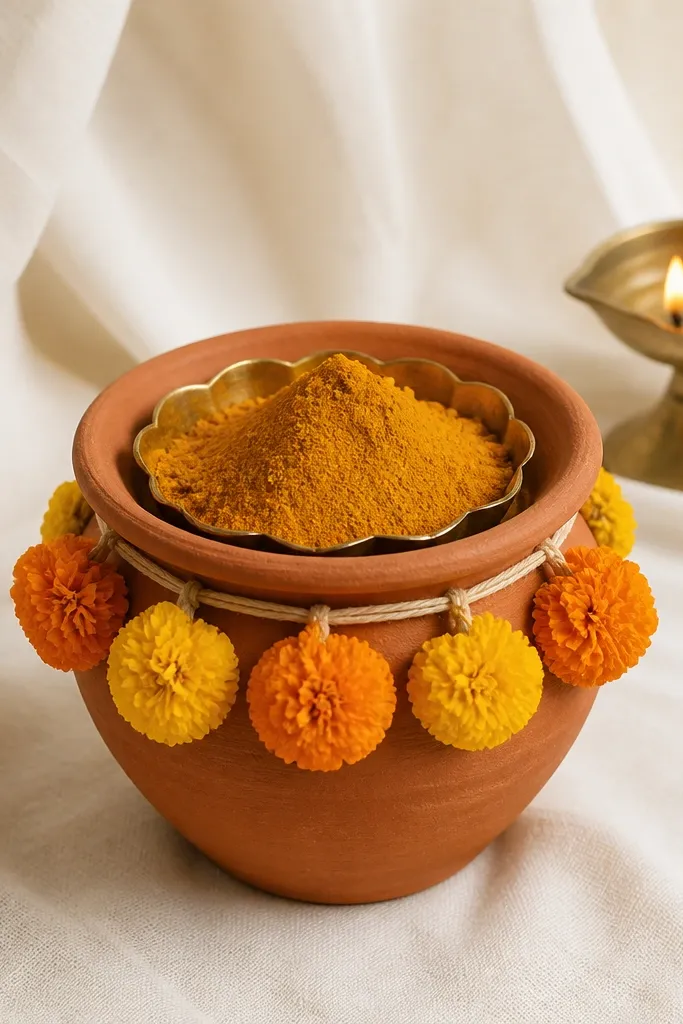
Terracotta makes haldi decoration look handmade and warm, and it's great for small spaces because the pot already creates height and structure. Marigold pom-poms add volume without needing a full garland. I use this when the couple's home decor is earthy or when the table is plain and needs texture. It looks best on neutral outfit palettes and flatters warm undertones because terracotta and turmeric feel naturally connected.
Place a small terracotta pot on the table and set the haldi bowl on top or inside the pot opening. Tie marigold pom-poms around the rim using thin thread or ribbon, keeping them evenly spaced. Add a small brass diya behind the pot, centered, so it doesn't crowd the front. Scatter only a few petals on the front side - keep it under 10. Finish by wiping any dust off the terracotta so it looks clean in photos.
Try thisIf you're using fresh marigolds, wrap the pom-pom ties tightly so they don't fall.
Common mistakeDon't pack pom-poms so tightly that the pot rim disappears - you still need the terracotta shape.