1. Maroon Velvet + Ivory Sheer Mandap Wall
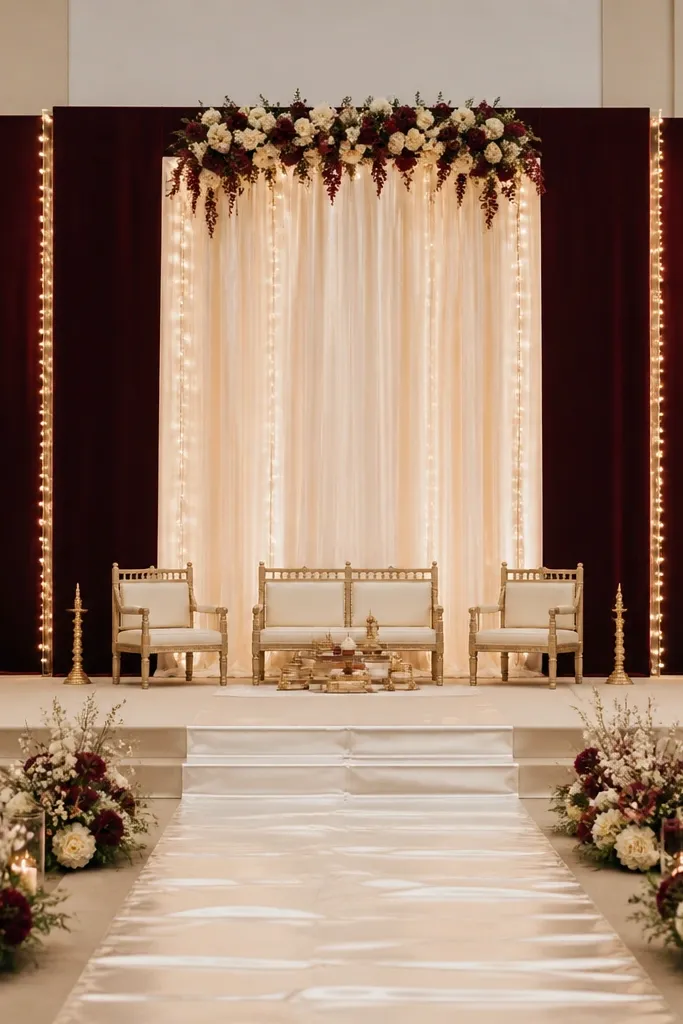
This look works because velvet gives you strong shape and the ivory sheer adds movement without clutter. I've done it for both haldi and sangeet when the outfit palette is maroon and gold - the stage doesn't fight the clothes, it frames them. The maroon reads flattering on most skin tones under warm lighting, and the ivory keeps the photos from looking too dark. Keep the floral palette to maroon, cream, and a touch of antique gold so it feels traditional instead of modern. The key styling principle is contrast: solid rich fabric behind, airy light fabric in front.
Start by covering a straight backdrop frame with maroon velvet panels, leaving a 2-3 inch gap between panels so it doesn't look flat. Drape ivory sheer in three vertical falls across the center, then gather the top ends with small pearl pins or tie-backs. Add a thin garland line (maroon and cream) along the top edge and repeat one small cluster at eye level on the center. Finish the floor with an ivory satin runner that's wide enough to show fabric texture (about 4-6 feet wide). Shoes and footwear photos look best when you place a small ring of rose petals just in front of the runner's center.
Try thisUse warm white lights (2700K) behind the sheer so the ivory glows instead of turning grey in photos.
Common mistakeAvoid using only maroon curtains - without sheer layering, the backdrop looks like a tent.
2. Peacock Teal Draped Jaal Backdrop
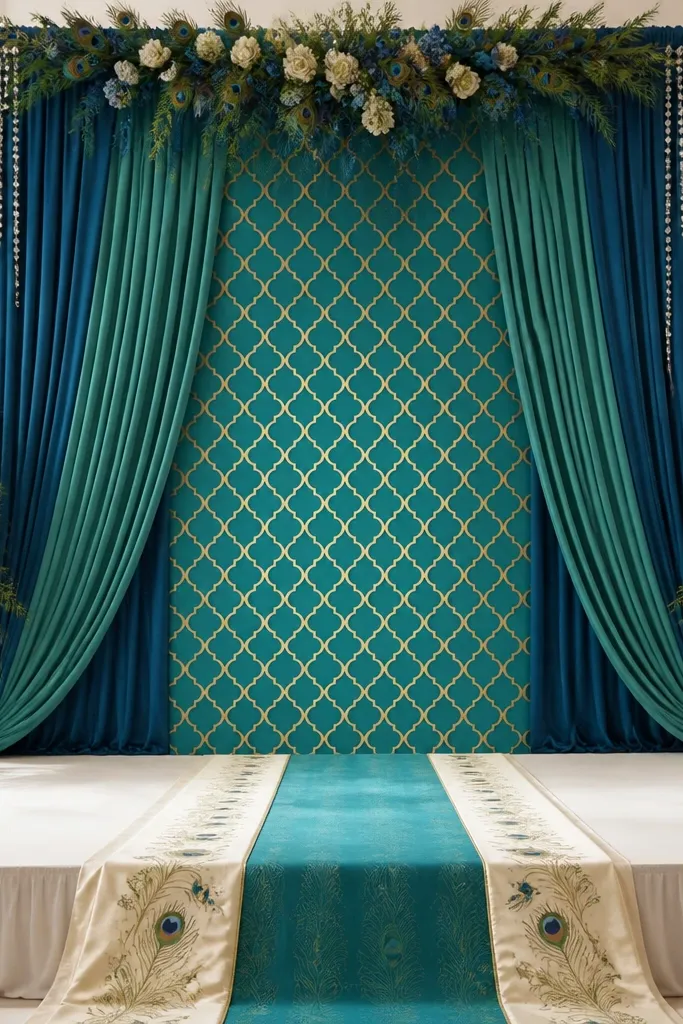
A jaal-style backdrop creates texture even when you don't have massive flower budgets. Teal and peacock blue look striking against gold jewellery, and the net pattern adds depth from the sides. I've used this for wedding ceremonies where the bride's outfit has a cool-toned teal or blue base - it makes her details pop. The dangling beads catch light as people move, so the stage looks alive in videos. The styling principle is pattern first, then soft drape around it.
Begin with a rigid jaal panel or net stretched tight on a frame, centered and tall (around 7 feet). Hang teal satin drapes on both sides with a slight inward angle so the center looks deeper. Place two hanging bead lines from the top corners to about 4 feet, keeping them symmetrical. Add a small floral swag at the top center using peacock blue, teal, and white flowers, then repeat a mini version on each side at mid-height. Lay a teal runner (or teal fabric strip) on the floor and top it with a thin border of white blooms so it reads clean on camera.
Try thisIf you're renting beads, ask for warm gold-toned beads, not icy silver, to match most Indian jewellery.
Common mistakeDon't let the net sag - loose jaal makes the whole setup look cheap.
3. Antique Gold Floral Halo Arch
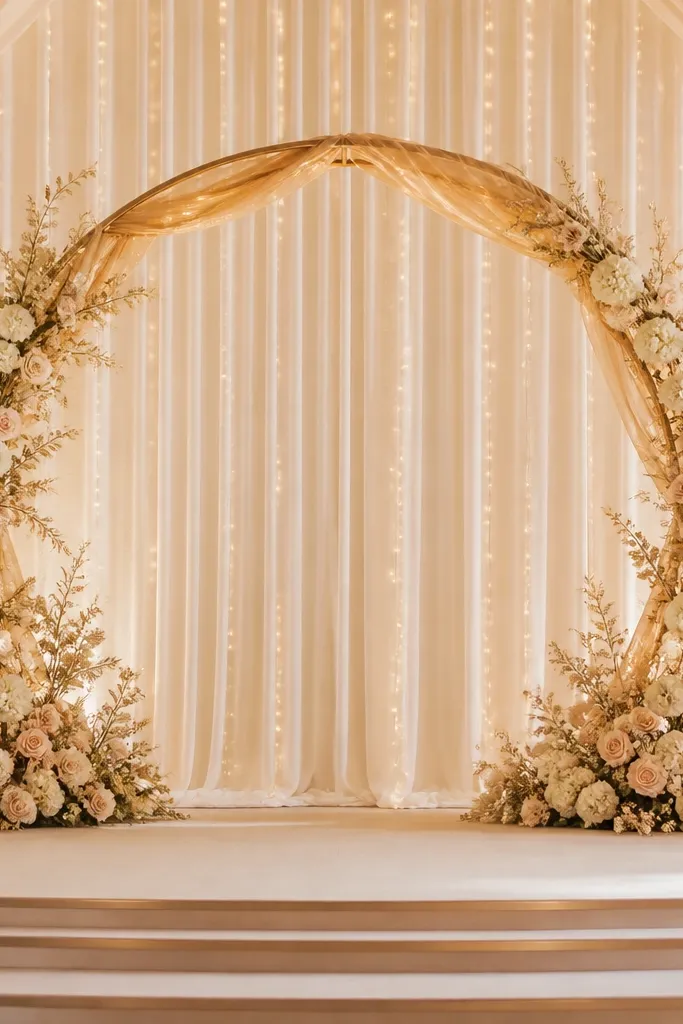
A halo arch gives you a clear "entrance moment" for photos, and it works even in smaller stages. Antique gold wrapping makes the flowers look more expensive because it adds a metallic highlight across the curve. Cream and peach flowers keep it traditional and soft, and the warm palette flatters most skin tones under warm lighting. I've seen this look hold up well for both bride and groom portraits and for the couple's entrance walk. The styling principle is framing: create a strong foreground arch so the camera has a focal point.
Start by building a semi-circle arch structure sized to the stage width, usually 7-10 feet wide for a standard stage. Wrap the arch frame with gold fabric ribbon or metallic mesh, then secure it every 6 inches so it stays smooth. Add cream flowers in the outer ring and peach flowers in the inner ring, leaving a small gap in the center so the bride's outfit shows. Place the halo arch about 3-4 feet in front of the main backdrop so depth shows in side photos. Use an ivory drape backdrop with a few gold string lights around the edges, not across the entire center.
Try thisAdd one vertical line of flowers down the center of the arch so it looks intentional from both front and side angles.
Common mistakeAvoid crowding the entire arch with flowers - too dense hides the metallic wrap and looks heavy.
4. Ivory Jute Runner with Marigold Edge
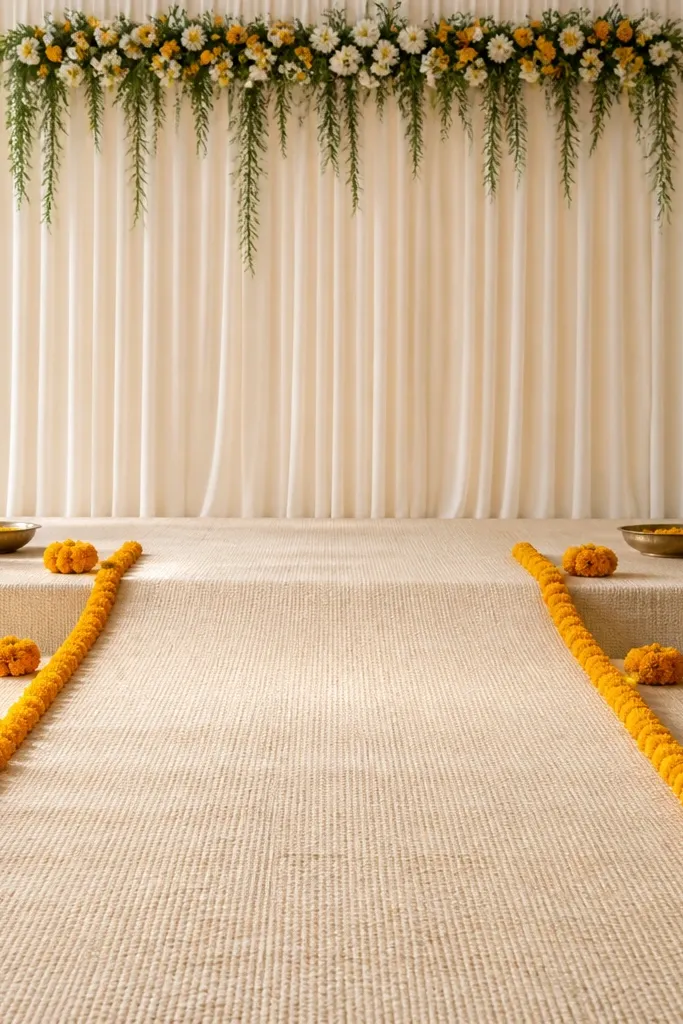
This is the stage idea I recommend when you want traditional energy without building a massive backdrop. The jute texture looks grounded and authentic, and marigold edges give that unmistakable Indian wedding feel. It flatters everyone because it keeps the colour focused at the floor while the outfits stay the star. I used this for a wedding where the mandap had lots of guests walking close to the stage - jute looks better than shiny fabric when people step around. The styling principle is contrast between rough texture on the floor and soft, clean background.
Start by laying ivory jute fabric across the stage floor and cutting it so it sits flat without wrinkles at the front edge. Place a narrower ivory runner strip on top (about 3-4 feet wide) for a clean center path. Add marigold garlands along both sides, securing with thin zip ties underneath so they don't shift. Keep the backdrop simple: one cream drape panel behind the mandap and one floral arrangement at the top center. Finish with small marigold clusters at every 2 feet along the runner edges for a balanced look.
Try thisSpray a light anti-wrinkle fabric spray on jute before setup so it lays smoother under stage lights.
Common mistakeDon't use bright orange marigold with cool grey drapes - the colour clash reads messy.
5. Rose Pink Floral Cascade on Side Frames
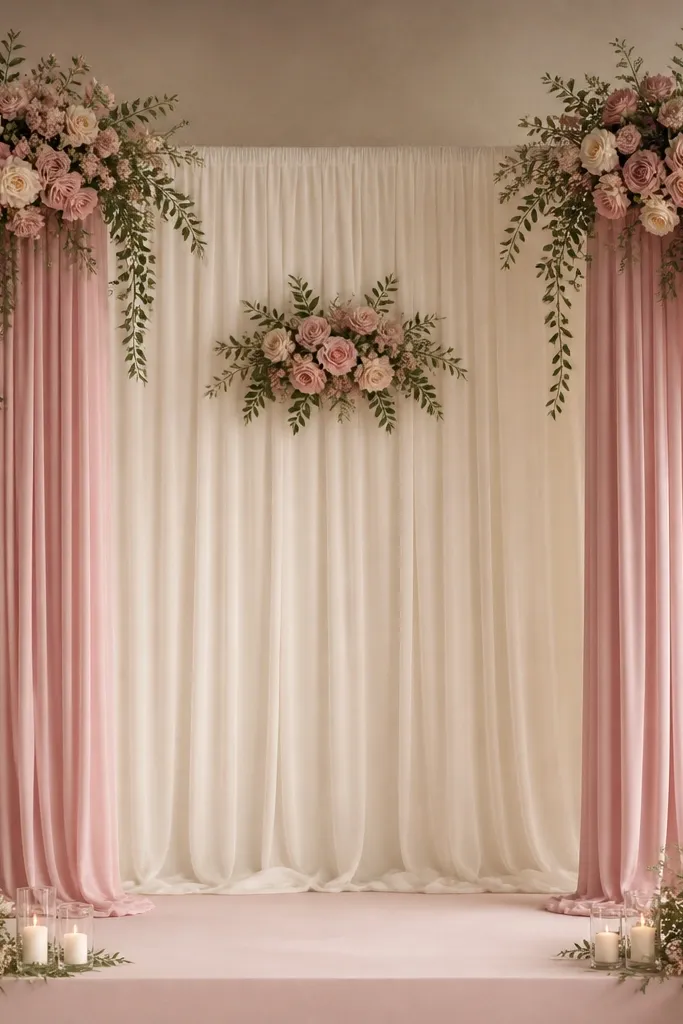
Side cascades add height and drama without covering the entire backdrop. Rose pink and blush tones look gorgeous on both warm and cool skin undertones, especially under soft warm lighting. This setup is great when the main stage needs to stay clean because the ceremony has lots of movement. I've used it for wedding functions where the couple wears heavy embroidery and you don't want the stage to compete. The styling principle is vertical storytelling: let flowers travel from top to mid-height on both sides.
Start with two freestanding side frames about 4-5 feet tall, wrapped in rose pink satin or matte silk. Build the cascade by attaching floral foam or mesh pockets only at the top anchor points, then layering flowers down in a controlled gradient (deep rose at the top, blush at the bottom). Add trailing greenery between flower clusters so the cascade doesn't look like it's floating. Keep the center backdrop neutral with ivory drape, then add a small rose-gold metallic corner detail on each side. Place a low front garland line across the stage edge in a single row so it doesn't crowd footwear.
Try thisUse a gradient - don't place the same shade of pink from top to bottom; it makes photos look flat.
Common mistakeAvoid uneven lengths between left and right cascades; it shows immediately in side-angle videos.
6. White Sheer + Gold Tassel Curtain Entrance
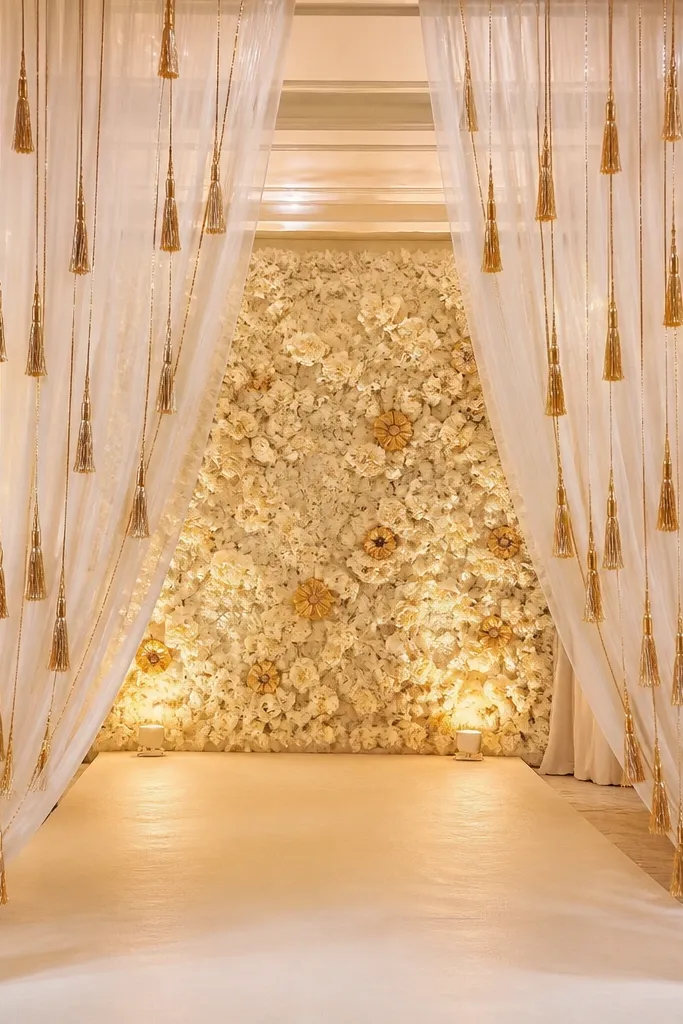
Gold tassels look expensive when they move, and white sheer keeps it light. This is one of the best stage ideas for couples who want a traditional vibe with a modern sparkle. I've seen it work across age groups because the shimmer is gentle - it doesn't scream "party backdrop." It also photographs well because the tassels create a soft bokeh effect around the couple. The styling principle is motion: make something that sways slightly as people walk through.
Hang white sheer panels on a sturdy overhead frame, then attach gold tassel strands so they fall to about 2-3 feet above the stage floor. Keep the tassel density even across the full width, using one strand every 4-5 inches for a smooth look. Add a thin gold border along the outer edge of the curtain with metallic ribbon. Behind it, place a white floral wall or a simple white drape with a small gold garland. On the floor, use a cream runner and place two small flower pots or low bouquets at the left and right corners to guide the eye.
Try thisTest the tassel length by standing at the center - if they brush the runner, shorten them by 6-8 inches.
Common mistakeDon't mix silver tassels with gold jewellery tones; the photos look split.
7. Marigold and Mango Leaf Temple Style
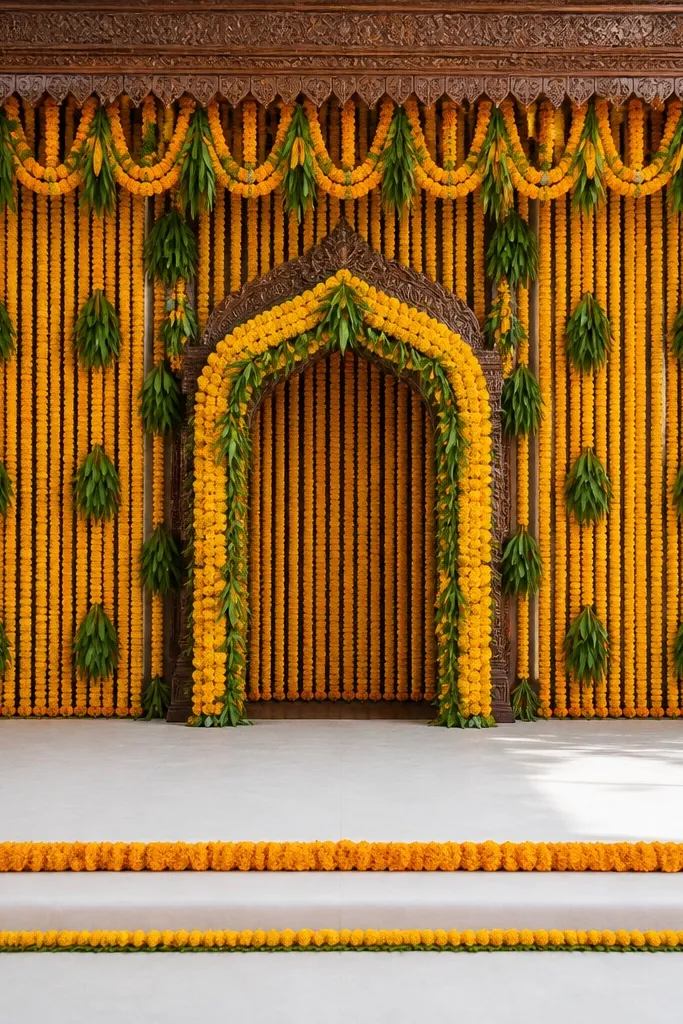
This setup feels deeply traditional because mango leaves and marigolds carry the same wedding language across regions. The green leaf adds a natural contrast that makes the orange marigold look brighter without being loud. I've used this when the ceremony has religious rituals and you want the stage to feel "part of the tradition," not just decor. It also handles heat and outdoor light better than delicate flowers because mango leaves keep their structure. The styling principle is repetition: repeating leaf and marigold patterns read elegant fast.
Start by building a backdrop frame and attaching mango leaf bunches in a repeating vertical pattern across the sides and top. Fill the gaps with marigold garlands, keeping them evenly spaced so it doesn't look patchy. Create a center mini arch using marigold clusters and wrap a thin rope garland around the arch edges. Add a marigold border on the floor using garlands cut to the stage length, then secure them with tape underneath. Keep the center area slightly less dense so the couple stays visually dominant.
Try thisMist mango leaves lightly before setup so they look glossy under lights.
Common mistakeAvoid using only loose marigolds without leaf structure - it looks like a flower market.
8. Deep Teal Silk Drape with Antique Copper Lighting
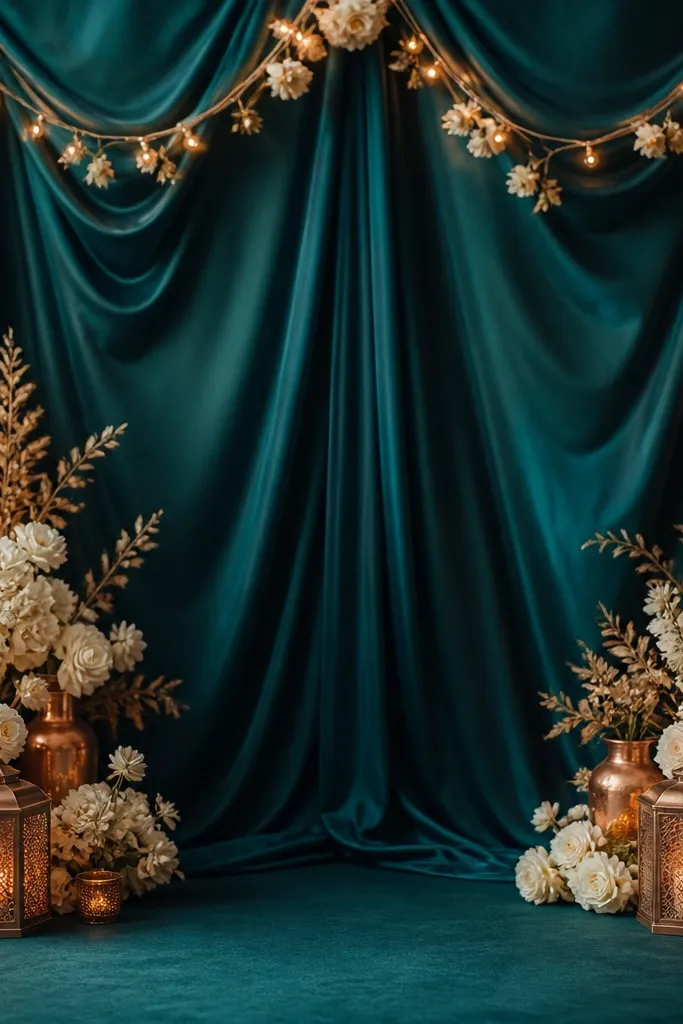
Teal silk under warm copper lighting looks rich without needing a heavy flower wall. I chose this when the bride's outfit had a deep teal base and copper embroidery - the stage matched without copying. The copper glow flatters skin because it adds warmth around faces, and the teal gives a strong traditional colour anchor. The subtle sheen in silk also helps the stage look clean from the sides. The styling principle is matching undertones: teal and copper are a natural pair in Indian wedding palettes.
Drape deep teal silk or heavy satin across the backdrop, then add two side drapes that fall in wider folds, about 18-24 inches apart. Hang copper string lights around the border and let them peek through the folds rather than running in a straight line. Add ivory and light gold flowers at the top center in a small arrangement, then repeat one tiny cluster on each side at mid-height. Place two lanterns or candle holders in copper tone at the front left and right, about 2 feet from the edge. Use an ivory runner on the floor so the teal doesn't overwhelm the lower part of the frame.
Try thisKeep the floral count low - the silk and lighting do the work.
Common mistakeAvoid mixing teal with bright neon pink accents; it makes the stage look accidental.
9. White and Gold Ganesh-Inspired Corner Panels
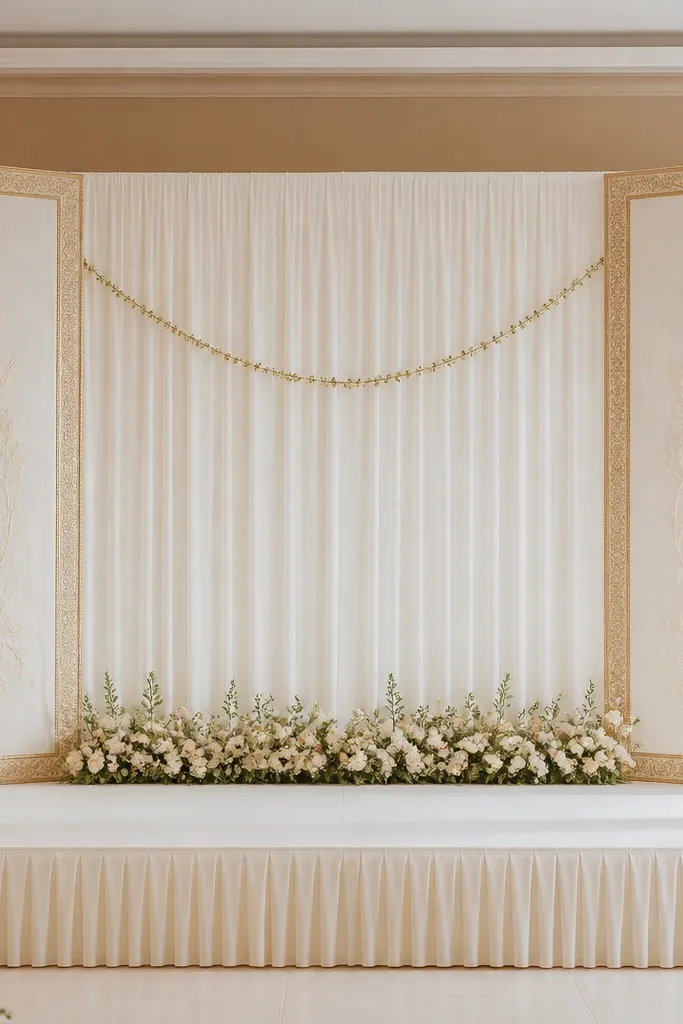
Corner panels are a smart move when you don't want a full backdrop but still want a traditional frame. White and gold keeps it festive without turning the whole stage into a wall of flowers. I've used these for ceremonies where the mandap has its own religious decor and the stage backdrop needs to be supportive. The embossed motifs catch light softly, so the stage doesn't look flat in flash photography. The styling principle is framing through corners: your main focus stays in the center, but the sides look finished.
Start by making two tall fabric panels for the corners, about 6 feet high, with a gold border using metallic tape or ribbon. Choose a subtle motif pattern (embossed vinyl, printed fabric, or a cut-out silhouette) so it doesn't look cartoonish from a distance. Mount the panels on stands so there is a 2-3 foot gap between each corner panel and the center backdrop. Add an ivory drape center wall behind the mandap and a thin gold garland at the top edge. For the floor, place a narrow gold tinsel line or gold ribbon border along the front edge, then keep the center runner plain ivory.
Try thisUse matte white fabric, not shiny satin, for the panels - it avoids glare in videos.
Common mistakeAvoid heavy glitter vinyl motifs; they look cheap under stage lights.
10. Sunflower and Maroon Mixed Garland Backdrop
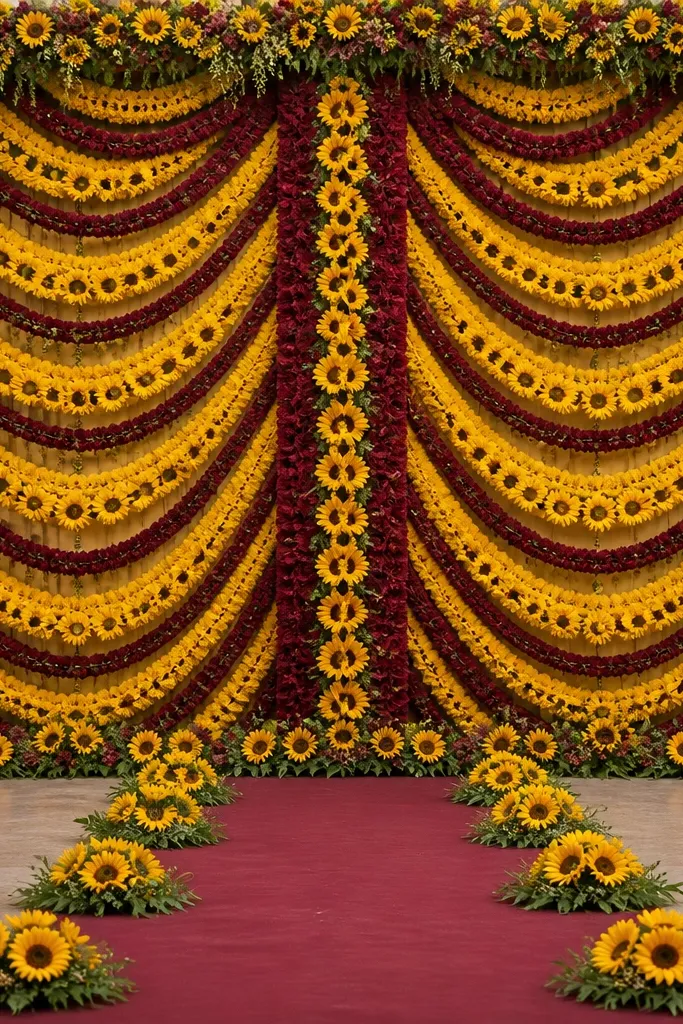
Sunflowers make the stage feel cheerful and modern-traditional at the same time. The trick is balancing them with deep maroon so the brightness doesn't turn into a casual vibe. I've used this for wedding functions when the couple's outfits have maroon or wine tones and they still want something fresh and photogenic. Sunflowers also read clearly in daylight, which helps if your function is outdoors or has big windows. The styling principle is contrast in shape: large sunflower heads mixed with denser maroon clusters.
Start with a tall backdrop frame and attach a base layer of maroon garlands in vertical strips. Add sunflower garlands in curved arcs across the top and mid-height, then create a center column by stacking maroon and sunflowers in a straight line from top to about 4 feet. Keep spacing tight so it looks lush, not sparse. On the floor, use a maroon runner about 4 feet wide and place small sunflower clusters along both edges every 2-3 feet. Add one low front bouquet at the center so the couple has a focal point below the backdrop.
Try thisIf sunflowers are real, spritz them with a light anti-wilt spray the morning of; they look fuller under lights.
Common mistakeAvoid too many yellow-only sections; it turns the stage into a bright wall without depth.
11. Ivory and Peach Rose Wall with Green Vein Leaves
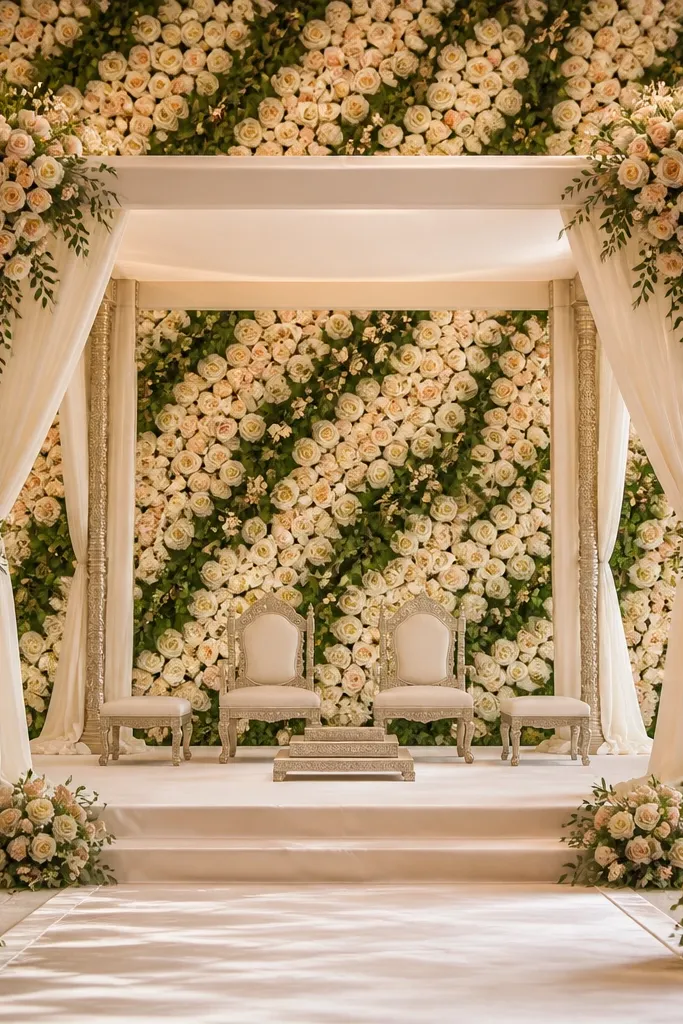
This is a romantic stage look that still reads traditional because roses are placed in a dense wall and supported by green foliage. Ivory and peach is flattering because it doesn't add harsh contrast - it lets the bride's lehenga details show. I used this for a wedding where the outfits were cream-gold with peach accents, and the stage matched without overpowering. Green vein leaves add movement and help the roses look layered instead of pasted on. The styling principle is density with breathing space: fill the wall, but leave small gaps for leaf texture.
Start by covering a backing panel with a floral grid or net so roses sit upright. Place ivory roses as the outer base layer and peach roses as the inner accents, keeping the center slightly lighter. Insert long green vein leaves in vertical strokes to create a pattern that frames the couple's faces. Build corner bouquets by placing one larger cluster at each front corner on the stage floor, then add smaller clusters at the back corners. Use an ivory satin runner and a thin border of peach petals at the front edge to connect the floor to the wall.
Try thisMake the center of the wall lighter than the sides; it pulls the eye to the couple instantly.
Common mistakeAvoid mixing in too many tiny filler flowers; they make the wall look cheap and flat.
12. Black and Gold Minimal Mandap with Saffron Accents
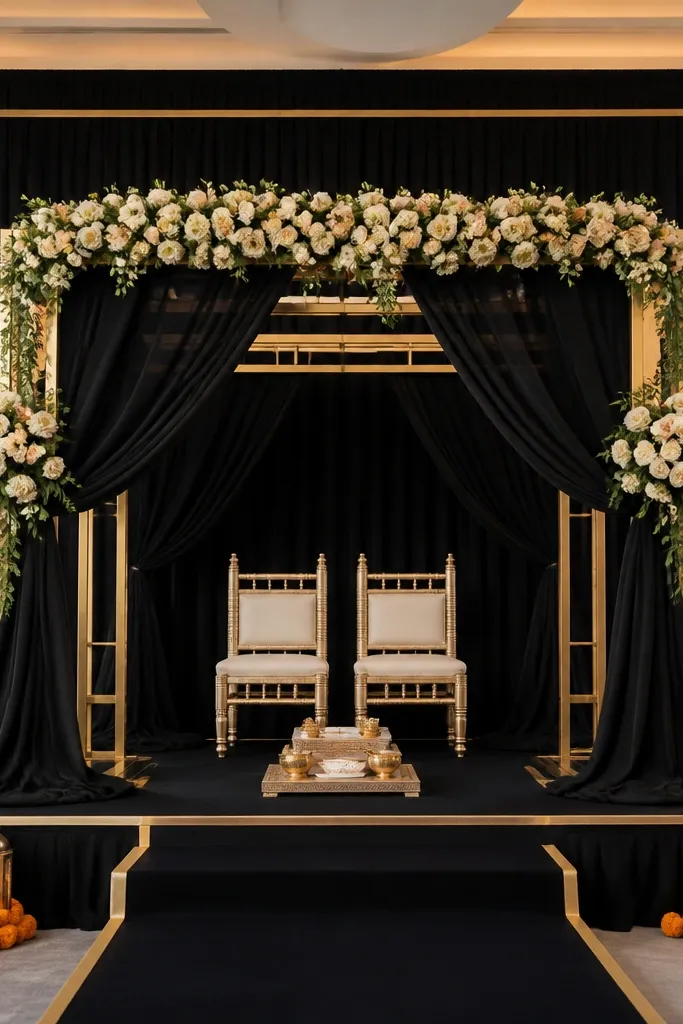
Minimal doesn't mean boring. A black and gold backdrop makes the mandap area feel like a luxury set, and saffron accents keep it Indian and warm. I've used this for weddings where the couple's outfits have heavy gold work and the bride wants a clean, bold stage that doesn't compete with embroidery. Under warm lighting, black drape looks smooth and expensive. The styling principle is restraint: fewer flowers, stronger structure, and controlled metallic highlights.
Cover the backdrop with matte black fabric or thick black satin, then add gold metallic ribbon borders around the top and sides of the frame. Place a gold framed panel behind the mandap using a simple rectangular frame with gold finish. Add saffron marigold clusters only at the front corners and at one top center point so the stage doesn't look scattered. Use a black runner on the floor with a thin gold ribbon along the front edge. For shoes and movement, keep the runner flat and wrinkle-free so it doesn't catch light in ugly streaks.
Try thisUse matte black, not shiny black - shiny fabric reflects stage lights and makes photos look harsh.
Common mistakeAvoid adding too many different flower colours; it kills the clean look fast.
13. Ivory and Green Temple Pillar Trio
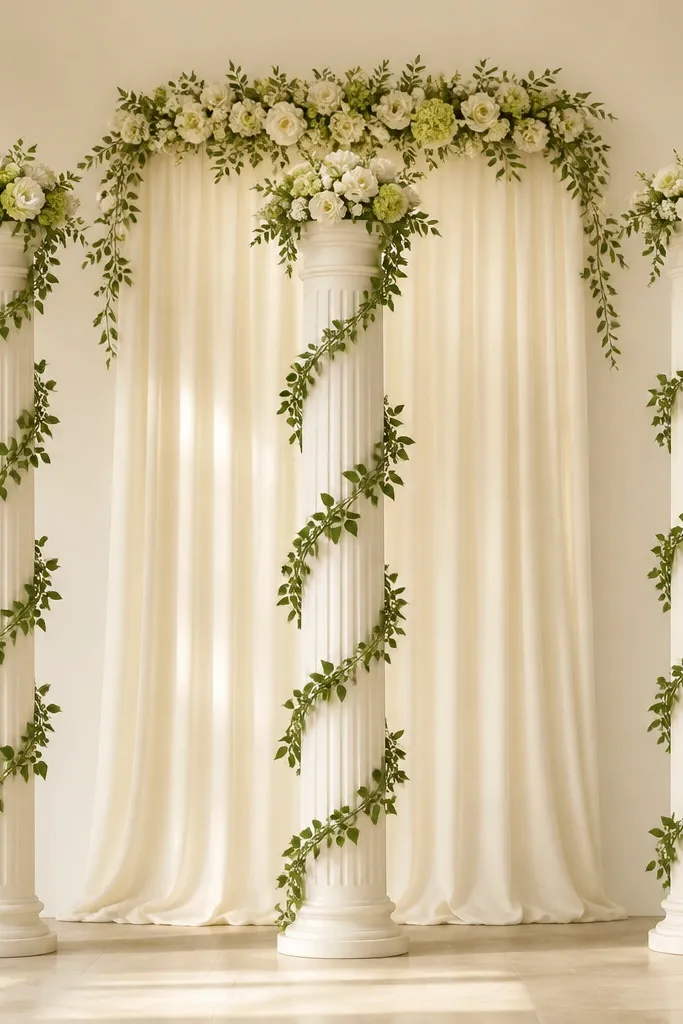
Pillar trios give you instant symmetry and a traditional temple feel without needing a full carved backdrop. Ivory keeps the stage bright and flattering, while green leaf garlands add freshness and depth. I've built this for indoor weddings where the stage size is limited, and pillars make the setup look taller. It also photographs well because the vertical lines guide the eye to the couple. The styling principle is symmetry plus vertical texture.
Build three pillars - one center and two sides - each about 6-7 feet high and spaced evenly across the stage width. Wrap pillars with ivory fabric strips and secure with hidden tape or ties so seams don't show. Add green leaf garlands spiraled around each pillar, then top each pillar with a small crown of white and light green flowers. Place an ivory drape backdrop behind the pillars and add a simple floral arch at the top center, around 2-3 feet wide. On the floor, use an ivory runner and place a low green garland line along the front edge.
Try thisKeep pillar spacing wide enough for camera framing; if pillars are too close, they crowd the couple.
Common mistakeAvoid using only leaves with no flowers - it looks like a decoration shop wall.
14. Coconut Leaf Toran with Marigold Knots
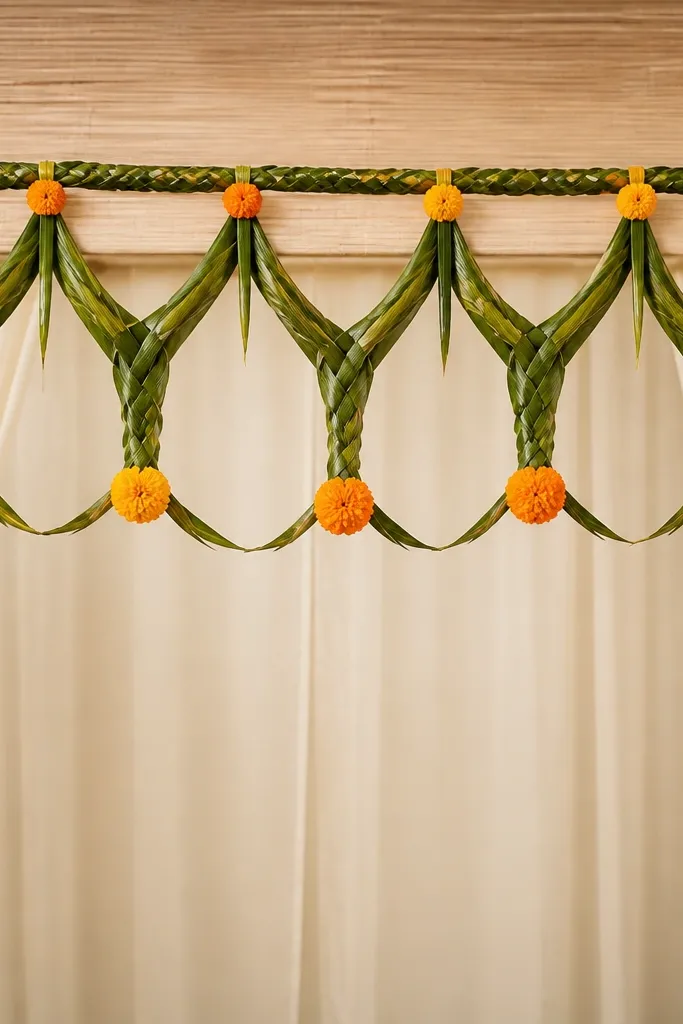
A coconut leaf toran is one of the most authentic traditional stage elements you can use without overbuilding. The texture of coconut leaves reads clearly on camera, and marigold knots add that festive Indian rhythm. I've used this for outdoor venues and it holds up well because leaves don't look limp as fast as delicate blooms. It also works when you want the stage to feel religious and grounded rather than heavily glam. The styling principle is using one hero element across the top and keeping everything below clean.
Start by creating or renting a toran sized to your stage entry width, usually 7-9 feet wide. Hang it across the top frame at about 8 feet height so it sits above head level. Tie marigold knots at regular intervals along the toran arch - about every 10-12 inches - so it looks intentional. Keep the backdrop behind it simple: cream drape panels with a small marigold cluster at each side corner. Add a narrow marigold garland along the front edge of the stage floor to connect the toran to the ground.
Try thisIf it's breezy outside, use extra ties - coconut leaves shift quickly and can look uneven after 30 minutes.
Common mistakeAvoid placing toran too low; it blocks faces and makes photos look crowded.
15. Pastel Lavender Drapes with Silver Balloon Columns
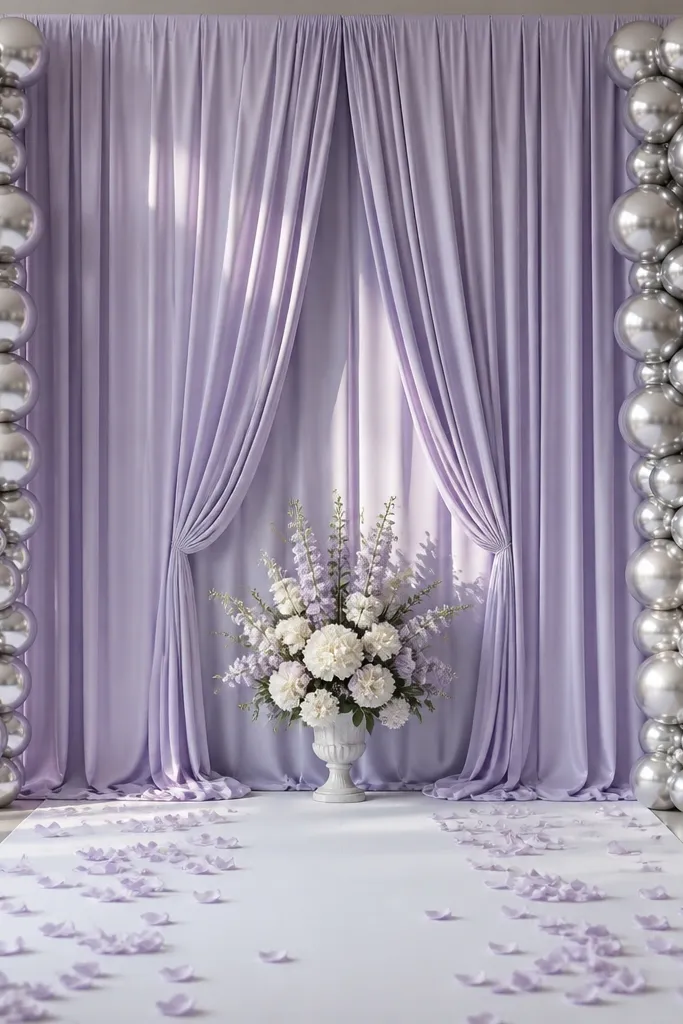
This is a modern twist that still feels wedding-appropriate when you keep it controlled. Lavender drapes soften the whole scene, and silver balloon columns add a clean vertical highlight without needing a full floral wall. I've used it for engagement-to-wedding transitions where the couple wants something airy but still festive. The silver columns also reflect stage lights in a flattering way around the couple's faces. The styling principle is minimal backdrop plus strong vertical accents.
Drape pastel lavender fabric across the backdrop in wide panels, then add a darker lavender trim at the top edge using velvet ribbon. Set up two balloon columns on the left and right - aim for 6-7 feet tall and keep them at least 3 feet away from the center so they don't block the view. Use white and lavender flowers in a small center arrangement at about 5 feet height. Place a white runner on the floor and scatter lavender petals only in a small strip at the center front. Keep accessories minimal: one silver lantern or candle holder at each front corner.
Try thisUse matte lavender fabric, not shiny - shiny drapes reflect harsh light and flatten skin tones.
Common mistakeAvoid balloon columns behind the couple's heads; keep them side-placed for clean framing.
16. Terracotta and Cream Jali Panels with Hanging Marigolds
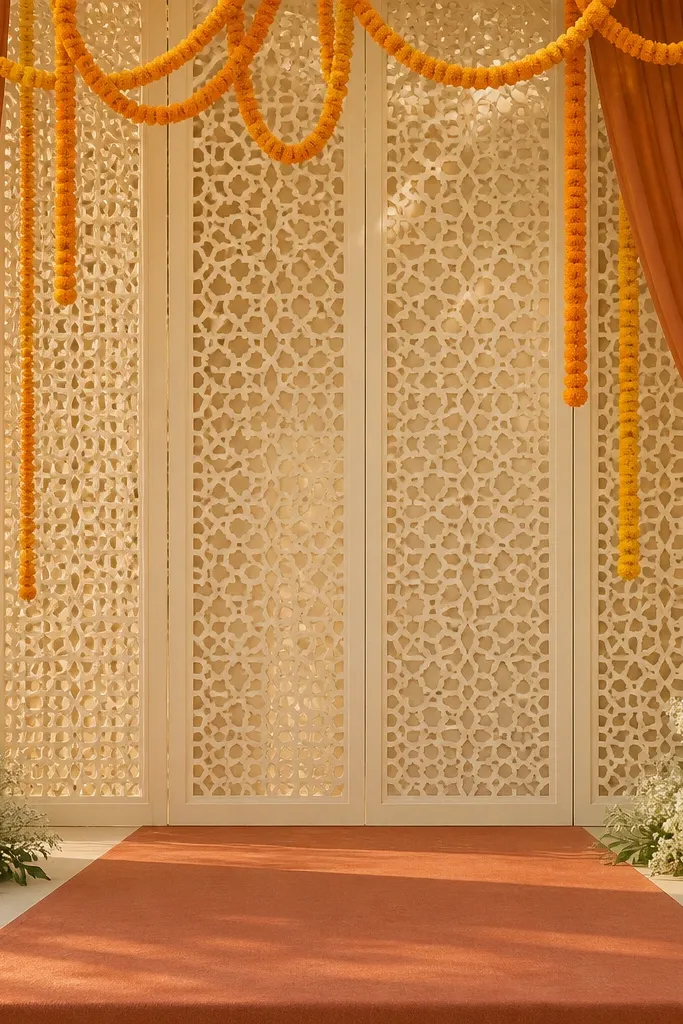
Jali panels add architectural detail, and the hanging marigolds bring motion and tradition. Terracotta and cream is a warm pairing that looks great in both indoor warm lights and outdoor sunlight. I used this when the bride's outfit had rust or terracotta embroidery and the groom's wear leaned cream - the stage tied both together. Hanging garlands also create side depth, which most flat backdrops miss. The styling principle is structure behind, movement on top.
Place cream jali panels on the main backdrop frame, centered and about 7 feet high. Add terracotta drapes on both sides with inward folds so the center feels wider. Hang marigold garlands from the top edge in loops, each loop ending around 3-4 feet height, leaving a gap so faces stay visible. Add one terracotta-and-cream floral cluster at the top center and one smaller cluster at each side mid-height. On the floor, use a terracotta runner and place cream flower clusters at both front corners to anchor the frame.
Try thisUse longer garland loops on the outer sides; it creates a natural diagonal that looks good in photos.
Common mistakeAvoid short marigold drops; if they end too high, the stage looks top-heavy.
17. Royal Blue and Gold Charcoal Draped Frame

This is the stage idea for people who want a bold royal look without filling the whole back with flowers. Royal blue reads rich and flattering, and the charcoal base makes it look even deeper. I've used this for sangeet nights where the lighting is dramatic and you need colours that won't wash out under LEDs. Gold metallic strips add a traditional wedding shine without needing heavy embroidery on the stage. The styling principle is three-tone control: charcoal base, blue hero panel, gold framing.
Drape charcoal fabric across the backdrop and create a royal blue center panel about 4-5 feet wide, leaving an even gap on both sides. Frame the blue panel with gold metallic strips or ribbon, keeping the lines straight so it feels structured. Add small flower clusters on the left and right sides at about 4 feet height, using royal blue, white, and a little gold. On the floor, lay a charcoal runner with a thin gold ribbon border along the front edge. Place two low blue lanterns or gold candle holders at the front corners for extra sparkle.
Try thisIf your stage lights are cool (blue LEDs), keep the gold warm-toned so it doesn't look greenish.
Common mistakeAvoid using too many blue shades; stick to royal blue and one light neutral.
18. White Rose Petal Stair-Step Front
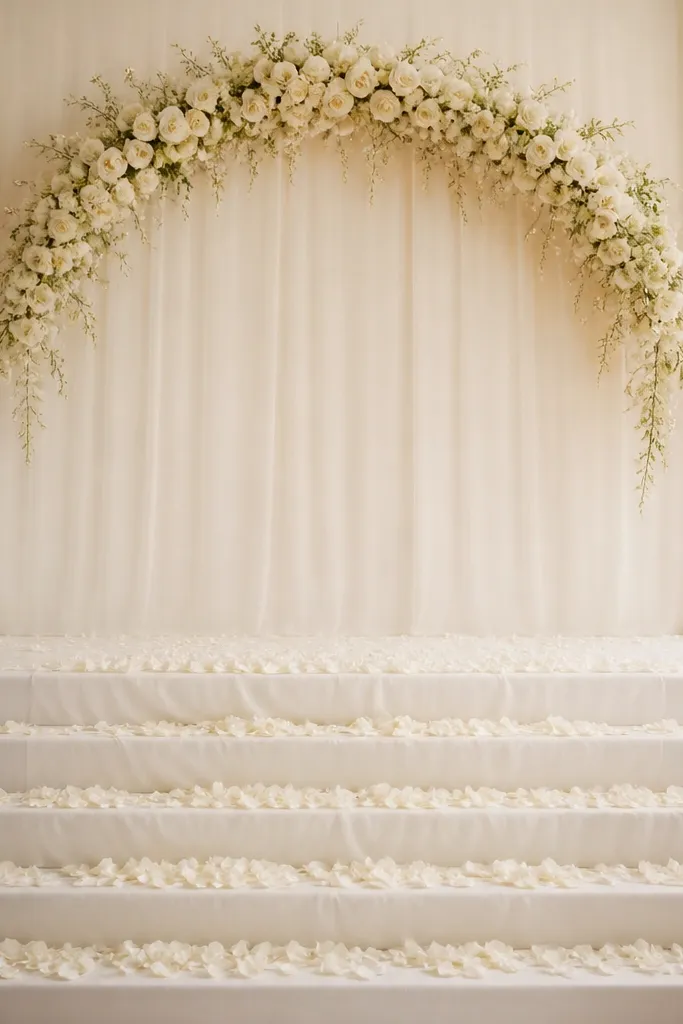
A stair-step front is a simple trick that makes your stage look designed, not decorated. White rose petals on layered steps create a soft, clean look that flatters both bold lehengas and minimal outfits. I've used this for couple photo sessions where you need a clear foreground that doesn't distract from faces. The petals also catch light gently under warm lights, which makes video footage look smooth. The styling principle is foreground depth: build height at the front, not only the back.
Create two or three layered steps at the front using fabric-covered foam or stacked platforms, each about 12-18 inches wide and rising 6-8 inches per step. Cover the top surface of each step with a white satin sheet, then sprinkle white rose petals in an even layer so you don't see the base. Behind the steps, keep the backdrop clean: one ivory drape panel and a small floral arch at the top center. Add a thin garland line across the arch to connect it to the petals. For shoes and walking, keep the petal layer thicker at the center and lighter near the edges so it doesn't look messy under feet.
Try thisUse petals that are dry and clean; wet petals darken quickly under stage heat.
Common mistakeAvoid placing a big floral wall behind if you already have petal steps - it becomes visually noisy.
19. Sangeet Fringe Backdrop in Wine Velvet
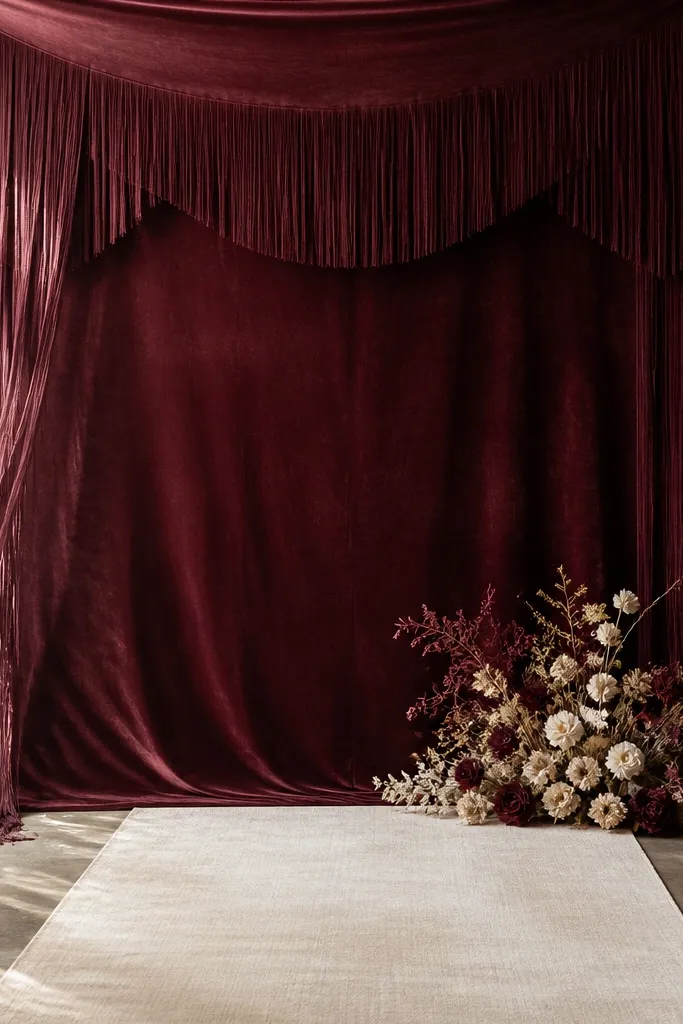
Fringe is one of the fastest ways to make a stage feel celebratory without building heavy structures. Wine velvet gives it a traditional base, and the fringe adds texture that looks great in dance videos. I've used this for sangeet nights where people move a lot - fringe stays photogenic even when the couple is turning and jumping. The warm wine colour flatters most skin tones under warm stage lights. The styling principle is texture and movement: let fabric do the work instead of stacking too many decor items.
Hang wine velvet fabric on a backdrop frame, keeping it taut so the fringe hangs straight. Add fringe trim along the top edge and down both sides, with fringe length about 18-24 inches for a strong silhouette. Place a cream runner on the floor and keep it centered to frame the dance space. Add a small floral arrangement at the top center only, about 18-24 inches wide, and use wine, cream, and gold accents. If you want extra sparkle, add two small warm fairy light lines behind the fringe so it glows subtly.
Try thisChoose fringe with a consistent weight; uneven fringe makes the stage look lopsided in photos.
Common mistakeAvoid mixing fringe with too many competing patterns behind it.
20. Golden Gota Patti Border with White Draped Center
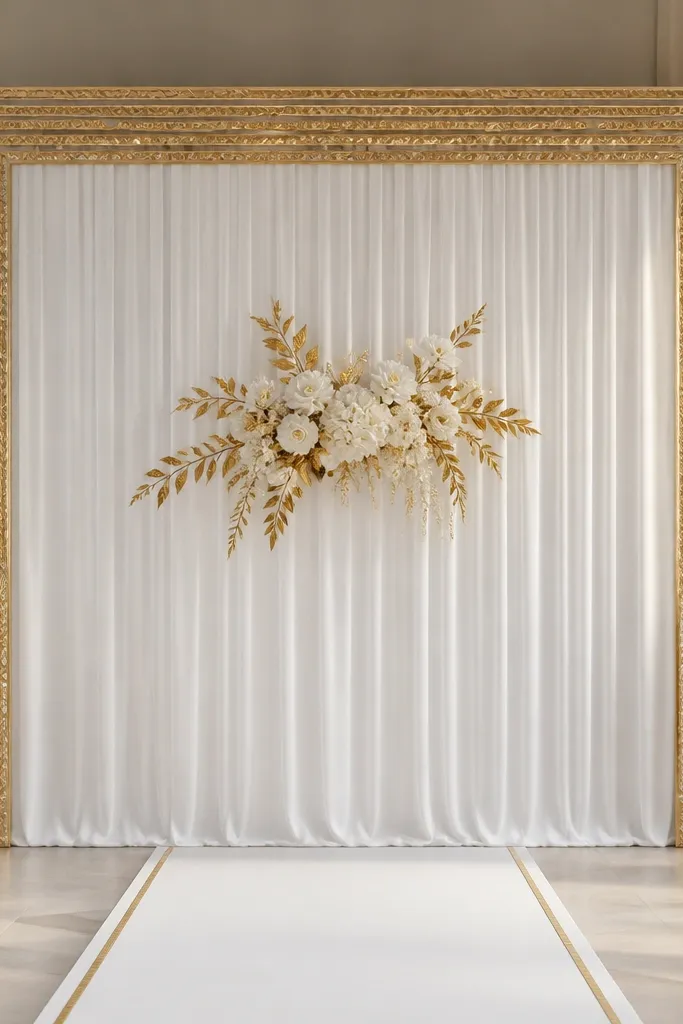
This look feels traditional because gota patti is part of the wedding language, not just decoration. White center drapes keep the stage clean and let the couple's outfits take the spotlight. Golden border details add a crisp edge so the backdrop looks intentional even from the sides. I've used this for ceremonies where the bride's lehenga has white and gold work, and the stage needed to match without covering everything in flowers. The styling principle is one bold border, one clean center.
Drape white fabric in a centered panel behind the mandap, keeping folds vertical and smooth. Apply golden gota patti trim along the top and sides of the center panel, leaving the middle untouched. Add a small white-and-gold floral cluster at the top center only, keeping it compact so it doesn't compete with the gota border. Place a white runner on the floor and add a thin gold ribbon line along the front edge. For shoes and walking, keep the runner wrinkle-free by ironing the fabric the morning of.
Try thisUse gota trim with a matte finish; it looks more premium under lights than glossy metallic tape.
Common mistakeAvoid covering the whole backdrop with gota - it turns into a busy wall instead of a defined frame.