1. Banana Leaf + Gold Foil Corner Tray
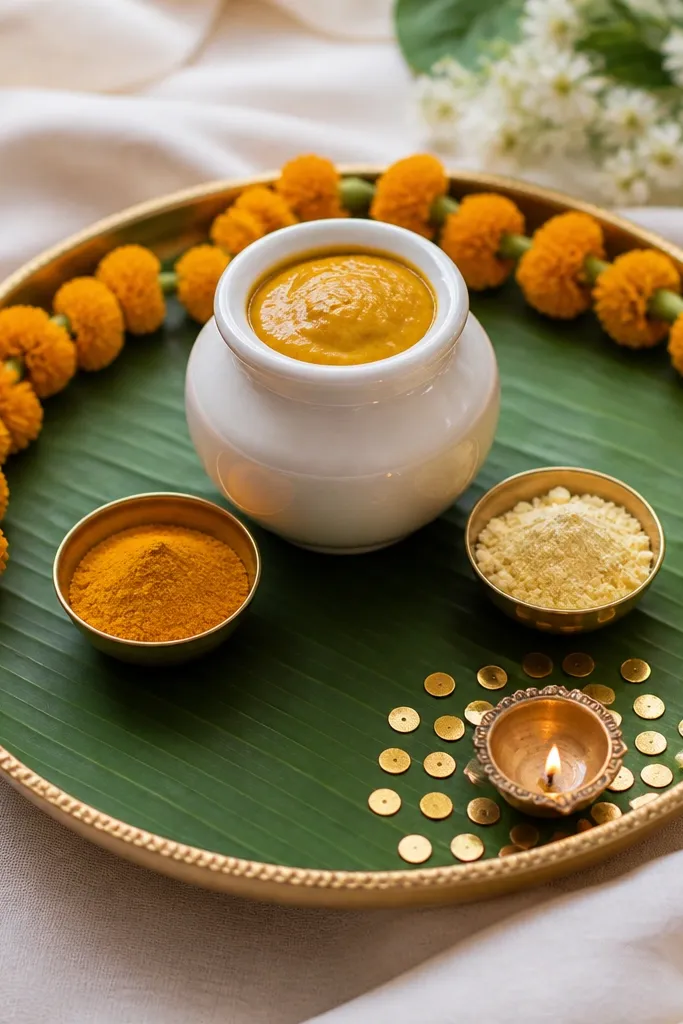
This setup looks expensive because the banana leaf gives real texture and a green frame, while gold foil dots add a crisp sparkle without needing a full heavy decor. I like it for medium to warm skin tones because the green and gold make yellow turmeric look brighter and cleaner in photos. Use a white pot or ceramic bowl for the haldi so the color sits on a light base instead of blending into the leaf. The styling principle is contrast: cool green + warm gold + turmeric yellow.
Start by lining the tray with a single layer of banana leaf, trimmed so it covers the base and slightly overlaps the rim. Place a small diya or candle holder at the front right corner and scatter gold foil dots around it in a loose curve. Put the haldi pot in the center, then add two small brass bowls on the left and right for balance. Finish by draping a thin marigold garland along one side of the tray rim, not all the way around.
Try thisIf the banana leaf dries, wipe it with a damp cloth and place a thin clear plastic sheet under it so it stays neat.
Common mistakeAvoid dumping loose petals everywhere - it makes the leaf look messy and cheap.
2. Satin Runner + Pearl Bead Border
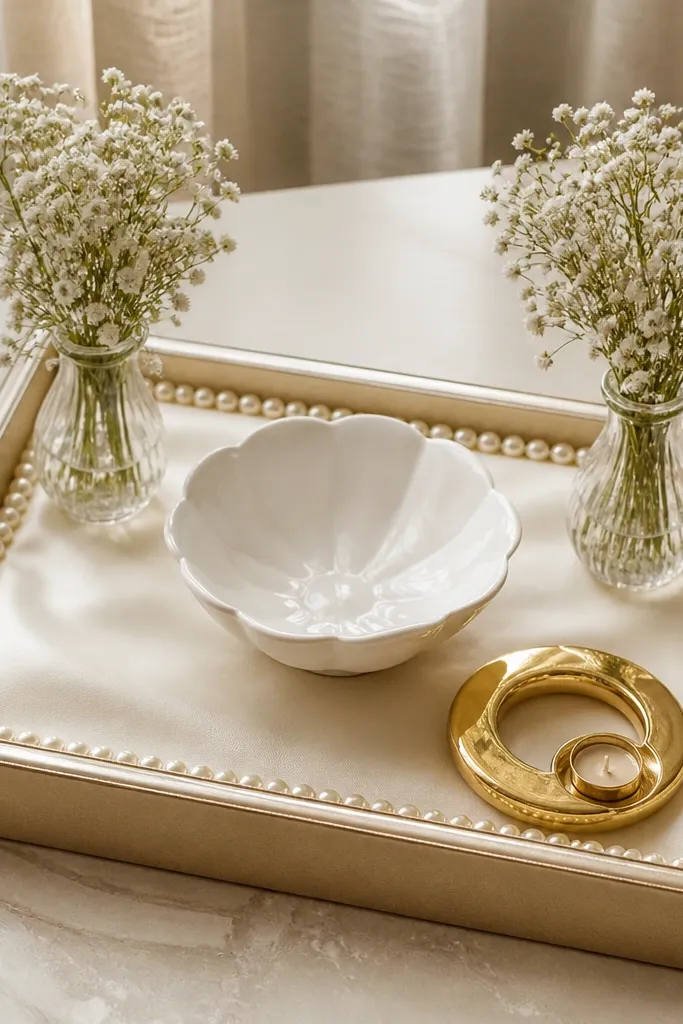
This is my go-to for year round haldi decoration ideas when you want it to look "clean" instead of crowded. Cream satin makes the turmeric color pop without turning the tray into a bright festival mess. Pearl-look beads look flattering on both fair and deeper complexions because they reflect light softly rather than screaming. The principle here is a controlled palette: one base fabric, one jewelry-like detail, and light flowers.
Lay a cream satin runner across the tray so it hangs over the sides by 1-2 cm. Place pearl-look beads along the visible edge in a straight line, then keep the center clear except for the haldi bowl. Add two mini glass vases at left and right with baby's breath or small white flowers. Put a gold ring diya holder behind the haldi bowl so it creates a halo effect in photos.
Try thisUse a fabric-safe double-sided tape under the satin corners so the runner doesn't slide mid-function.
Common mistakeAvoid using cheap plastic beads that look cloudy under flash.
3. Jute Burlap + Dried Orange Slice Garland
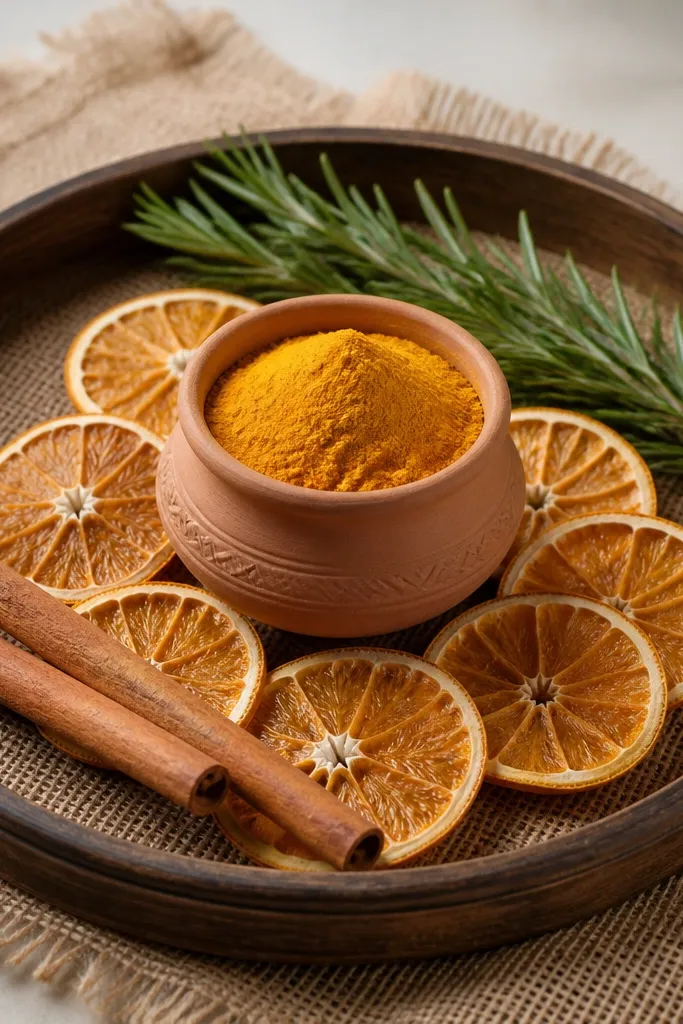
This one looks like a holiday table even when it's not a wedding, which is why I love it for year round. Jute adds that warm farmhouse texture, while dried orange slices bring color that still harmonizes with turmeric yellow. It flatters people who look great in earthy tones - think warm undertones and medium skin - because the palette is cozy, not neon. The principle is seasonal scent + color pairing: orange and spice with turmeric.
Cut burlap to fit the tray base and fold the edges under so it looks crisp, not frayed. Place dried orange slices in a tight circle around the center pot, then tuck two cinnamon sticks diagonally across the slices. Add a sprig of rosemary at the back edge, and keep your haldi pot terracotta or matte clay for a grounded look. Finish with a thin twine loop garland along one side of the tray rim.
Try thisSeal dried citrus with a light coat of clear matte spray so it stays intact for repeat use.
Common mistakeAvoid fresh fruit slices - they leak and stain the burlap.
4. Pastel Dupatta Drapes + Mini Rangka Dots
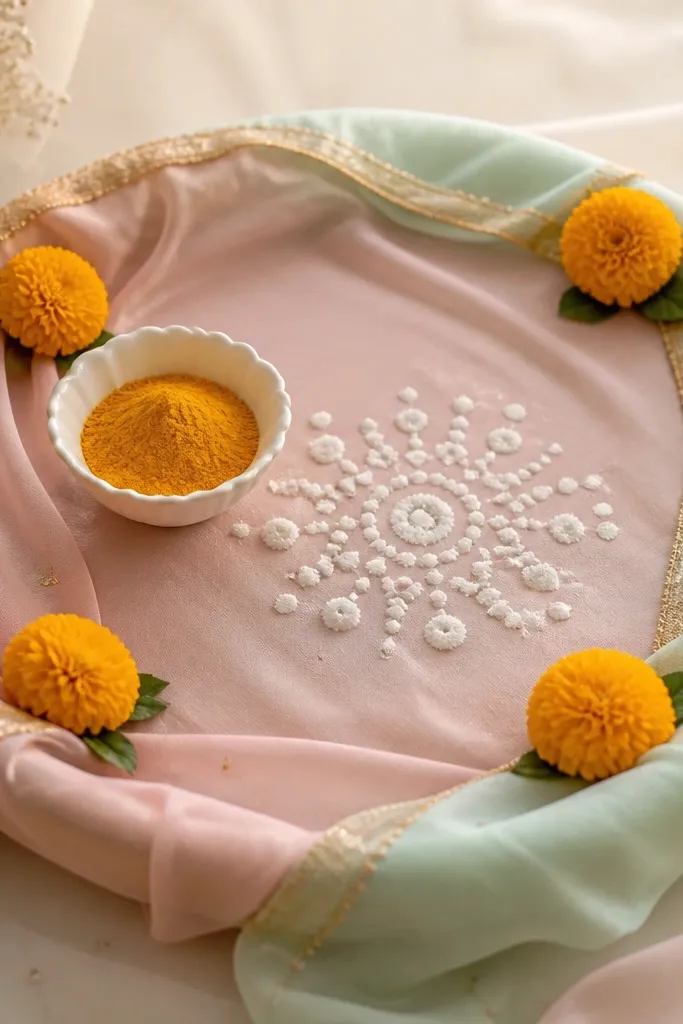
This setup is soft and photo-friendly because the pastel dupatta acts like a background, and the tiny dot pattern adds structure. Dusty pink and mint make turmeric look intentional instead of messy, especially in daylight. It flatters most skin tones because pastel shades reflect gently and don't overpower the face in portraits. The principle is background softness + a small, exact focal pattern.
Drape the dupatta across the tray so one corner folds upward by about 3-4 cm, creating a peak at the back. Sprinkle a small dot rangoli circle around the haldi bowl using white powder (or chalk-safe powder) and keep it tight, about the size of a small plate. Place marigold buds at four corners of the tray for symmetry. Add a thin gold ribbon tie around one side drape so it looks finished.
Try thisUse a lint roller on the dupatta before placing it; tiny dust shows up in flash photos.
Common mistakeAvoid big rangoli designs on the tray - they look cluttered at table height.
5. Terracotta Pots + Green Mango Leaves Frame
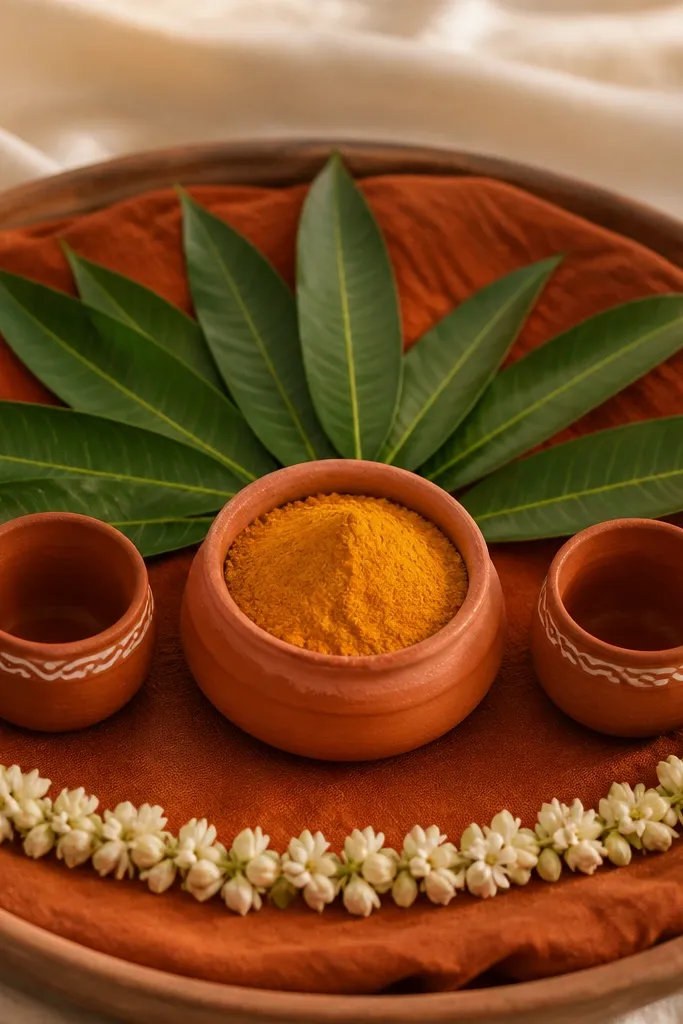
Mango leaves are the quickest way to make haldi look rooted in tradition without adding heavy garlands. Terracotta cloth and pots add a warm base that makes turmeric yellow look deeper and richer without looking neon. This works beautifully on warm undertones and also on fair skin because the green frame adds freshness. The principle is framing: create a leaf "arch" behind the haldi so the center reads instantly.
Cover the tray with a terracotta runner or cloth and smooth it flat. Arrange mango leaves behind the haldi pot in a U-shape, with the tips pointing upward. Place two terracotta cups on left and right, slightly lower than the center pot by 1-2 cm. Add tiny white flowers along the front edge, then tuck a single leaf tip near the left cup for an extra visual hook.
Try thisIf mango leaves are too stiff, soak them for 10 minutes and pat dry so they bend cleanly.
Common mistakeAvoid stacking leaves too thick - it blocks the haldi bowl in photos.
6. Black Velvet Tray + Copper Diya Trio
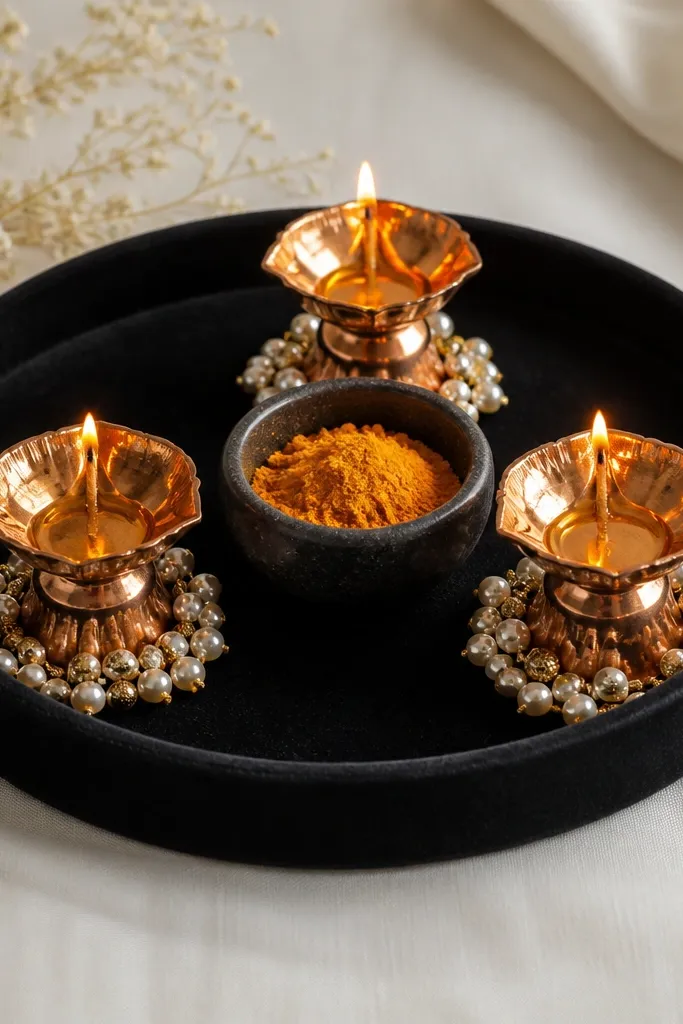
Black velvet turns turmeric into a highlight instead of a pigment that blends in. Copper diyas add warm metallic contrast, which looks stunning in both indoor tungsten light and flash. I've used this for evening functions and it always photographs sharp because velvet absorbs background noise. The principle is dark base + warm metal + minimal accents.
Line the tray with black velvet or black satin with a matte finish and pull it tight so it doesn't wrinkle. Place the haldi bowl in the center on a small folded cloth so it sits slightly elevated. Arrange three copper diyas in a triangle around the bowl, keeping the front two closer to the camera. Add a few white-and-gold bead clusters at the outer corners and stop there.
Try thisUse LED tea lights instead of real flames so the setup stays consistent across photos.
Common mistakeAvoid shiny satin - it creates glare that makes turmeric look washed out.
7. White Lace + Hand-Painted Floral Bowls
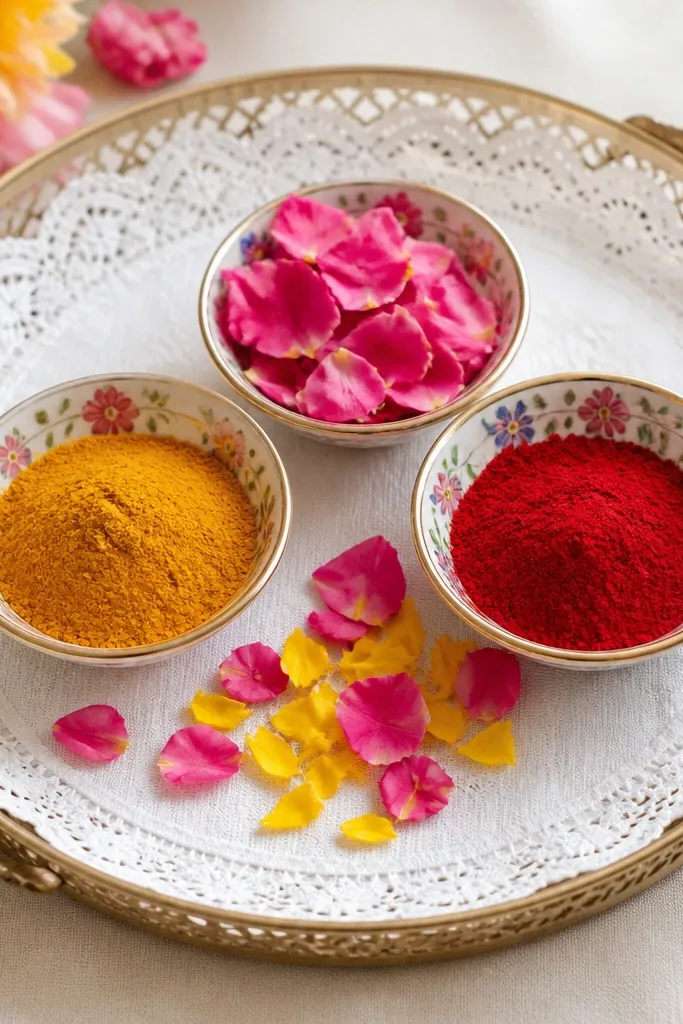
This is the clean romantic look that still feels festive. White lace gives you a soft, airy background, and hand-painted bowls add personality without needing heavy flowers. It flatters fair to medium skin tones because the white base brightens the whole frame, and the floral colors guide the eye to the center. The principle is texture layering: lace base + painted focal pieces + minimal petal scatter.
Lay white lace over the tray and secure the edges with small double-sided tape under the rim. Place the haldi bowl in the center, then add kumkum and rose petal bowls slightly in front so they catch light. Scatter rose petals sparingly, about a dozen pieces, and keep the rest of the tray empty. Add one small cluster of fresh or faux flowers at the back so the front stays uncluttered.
Try thisPat fresh petals dry with tissue so they don't stain the lace.
Common mistakeAvoid thick petal piles - lace makes them look like a spill.
8. Monochrome Green Only Tray
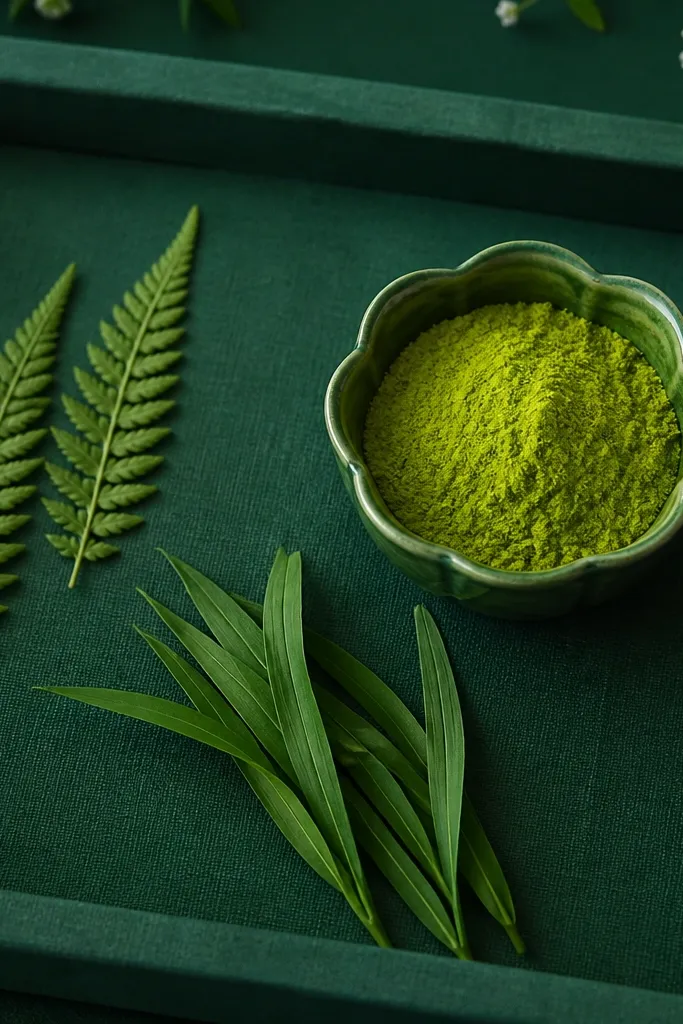
A monochrome green setup looks modern and calm, which is rare for haldi. It makes turmeric look like a purposeful element because the rest of the tray doesn't compete for attention. This works great for people who prefer understated decor, and it photographs well in both daylight and evening light because green textures show depth. The principle is strict palette control: one color family, multiple textures.
Cover the tray with deep green fabric like velvet or matte satin. Place the haldi bowl in the center and add fern fronds on the back edge, fanning outward. Put small green leaves or a few sprigs of mint-like foliage at the front corners. Keep white flowers to a minimum - 2-3 tiny blooms only - so the look stays monochrome.
Try thisUse faux greenery if you're doing this year round; it keeps shape and doesn't wilt on hot days.
Common mistakeAvoid mixing in orange or bright pink flowers - it breaks the monochrome effect.
9. Red Pot + White Ribbons Bow
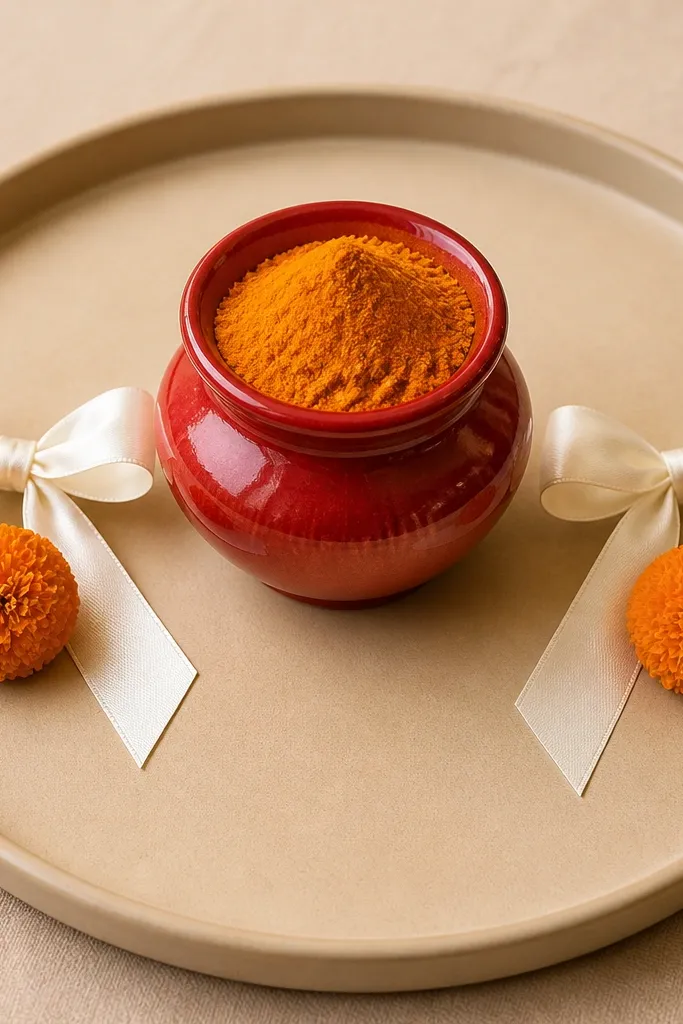
Red and white makes haldi feel like a gift wrap - crisp, graphic, and easy to read in photos. The red pot gives you instant contrast, and the white ribbon bows add height without making the tray heavy. This works well across skin tones because the red frames the yellow turmeric in a classic way. The principle is symmetry: two identical bows that balance the center.
Place a beige cloth or table mat on the tray and smooth it flat. Put the red pot in the center. Tie two white satin ribbons into small bows about 6-7 cm wide and place them on left and right, slightly behind the pot so they don't block the bowl. Add one mini marigold ball at the base of each bow for a tie-in to haldi tradition.
Try thisUse ribbon wired edges so the bow holds its shape for longer events.
Common mistakeAvoid floppy ribbon ends; they look like you rushed the setup.
10. Blue Denim + Tiny Brass Bells
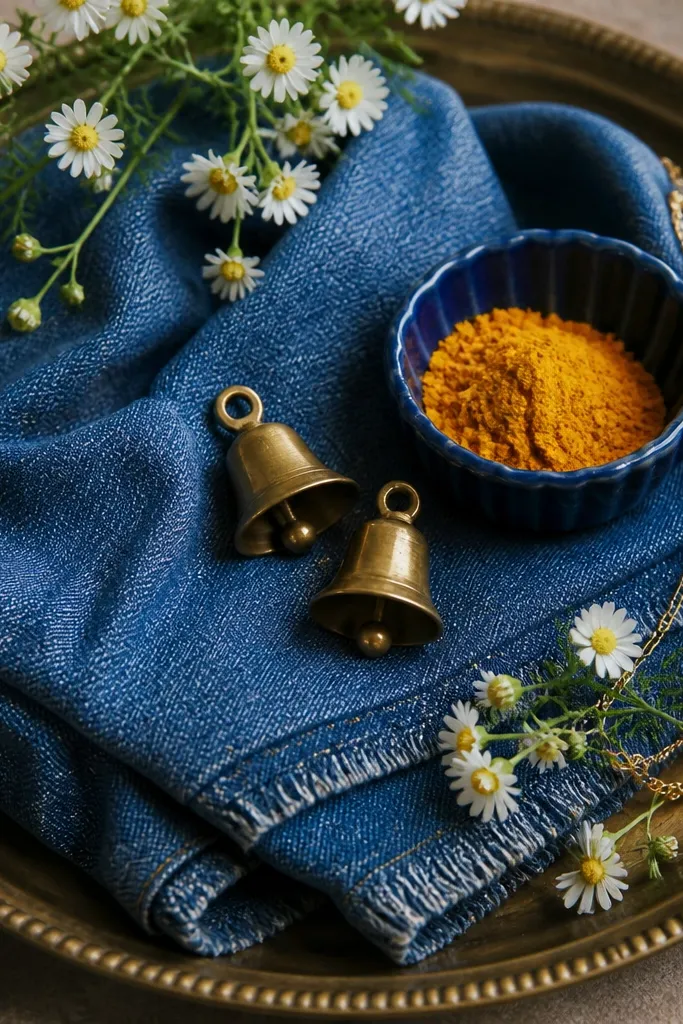
Denim makes haldi decoration ideas feel casual and wearable, not only for big weddings. The blue gives a cool background that makes turmeric look warm and sunny. Brass bells add a playful metallic detail that catches light and looks great in close-up shots. This suits people who like modern decor and works nicely for medium and deep skin tones because blue creates strong contrast without washing anyone out.
Cut a piece of blue denim to fit the tray base and fold the edges neatly under the rim. Place a small blue ceramic bowl in the center and set two brass bells on either side, each about 5 cm from the bowl. Add a few white daisy-like flowers around the bells, leaving space in the middle. Drape a thin gold chain along one side of the tray and tuck the ends under the denim folds.
Try thisWipe the bells with a dry microfiber cloth right before the function to remove fingerprints.
Common mistakeAvoid too many bells; three max keeps it from looking like random craft supplies.
11. Rangoli-Style Rice Powder Grid
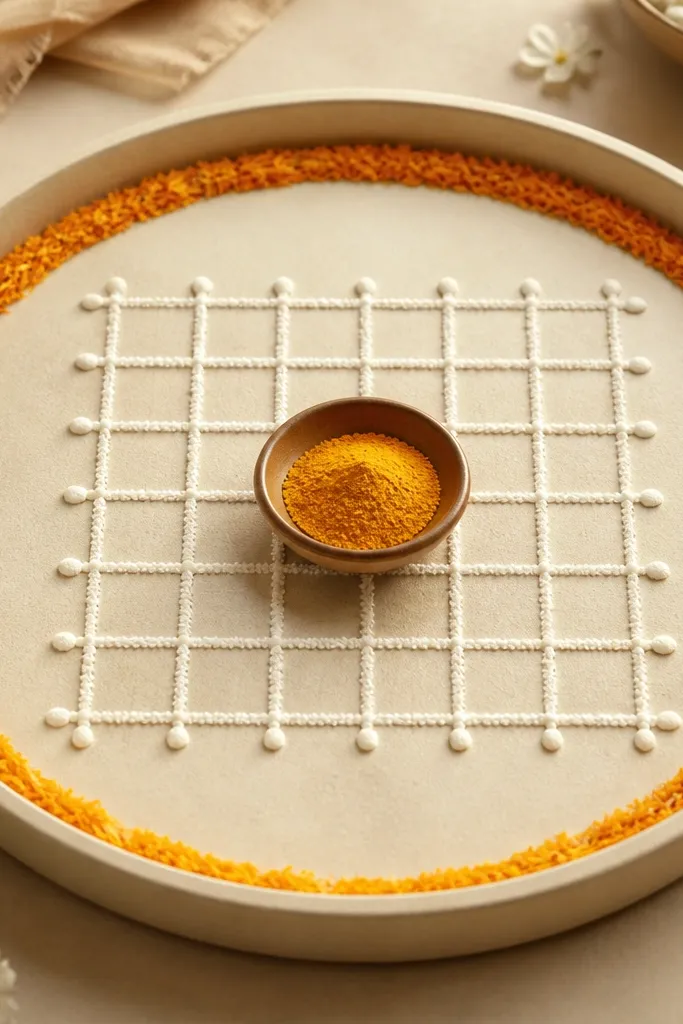
A rice powder grid makes the tray look like a mini rangoli, and it stays readable even from far away. The neutral cream base keeps the pattern crisp, while the turmeric bowl becomes the focal point inside the geometry. This flat layout works best for overhead photos, and it flatters everyone because it doesn't rely on heavy colors. The principle is clean geometry: one pattern, one center object.
Place a cream table mat on the tray and level it. Use a small stencil (or draw lightly with a pencil on paper placed under the mat) to mark a square area in the center. Sprinkle rice powder to form dots and thin lines, then place the haldi bowl right in the middle. Add a thin strip of marigold petals around the grid edge, leaving a clear gap between petals and bowl.
Try thisSpray a tiny mist of water on the rice powder pattern using a micro sprayer so it doesn't blow away.
Common mistakeAvoid using wet rangoli paste on the tray - it smears and looks messy fast.
12. Single-Flower Stem Height Setup
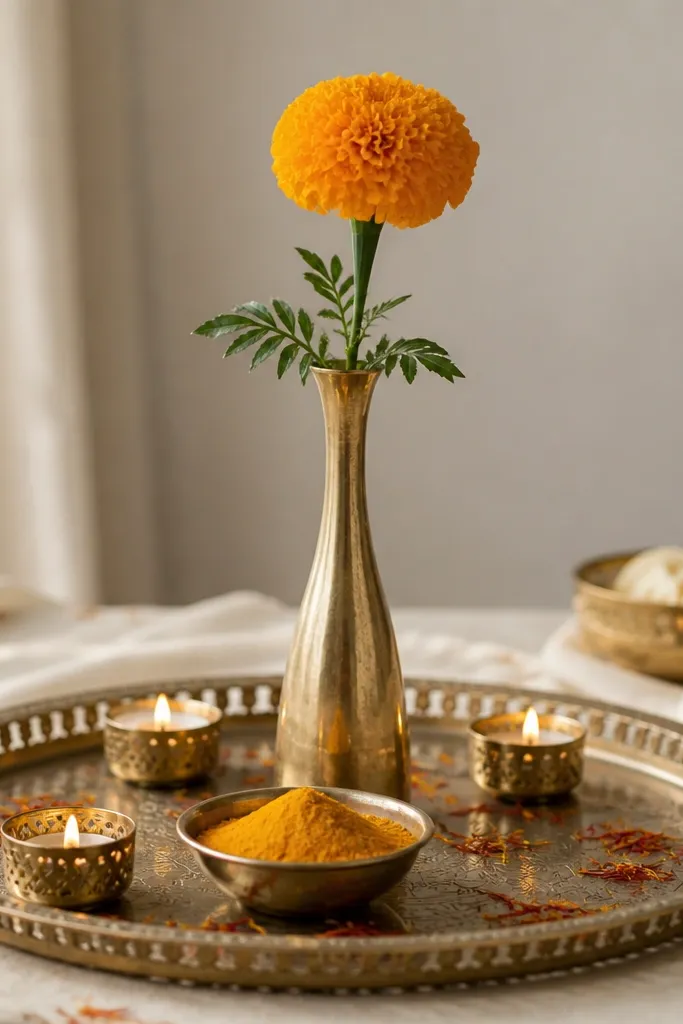
This is minimal but still looks styled because you get one clear vertical line. One long marigold stem gives you height, and tiny tea lights add warm glow for evening photos. Saffron threads add texture without adding color clutter, and the turmeric bowl stays the hero. This works for almost any skin tone because the palette is warm and controlled. The principle is vertical focus: one tall element plus low anchors.
Line the tray with a plain neutral cloth like beige or off-white. Place the haldi bowl low in the center front. Put a slim vase behind it and insert one long marigold stem so it rises above the bowl by about 10-12 cm. Add two tea-light holders at left and right, and scatter saffron threads lightly near the base of the haldi bowl.
Try thisTrim the marigold stem cleanly and recut the base at an angle if using fresh flowers for longer freshness.
Common mistakeAvoid multiple tall stems; it becomes a bouquet on a tray.
13. Tropical Leaf + Coconut Shell Mini Bowls
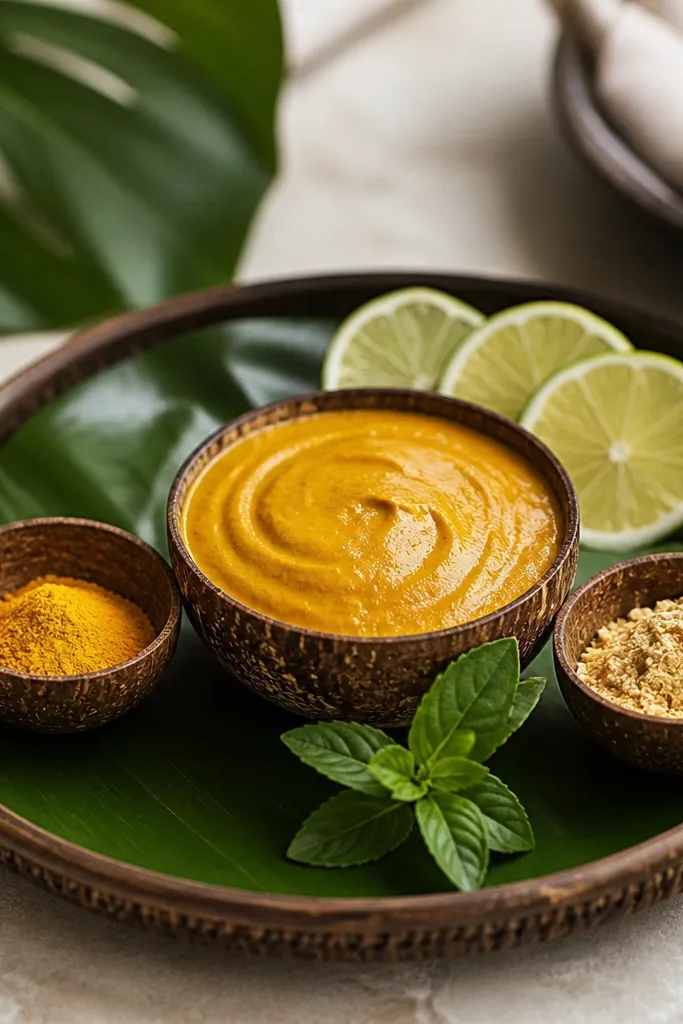
Coconut shell bowls make haldi decoration ideas feel playful and outdoorsy, which is perfect for summer functions and backyard setups. The green leaf base and lime slices bring freshness, while turmeric still stays visually central. This works especially well for warmer undertones because the yellow turmeric and green leaves look like a natural color story. The principle is natural materials: use leaf texture and organic bowls to keep the look grounded.
Line the tray with tropical leaves so they cover the base and rise slightly at the back. Place the haldi bowl in the center. Set two coconut-shell mini bowls on left and right and fill them with a small amount of kumkum or rose petals. Add a couple of thin lime slices near the back edge and tuck a basil sprig behind one shell bowl.
Try thisIf lime slices look too wet, blot them and keep them only for the photo window.
Common mistakeAvoid strong-smelling herbs like mint if guests will be close to the tray.
14. Rattan Tray + White Candle Cluster
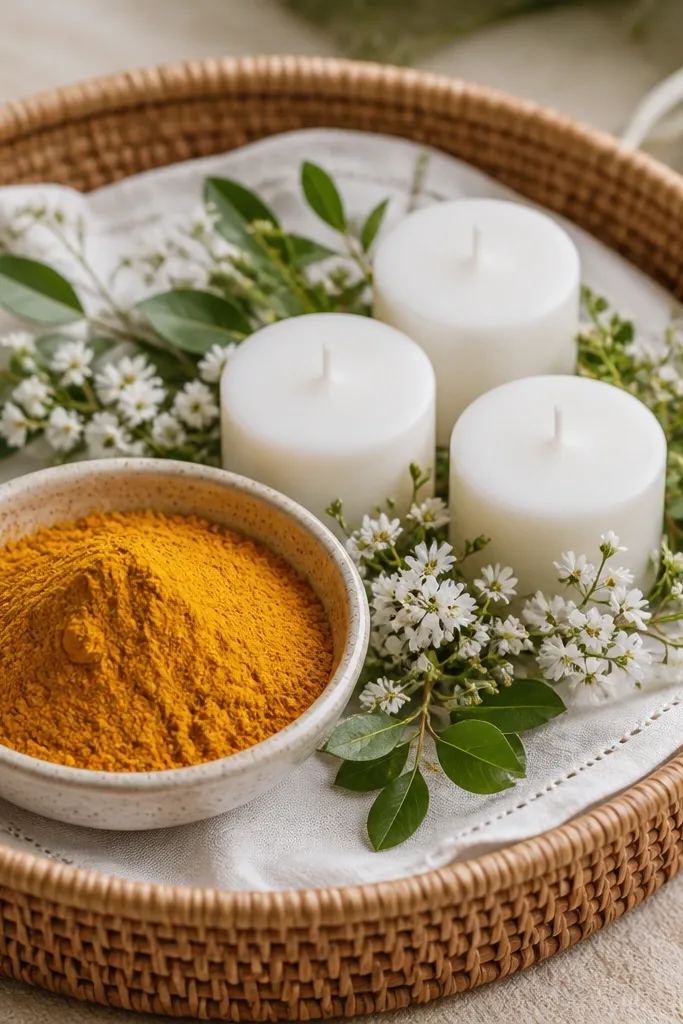
A rattan tray instantly makes haldi feel like a home ritual, not a one-day decoration. White candles add a clean, glowing backdrop that makes turmeric look warm and photogenic. I've used this for daytime poojas because the woven texture adds depth even when lighting is flat. It flatters fair to medium skin tones because the whites stay bright and don't overpower the center. The principle is texture + glow: weave texture and candle light behind the haldi.
Place a white cloth insert on the rattan tray so the center area looks smooth. Put the haldi bowl slightly forward in the center. Arrange three white candles behind it in a small cluster, with the tallest candle at the middle. Fill the space between candles with tiny green leaves and 4-5 small white flowers. Keep the front edge clear so fingers and utensils don't look cluttered.
Try thisUse LED candles if you want the same photo look every time without worrying about wax.
Common mistakeAvoid placing candles too close to turmeric bowls; wax heat and drips look sloppy.
15. Pastel Balloon Garland Edge Accent
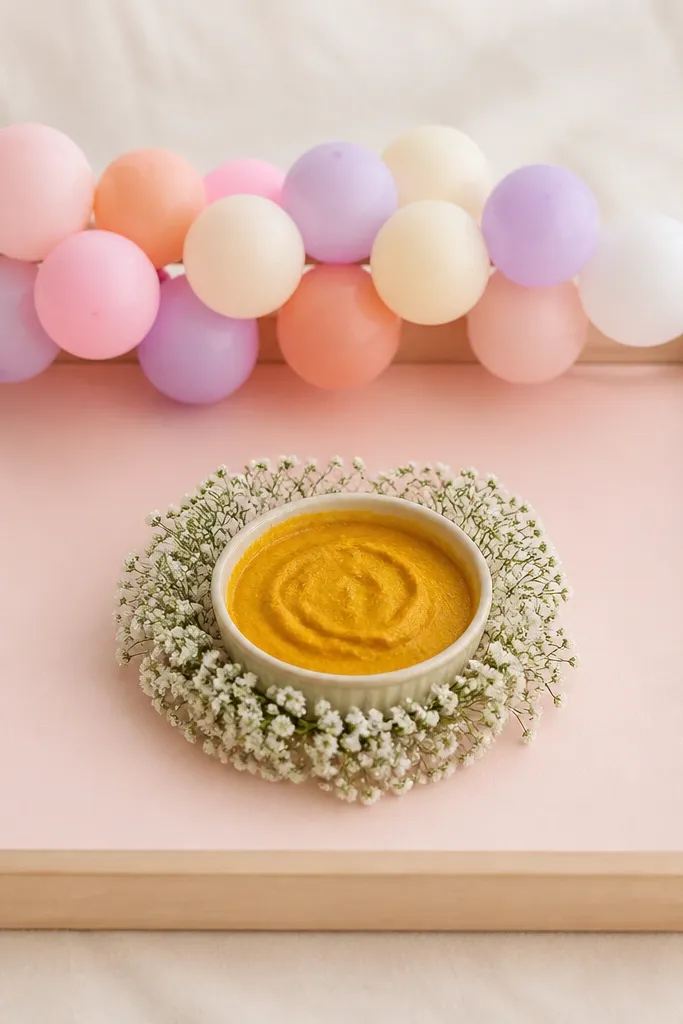
This is for when you want year round haldi decoration ideas that also feel like a celebration, not only a ritual. Pastel balloon accents look adorable in photos because they create soft shapes and a playful background. The trick is to keep it to the edge - never cover the tray center. It flatters people who look great in soft colors; the pastel palette also works for both fair and deeper skin since it doesn't clash with turmeric. The principle is framing with a playful element that stays out of the way.
Cover the tray base with a light pink or cream cloth. Tape or tie a small pastel balloon garland only along the back rim so it doesn't block the haldi bowl. Place the haldi bowl in the center and add a small white flower crown or mini garland around the bowl base. Add two tiny marigold buds on left and right as a bridge back to tradition.
Try thisUse balloon garlands made for events; they hold shape longer and don't look wrinkled.
Common mistakeAvoid using full balloon bunches - they look childish and hide the tray.
16. Gold Leaf Paper + Minimal Flower Dots
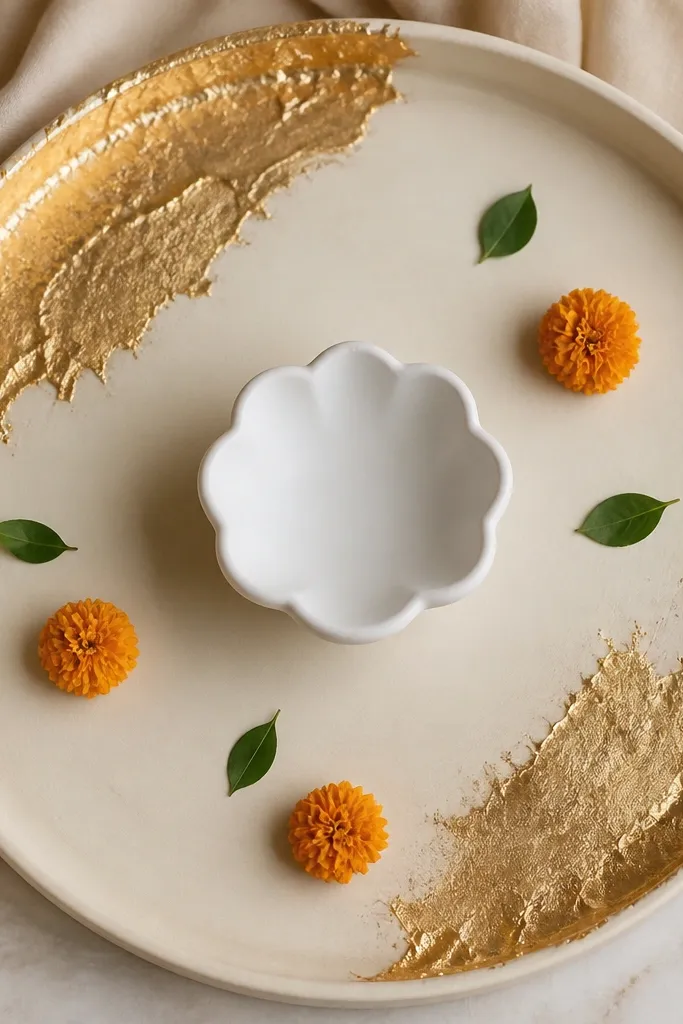
Gold leaf paper makes the setup look sharp without adding clutter. When you keep flowers to tiny dots, the tray looks designed and not like a craft project. It flatters every skin tone because gold and cream are neutral and they reflect light in a controlled way. The principle is negative space: let the tray breathe, then add gold and three small flower accents.
Lay a cream base cloth on the tray. Tear gold leaf paper into two pieces and place them in opposite corners, about 10-12 cm from the tray center. Put the haldi bowl in the center on a small folded napkin so it sits slightly elevated. Add three tiny marigold clusters - one front left, one front right, one near the back edge - and tuck a single green leaf behind the bowl for depth.
Try thisPress gold leaf gently with clean fingers so it doesn't lift under flash.
Common mistakeAvoid covering the whole tray with gold leaf; it looks like a cheap sticker sheet.
17. Blue and White Porcelain Haldi Scene
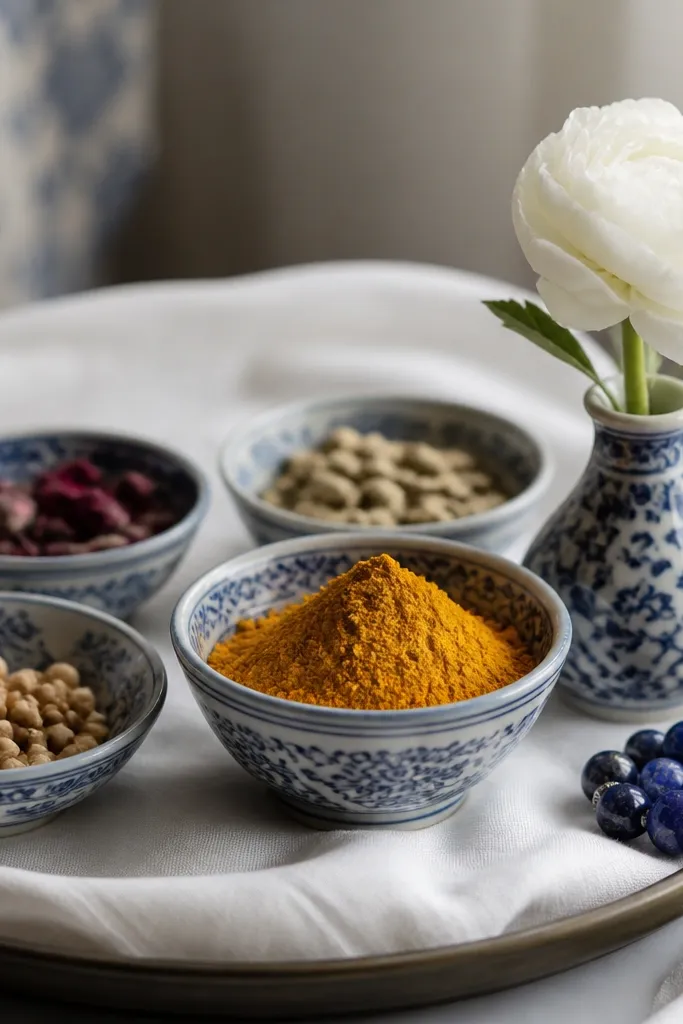
Blue-and-white porcelain gives a crisp, heritage look that still feels modern. The cool blue makes turmeric yellow look warmer and more saturated, especially in indoor lighting. I like this for people who prefer a clean aesthetic and want a tray that doesn't look overly "wedding." It works for fair and deeper complexions because blue is a stable, flattering contrast. The principle is matching: use one pattern family and repeat it across bowls and accents.
Cover the tray with a plain white cloth so the porcelain pattern stands out. Place a blue patterned bowl in the center for haldi. Add two smaller matching bowls left and right for kumkum and rose petals. Put a small blue-and-white vase behind the center bowl with one white flower stem. Sprinkle a few blue beads at the front edge, keeping them away from the bowl rim.
Try thisChoose matte porcelain or ceramic finishes; glossy surfaces glare under flash.
Common mistakeAvoid mixing random prints; one pattern family makes it look intentional.
18. Red Rose Petal Bed + Green Leaf Frame
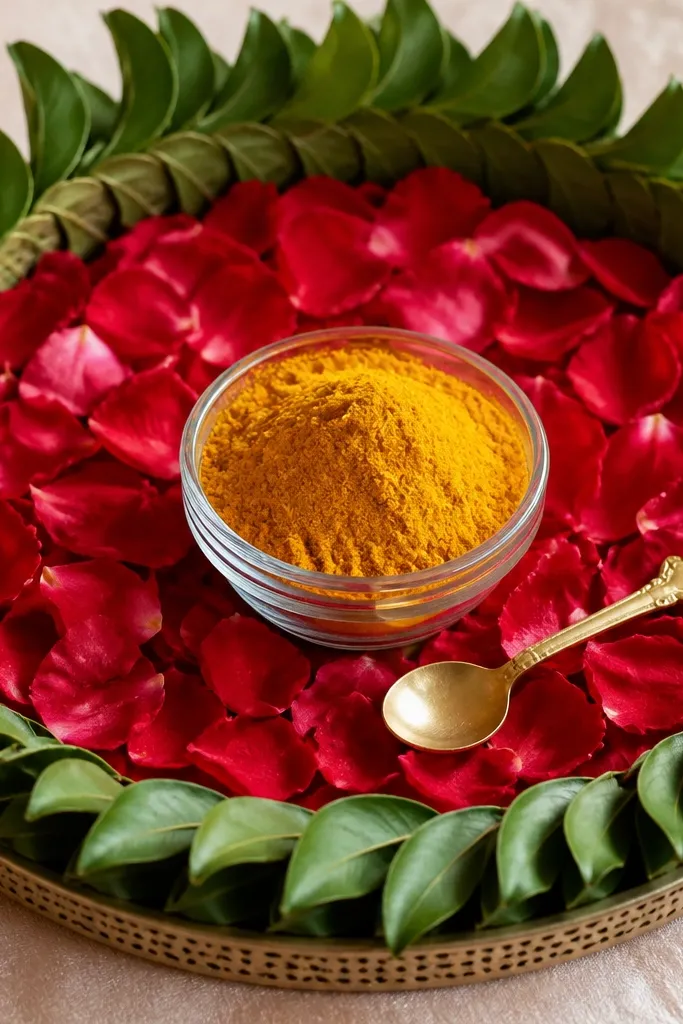
Red rose petals are the fastest way to make haldi decoration ideas look romantic, and the green leaf frame keeps it from turning into a pile. Clear glass makes turmeric look like a glowing gel, which is great for close-up photos. This setup flatters fair to medium skin because the red tones brighten the frame, and the green adds balance. The principle is controlled drama: red petals in a defined area, green around the edges.
Create a green leaf frame by tucking fresh or faux leaves around the tray edge, leaving an open center. Place a clear glass bowl in the center and fill it with turmeric. Spread red rose petals lightly around the bowl base, covering about a 15-18 cm circle. Add one gold spoon or small gold spoon-shaped ornament near the front so the tray has a metal highlight. Keep the rest of the tray bare so the petals don't look messy.
Try thisUse faux rose petals if you want this to last through multiple functions.
Common mistakeAvoid heavy rose petal heaps; they hide the bowl and look like spill.
19. Saffron Thread + Hemp Twine Minimalist
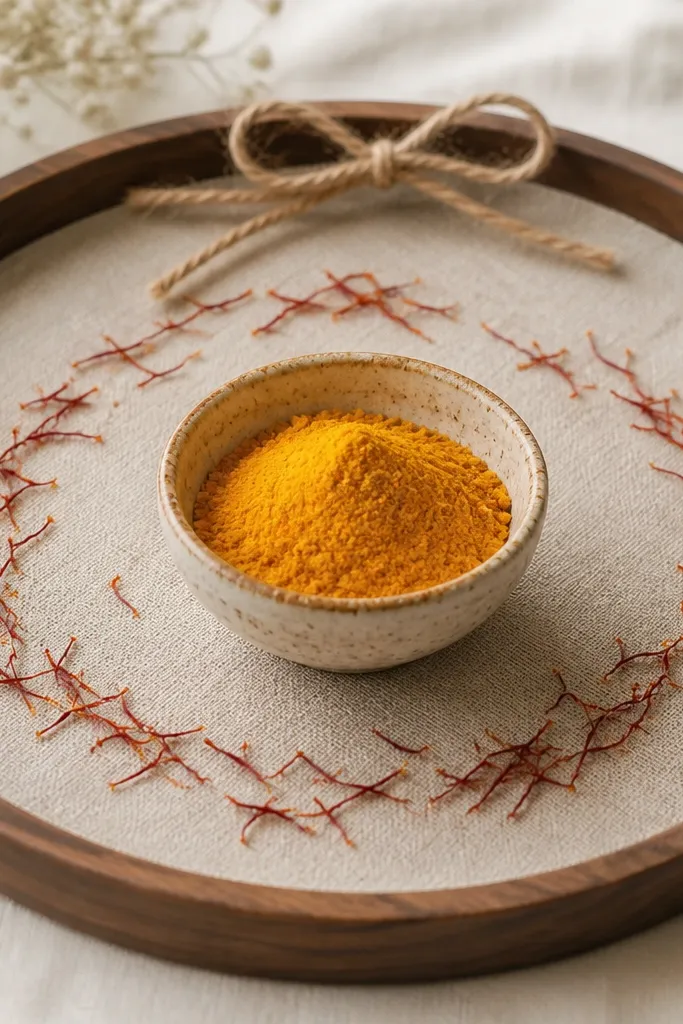
This one looks like a calm modern ritual. Beige cloth keeps everything neutral, saffron thread adds texture that reads well in photos, and hemp twine gives that handmade feel without extra clutter. It flatters all skin tones because it doesn't add strong competing colors. The principle is texture over color: you're using thread and fibers instead of heavy flowers.
Place a beige cloth on the tray and smooth it flat. Put the haldi bowl in the center. Scatter saffron threads in a loose spiral pattern around the bowl, leaving space between threads so it stays airy. Tie a small hemp twine bow and place it at the back edge, then add one tiny green leaf to connect the natural theme.
Try thisUse a small brush to place threads - it stops them from clumping into thick knots.
Common mistakeAvoid using too many threads; it turns into a tangled mess under flash.
20. White Marble Look Tray + Rose Quartz Accents
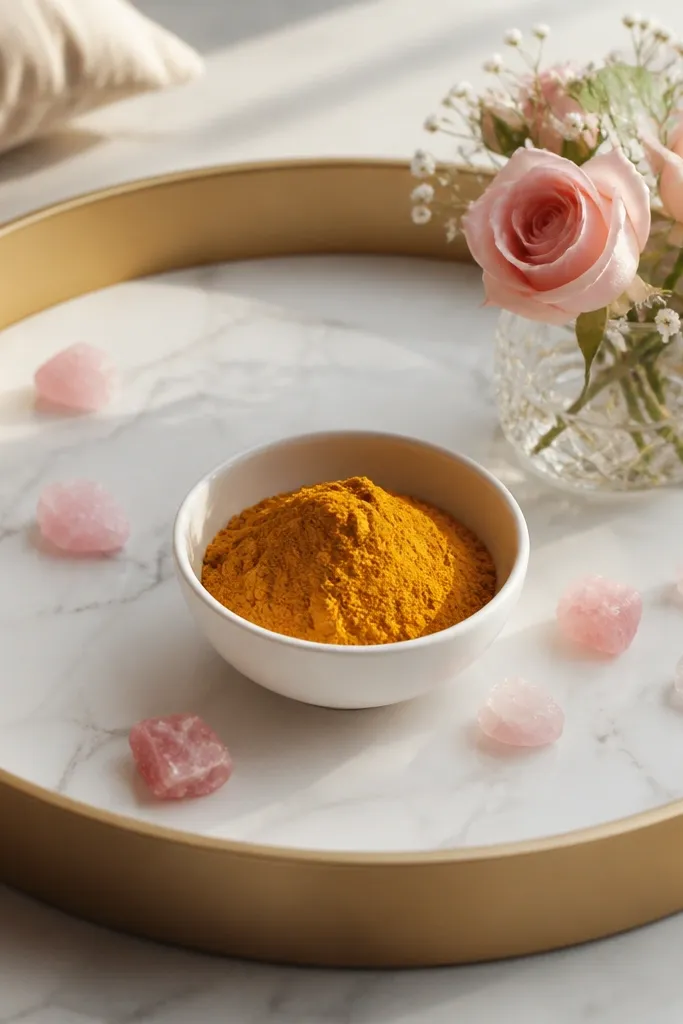
Marble-look surfaces make haldi feel clean and upscale, and rose quartz accents add a soft pink that works with turmeric without overpowering it. This setup photographs beautifully because the white base reflects light evenly, reducing harsh shadows. It's flattering for fair and medium skin tones because the pink stone tones bring warmth. The principle is reflective clarity: a bright background and small gemstone-like accents.
Cover the tray with a marble-effect sheet or white textured paper mat. Place the haldi bowl in the center and keep it slightly elevated on a small folded napkin. Arrange rose quartz stones in a half-moon around the front and sides of the bowl, leaving the back clear. Place a tiny rose flower arrangement at the back right so it creates a diagonal visual line. Add one small gold pin or gold bead near the stones for a metallic highlight.
Try thisWipe stones with a dry cloth before use to remove dust that shows up in close-ups.
Common mistakeAvoid placing stones on top of the bowl rim; it looks crowded and messy.
21. Green Velvet + White Pearl Droplets
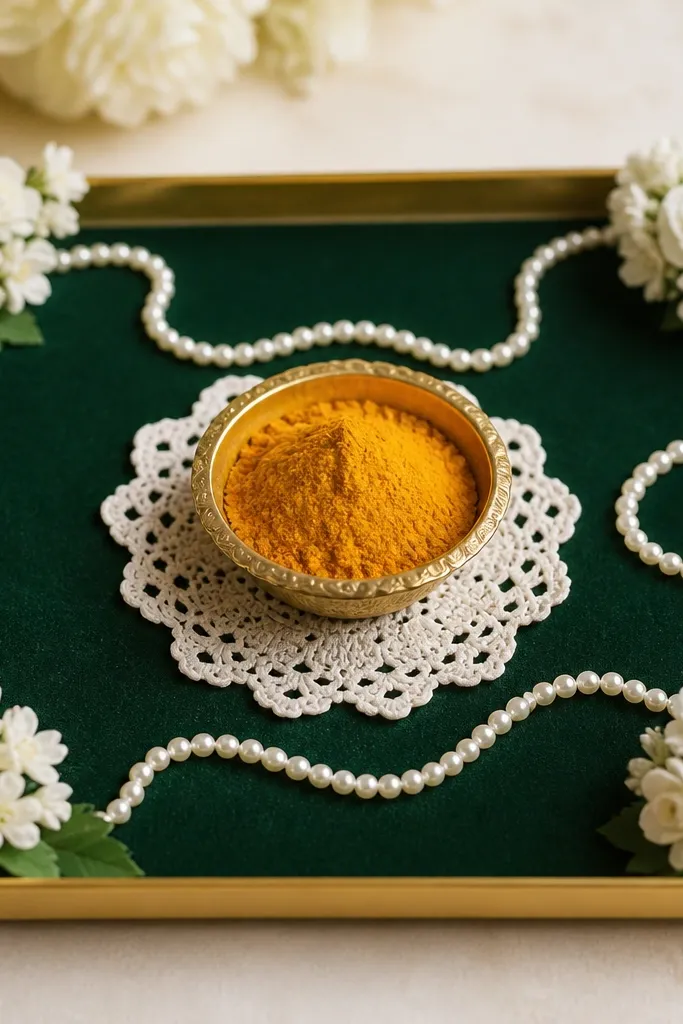
Green velvet gives depth, and the pearl-like bead trail makes the center look like it has a frame. White pearls are a safe accent because they don't clash with turmeric yellow, and they catch light in a soft way. This works for deeper skin tones especially because green velvet makes the whole image look rich without adding brightness that can wash out the face. The principle is a bead trail: guide the eye to the haldi bowl with a curved line.
Line the tray with green velvet or matte green satin and keep it wrinkle-free. Place a small white doily or lace circle under the haldi bowl. Create a curved bead trail around the doily - about 6-8 cm from the bowl edge - so it looks like droplets leading inward. Add small white artificial flowers at two opposite corners and stop there so the bead trail stays the focus.
Try thisUse a glue dot under a few beads so the trail doesn't shift when people move around.
Common mistakeAvoid random bead scattering; it reads as craft clutter, not styling.
22. Red Chilli String + Brass Tray Edge
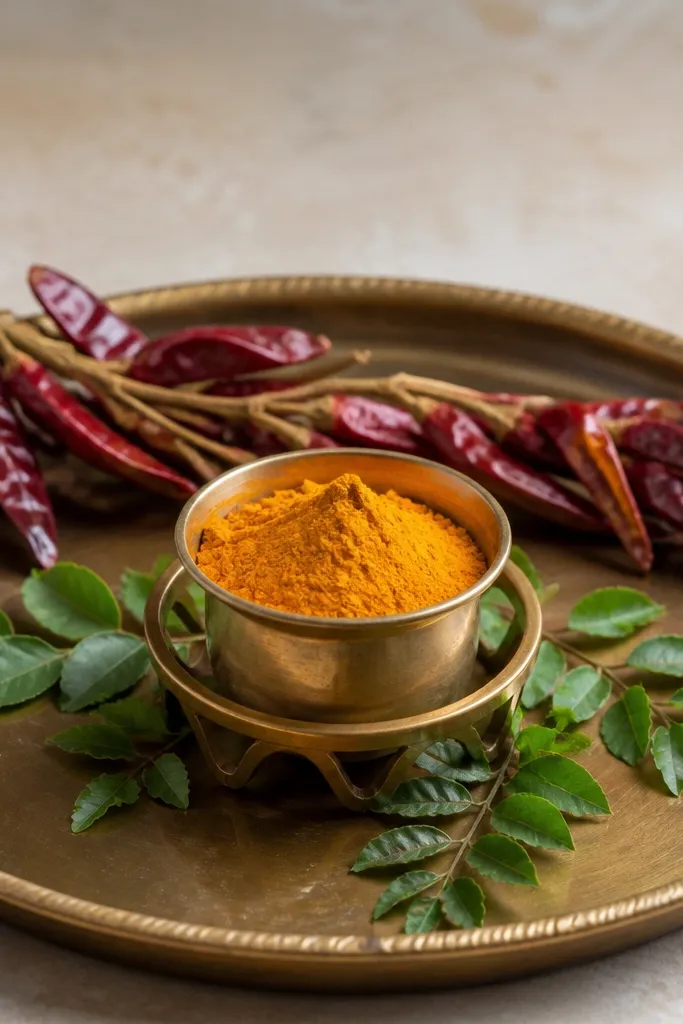
Dried red chilies bring a strong graphic color that pairs well with turmeric when you keep everything else simple. Brass rim details make the setup look formal without needing flowers everywhere. This works best for evening gatherings because the red looks deeper under warm light. It flatters medium to deep complexions because the brass and red create a warm frame. The principle is one bold element: chilies along the back edge.
Use a tray with a visible brass rim if you have one; if not, wrap one side with brass-colored tape for a similar effect. Place the haldi bowl in the center on a small brass stand or small metal plate. Tuck dried red chilies into a string and lay it along the back edge, securing ends under the rim. Add a few green leaves around the bowl base, then add one small diya at front left for balance.
Try thisChoose chilies with intact stems so the string looks neat instead of loose.
Common mistakeAvoid letting chili strings hang over the bowl; it blocks the haldi in photos.
23. Pink Floral Watercolor Runner + Gold Specks
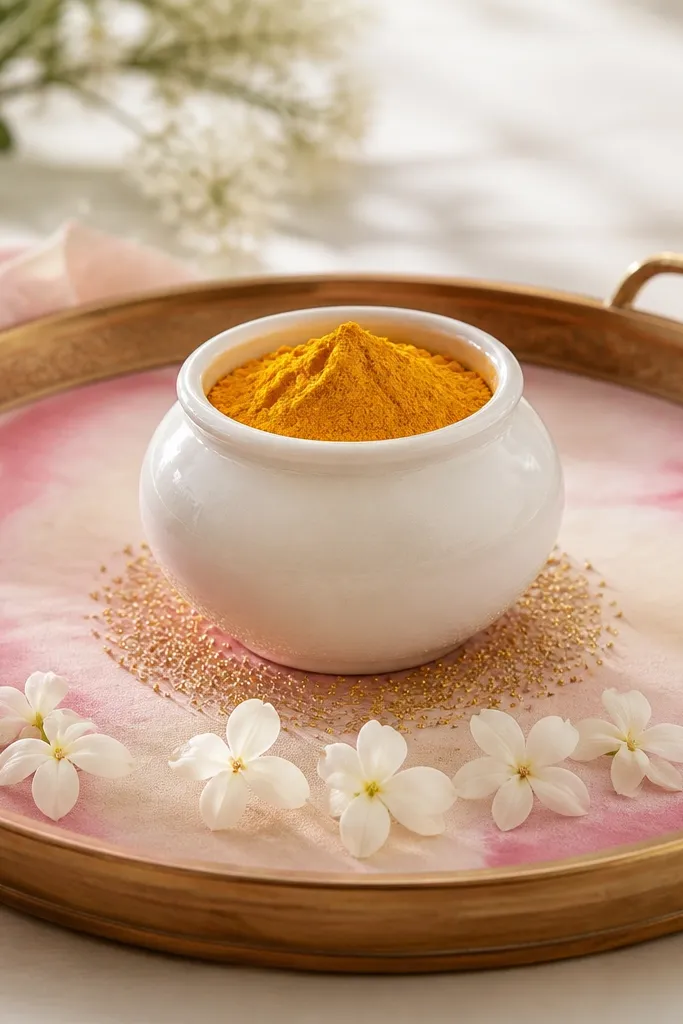
Watercolor-style fabric makes the tray look like it has a background print, which instantly makes it feel styled even with minimal objects. Pink works great with turmeric because it adds softness and keeps the yellow from looking harsh. This flatters fair and cool undertones because pink brings warmth without going too loud. The principle is print + restraint: one printed runner, then small gold and white accents.
Place a pink floral watercolor runner on the tray and center it so the pattern sits behind the haldi pot. Put the haldi pot in the exact middle, then add a few tiny gold specks using gold paint marker or gold glitter glue around the pot base. Add 4-5 small white flowers along the front edge, spaced evenly. Keep the rest of the tray empty so the runner pattern does the work.
Try thisUse a fabric-safe runner and avoid heavy embroidery that lifts and casts shadows.
Common mistakeAvoid adding big marigold garlands over printed fabric; it becomes visually noisy.
24. Green Banana Stem Slice Base + Brass Bow
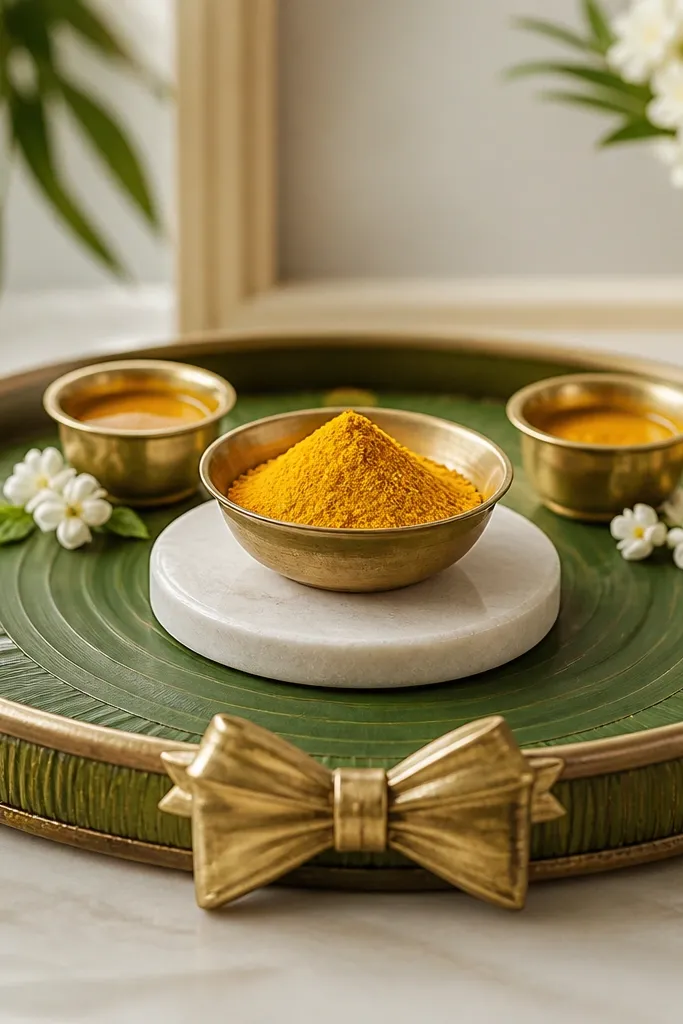
Using banana stem-style mats or leaf-textured bases gives you that fresh green look with a natural pattern, even when you don't want a full banana leaf covering. A brass bow adds a neat, symmetrical touch that makes the tray feel finished. I like this for people who want year round haldi decoration ideas that feel artsy but still traditional. It flatters medium and deeper skin tones because green and brass create warm contrast that reads well on camera. The principle is natural base + one centered metal accent.
Lay a green banana stem slice mat or leaf-textured base on the tray and tuck edges under the rim. Place the haldi bowl on a small white platform or folded cloth so it sits slightly above the mat. Put a brass bow at the front center, then add two mini brass bowls behind the haldi bowl for depth. Finish by placing one small leaf at each side edge, keeping the center clean.
Try thisIf the mat sheds fibers, wipe it lightly and cover with thin clear plastic underlay so it stays tidy.
Common mistakeAvoid too many metal pieces; brass should be one accent, not a full scatter.
25. Handmade Paper Doily + Dotted Turmeric Border
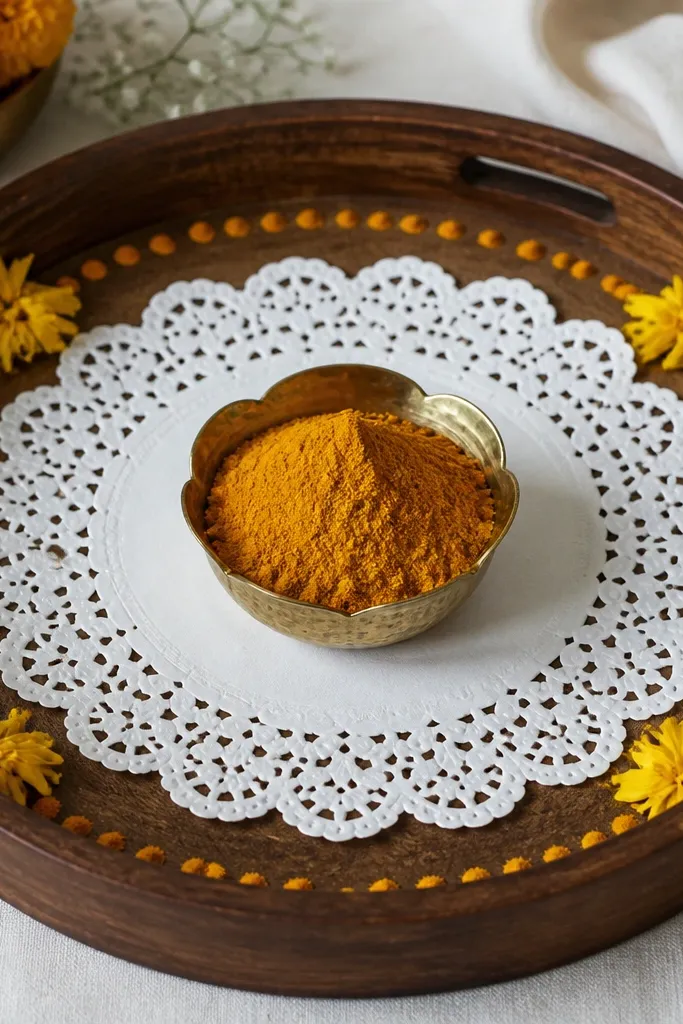
Paper doilies give you a crisp lace-like effect without the mess of real lace. The dotted turmeric border is a clever trick because it keeps the "haldi color" contained to a defined ring. This works for all skin tones because it's mostly white and yellow, with tiny marigold accents only at the edges. The principle is containment: keep turmeric powder in a planned border so it looks intentional, not spilled.
Place a white paper doily in the center of the tray and secure it with a tiny piece of double-sided tape under the rim. Put the haldi bowl right on top or just in front of the doily's center. Sprinkle turmeric powder to form a dotted ring border around the doily - about 2-3 cm away from the bowl. Add small marigold petals in the four outer corners of the tray for symmetry, then keep the rest plain.
Try thisUse a fine sieve for the dots; it gives you clean circles instead of chunky dust.
Common mistakeAvoid thick turmeric blobs - they look like stains on camera.