1. Satin waterfall panel with a pearl-string edge
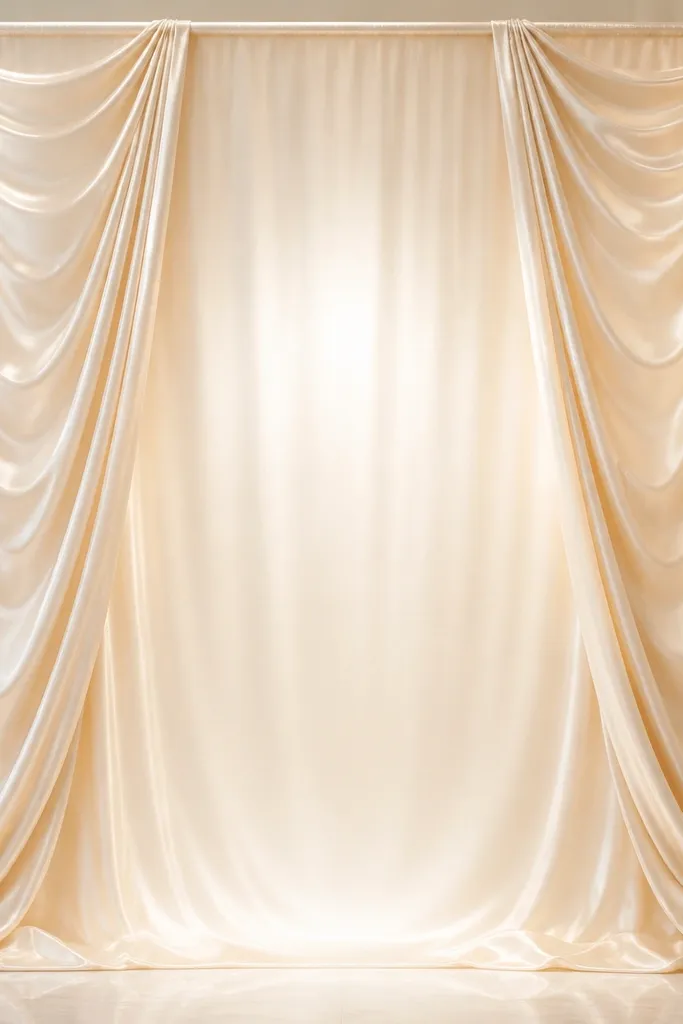
I build this when the room is plain and you need a luxe look without clutter. The champagne satin field gives you a smooth, slightly reflective surface that makes haldi yellow look warm instead of dirty. I keep the center area mostly uninterrupted so the couple stays the focus and the background doesn't compete. Pearl strings on the outer edge add sparkle that shows up even on lower-end phone cameras. This setup flatters most skin tones because the satin reflection warms everything evenly.
First, hang a top bar or use a strong stand, then drape 2 satin panels so they overlap by 6 to 8 inches at the center. Pin the bottom edges so they stop 2 to 3 inches above the floor; that keeps the fabric from pooling and looking wrinkled. Add pearl string along the outer edges - I attach with zip ties to the top bar so it stays straight. Finally, check from the front at eye level and trim any uneven drape so the waterfall edges look symmetrical.
Try thisSpritz a little anti-static spray on the satin before hanging; it reduces cling and keeps the drape smooth on camera.
Common mistakeAvoid matte polyester as the main field - it absorbs light and makes haldi look flat in photos.
2. Champagne organza ruffle frame with a calm center
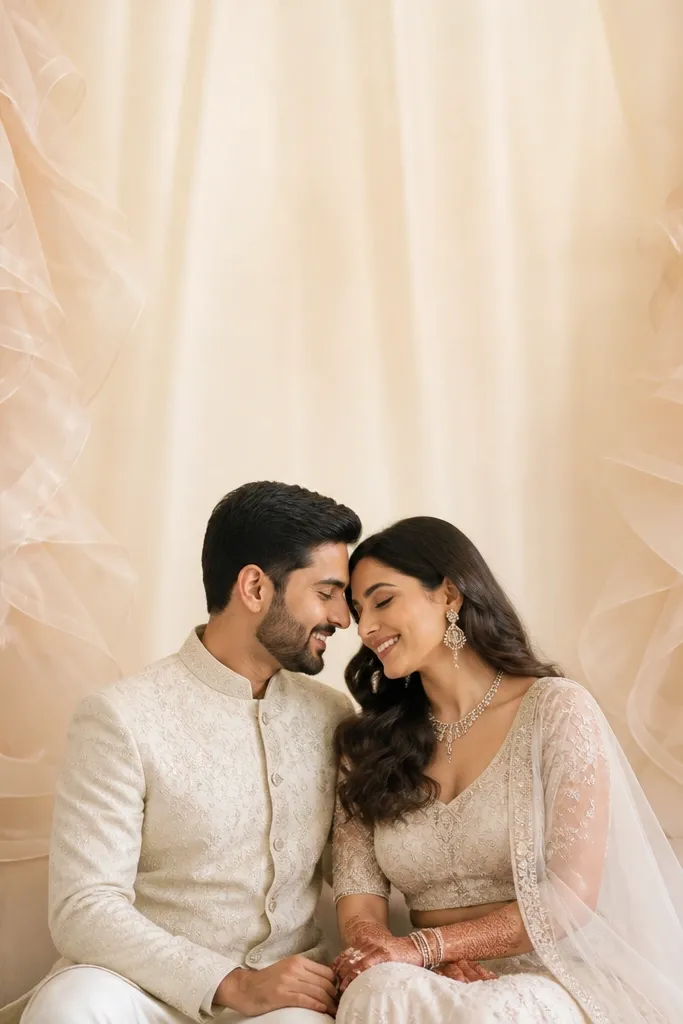
This is my go-to when the mandap already has flowers and you don't want the background to feel crowded. Organza ruffles look luxe because they create volume without looking heavy, and the semi-transparent layers let light pass through. I pair it with a calm center panel so skin tones stay clear and haldi doesn't blend into a busy pattern. This also helps if you have a smaller room, since the airy frame doesn't feel bulky. It flatters leaner frames because the ruffles add width around the head and shoulders.
Start by cutting organza into long strips about 10 to 12 inches wide, then gather each strip with a basting stitch so you can control fullness. Attach the gathered strips to the sides of a half-frame at two heights: one around eye level and one around shoulder level. Keep the center panel as plain champagne fabric - I use satin or silk-sheen here for consistency. Secure all ruffle edges with hidden clips so the outline stays crisp.
Try thisUse two organza textures: one slightly thicker for the outer edge and a thinner one for inner ruffles - it adds depth without extra flowers.
Common mistakeSkip thick tinsel garlands inside the frame; they look sparkly in person but cheap on camera.
3. Marigold-free luxe: ivory tulle cloud backdrop
This is for the people who want haldi to feel upscale without relying on marigolds everywhere. Ivory tulle creates a soft cloud effect that makes haldi powder look like golden mist instead of a stain. I keep the tulle layered in uneven heights so it creates dimension, but the overall palette stays neutral. It flatters deeper skin tones because ivory reads bright and lifts the face. For fair skin, it prevents the yellow from overpowering and turning the complexion blotchy.
First, hang a sheer backing sheet behind the tulle so it doesn't look see-through from angles. Then create three tulle zones: base drape at 2 feet from the floor, a mid cloud at head height, and a top cloud 6 to 10 inches above the tallest head. Gather tulle with light tension so it puffs but doesn't sag; I secure the gathers to a top seam using cloth tape. Finish with a thin satin ribbon border to frame the clouds.
Try thisAdd a single line of warm white LED fairy lights behind the tulle - not in front - so the glow diffuses through the fabric.
Common mistakeDon't use black or dark gray tulle; it makes haldi look muddy and harsh on skin.
4. Gold foil balloon arch behind the couple
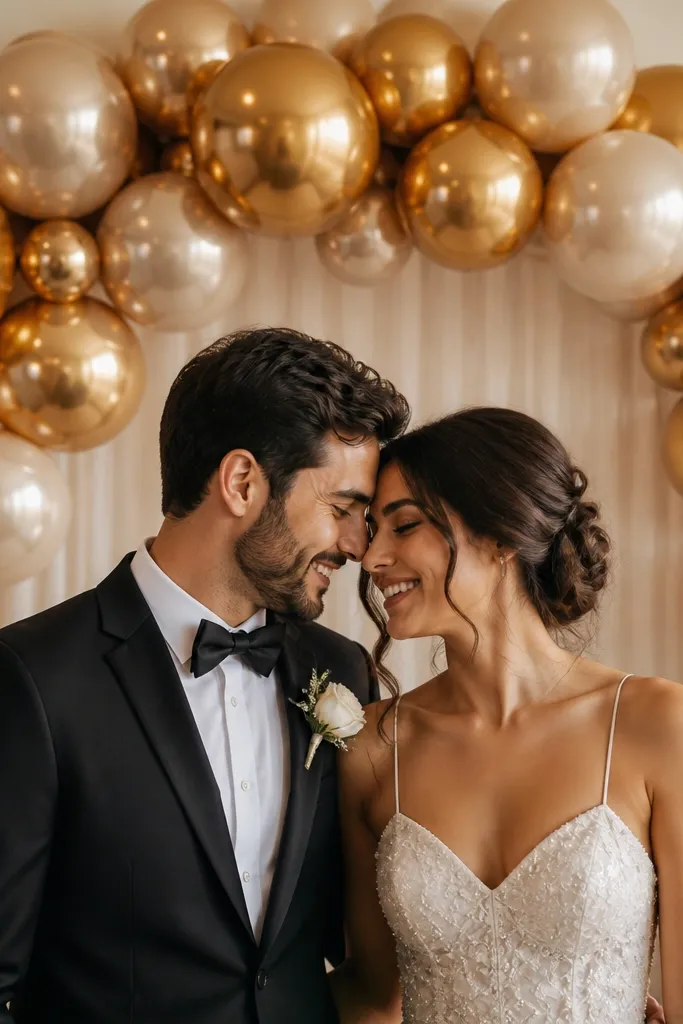
If you want instant "luxe" without fabric work, this is the easiest win. Gold foil balloons reflect warm light and create a clean geometric frame, so the couple looks centered and styled. I keep colors to champagne, gold, and a tiny bit of blush so the yellow haldi doesn't clash. This works especially well for photos taken straight-on because the balloon curve forms a flattering silhouette. It also helps if you're doing haldi in a backyard where the wall background is messy.
First, build a simple arch stand and inflate a mix of 18-inch and 12-inch champagne-gold balloons. Use balloon glue dots or strong double-sided tape to assemble the arch - keep spacing tight so gaps don't show. Place a plain satin or silk-sheen sheet behind the arch to hide the stand. Then add a thin pearl garland at the base of the arch so the balloons look intentional, not random.
Try thisChoose balloons with a warm gold tone, not yellow-gold; yellow-gold fights the haldi color.
Common mistakeAvoid silver balloons; they reflect cool tones and make skin look gray in indoor lighting.
5. Cream silk-sheen drape with scalloped lace border
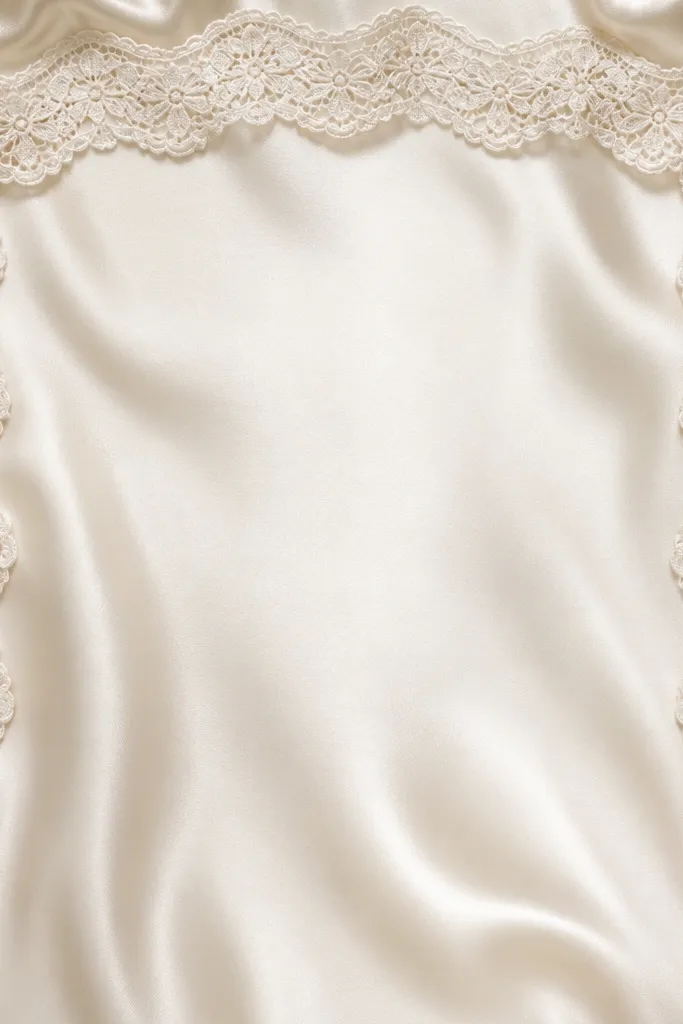
This looks luxe because the border does the work. Silk-sheen fabric gives you that soft shine, while scalloped lace adds a delicate pattern that reads "hand-finished." I use this when outfits are already detailed, like a heavy gota patti kurta or a silk sari with embroidery. The lace pattern frames the face area and keeps the rest of the background calm. It flatters oval and heart-shaped faces because the scallops create a gentle lift around the forehead and cheeks.
Start by draping cream silk-sheen in one vertical panel or two overlapping panels, and keep the seam hidden behind a lace edge. Attach lace along the top bar and down both sides, using small safety pins or fabric clips every 6 to 8 inches. Add a second lace strip at the mid height across the center so the background has two horizontal anchors. Finish by smoothing the satin with your palm - don't press with heat - so it stays glossy.
Try thisMatch lace color to your outfit's undertone: warm ivory lace for warm gold jewelry, white lace for cooler silver tones.
Common mistakeDon't use cheap net lace; it looks scratchy and catches light in a harsh way.
6. Monochrome sage + ivory drapes for a modern haldi
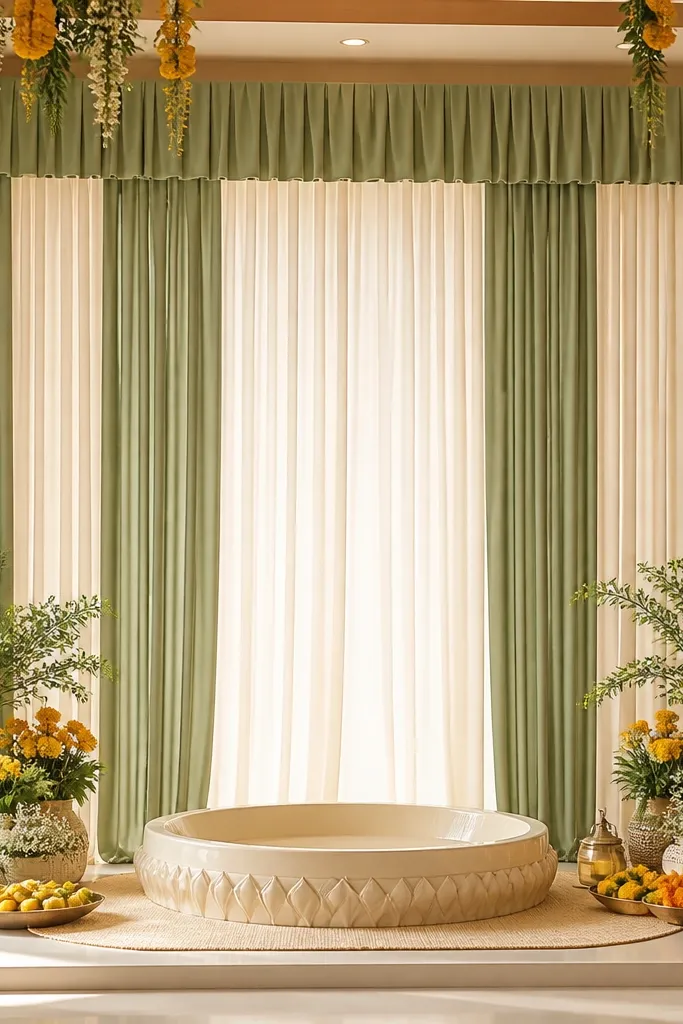
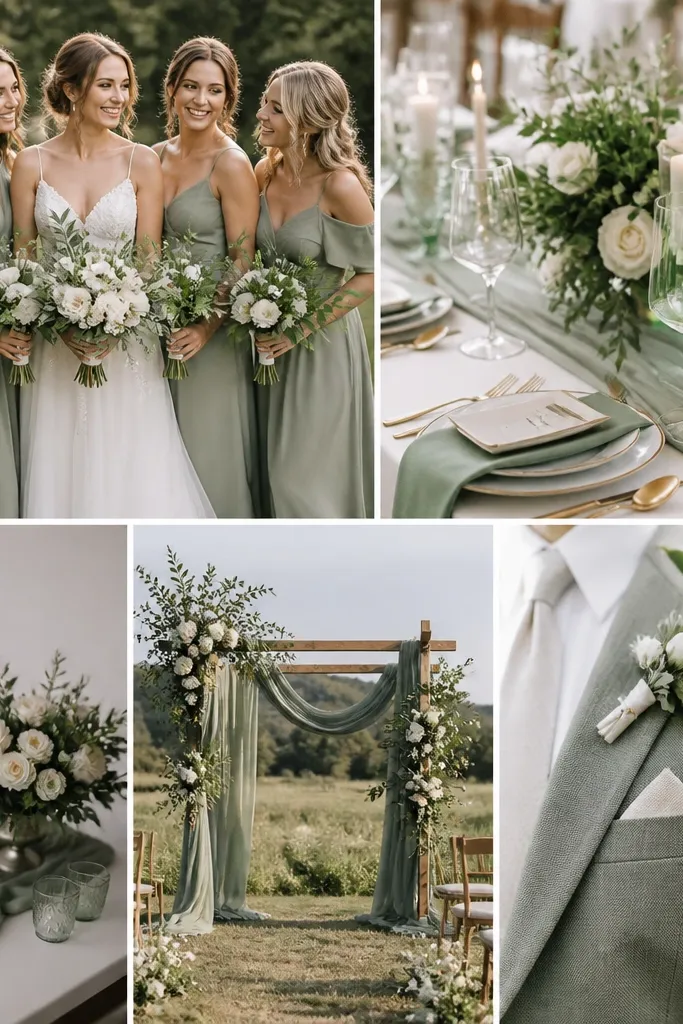
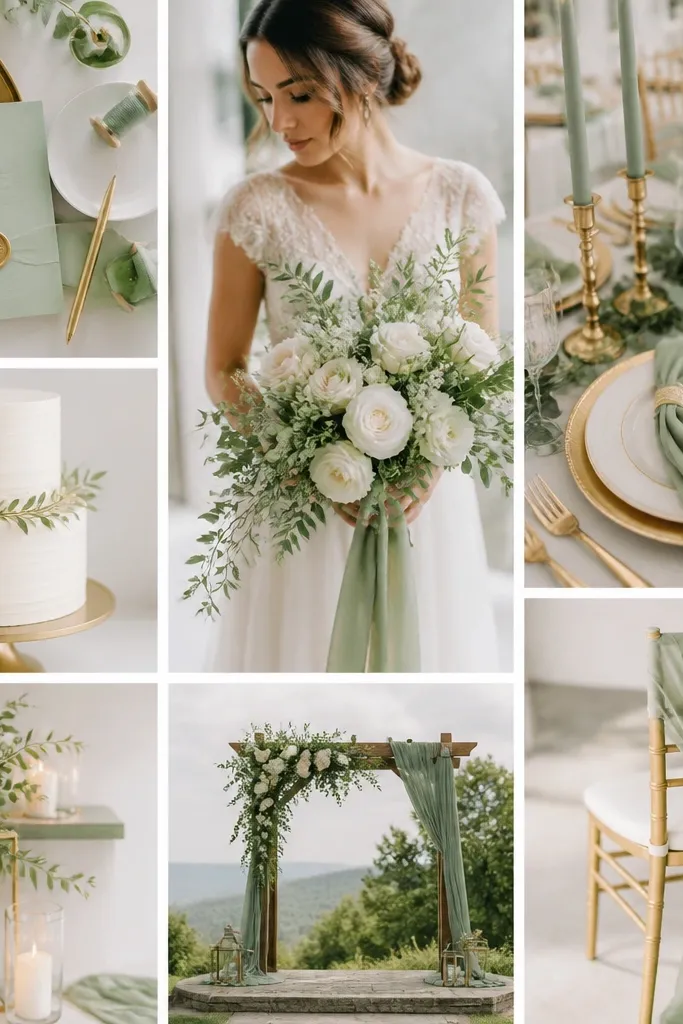
This is how you get luxe without going full gold and marigold. Sage and ivory create a calm, high-end contrast that makes yellow haldi pop without turning everything into a single color. I've used this for couples who wear pastel outfits, and the background makes their fabric look richer. Sage also photographs well because it doesn't absorb the warm indoor light the way dark colors do. It works for most skin tones, especially if you want a fresh look for an outdoor haldi.
Start with an ivory satin center panel and then add two sage drapes on the sides, each about 18 to 24 inches wide depending on your frame size. Keep folds vertical and tight so it looks tailored, not messy. Add a sage top valance that sits 4 to 6 inches below the ceiling or top bar. Finally, tie the side drapes with ivory satin ribbons at mid height so the drape shapes stay consistent.
Try thisUse matte sage fabric only on the sides; keep the center satin so the photos stay bright.
Common mistakeAvoid mixing too many greens; two shades max keeps it expensive-looking.
7. Golden jute fringe with a satin inner frame
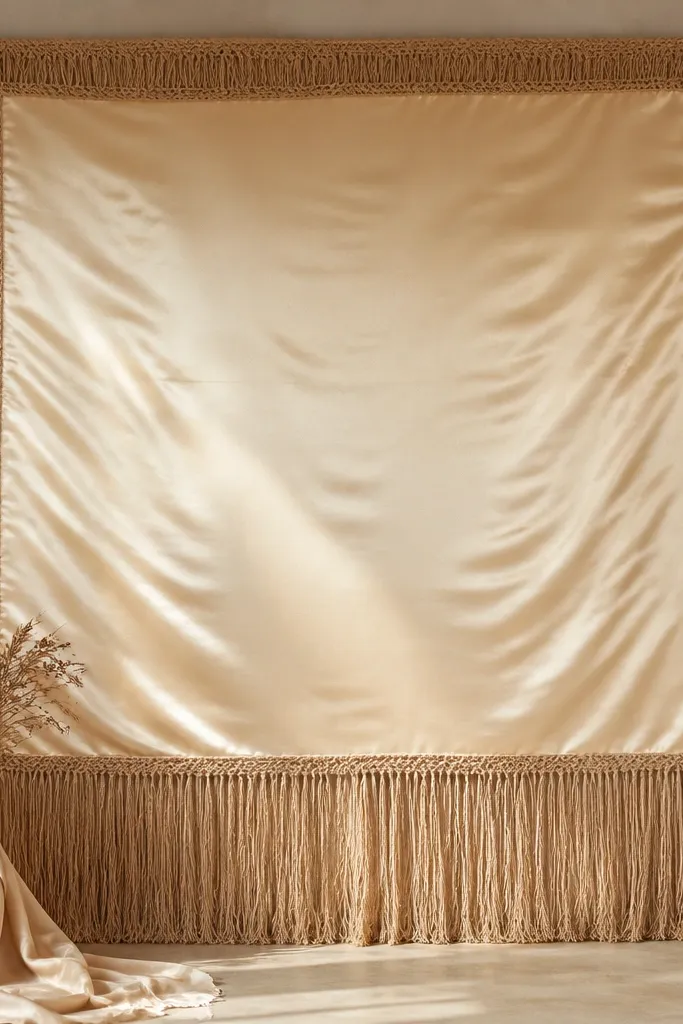
Jute sounds rustic, but when you frame it inside satin, it reads luxe and intentional. The fringe adds texture that holds attention in photos, and the satin inner rectangle keeps the center clean for portraits. I use this when I'm styling for a couple that likes warm, earthy tones but still wants their haldi pictures to look polished. It flatters hands and jewelry because the textured border doesn't compete with skin. It's also forgiving if your wall behind the setup is uneven.
First, measure the rectangle you want behind the couple - for most photo setups, 6.5 to 7.5 feet wide and 7 feet tall. Hang satin as the inner panel, then wrap jute fringe around the outer edge using twine loops tied to the frame. Keep the fringe length consistent, around 10 to 12 inches from the top edge. Add a thin gold ribbon at the top border so the texture looks finished, not raw.
Try thisLightly mist the jute with a fabric-friendly anti-frizz spray so strands fall straighter on camera.
Common mistakeDon't leave the jute ends uneven; uneven fringe makes it look handmade in a messy way.
8. Floral-less stacked garland using warm white faux blooms
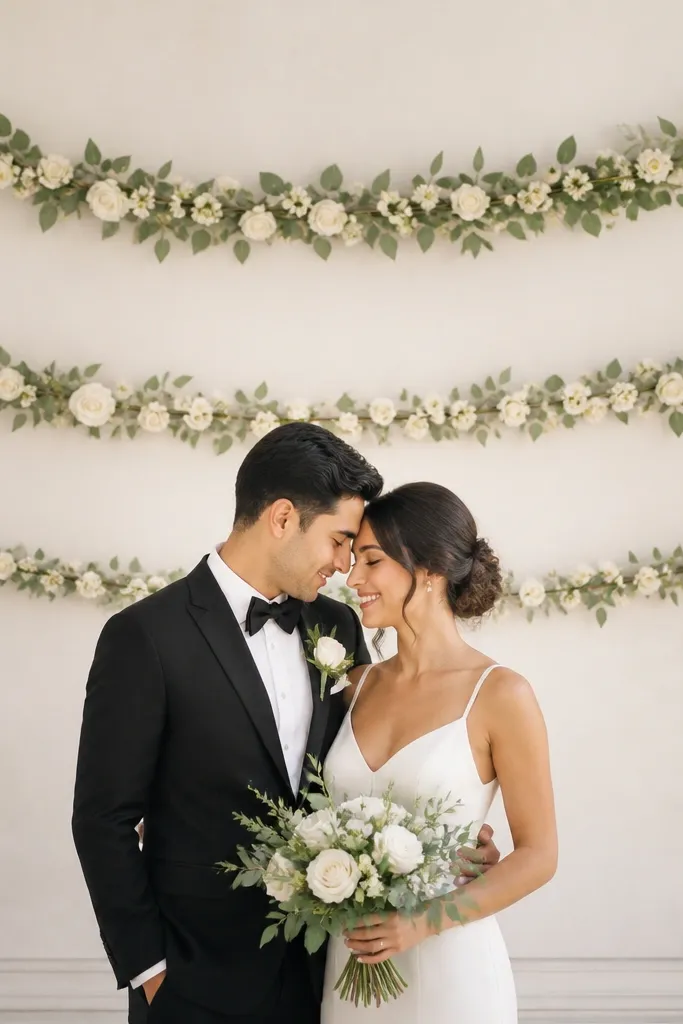
You can get luxe with flowers without going heavy. I stack warm white faux blooms in horizontal bands because it creates rhythm and depth without cluttering the couple. The warm white palette makes yellow haldi look like it belongs, not like an accident. This setup flatters both petite and taller frames because the bands guide the eye across the face. It's also a lifesaver when you want a background that matches multiple outfit colors.
Start by installing a sturdy frame or top net, then attach three garland rails using zip ties. Build the top band first so it sits above hairline by 6 to 8 inches, then place the second band at head height and the third at shoulder height. Use garlands with small blossoms, not huge ones, so the texture stays fine-grained. Leave the center gap slightly lighter by reducing garland thickness in the middle.
Try thisAdd one satin ribbon bow at the center seam between bands; it gives "styled" energy instantly.
Common mistakeAvoid bright neon yellow flowers; they fight haldi and turn photos greenish.
9. Mirror-style gold frame with sheer drapes
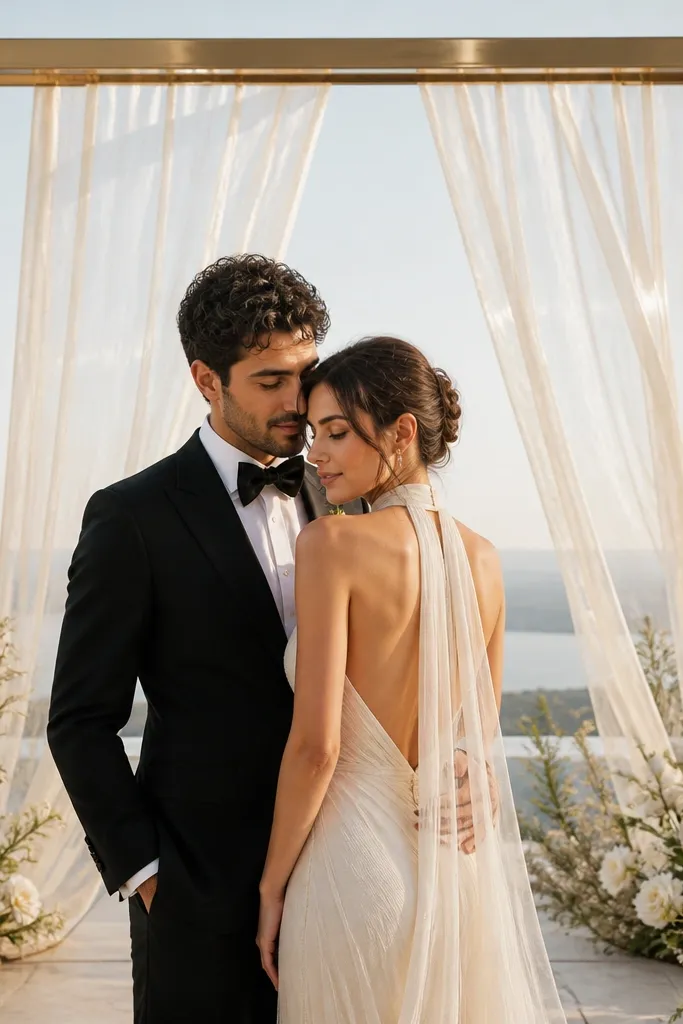
This looks expensive because it's architectural. A gold metallic frame gives you sharp edges that read polished even when the room lighting is messy. Inside, sheer ivory drapes soften the frame so it doesn't look like a photo booth prop. I use this when the couple's outfit has geometric embroidery or when you want a modern, styled look. It flatters camera angles because the frame lines pull focus toward the face. For darker skin tones, the gold reflection adds warmth without looking orange.
First, set up a rectangular frame at about shoulder height behind where the couple will stand. Hang sheer ivory panels inside the frame with 2 inches overlap so there's no gap. Tie the sheers at two points: one around mid-height and one near the bottom so they fall in controlled folds. Add a thin gold garland or pearl string along the inner edge of the frame to hide the attachment points.
Try thisPlace a warm light source slightly to the side (not straight behind) so the gold frame highlights without blowing out the photo.
Common mistakeDon't use heavy black backing with this frame; it makes reflections look harsh.
10. Rose-gold sequin curtain with a satin base
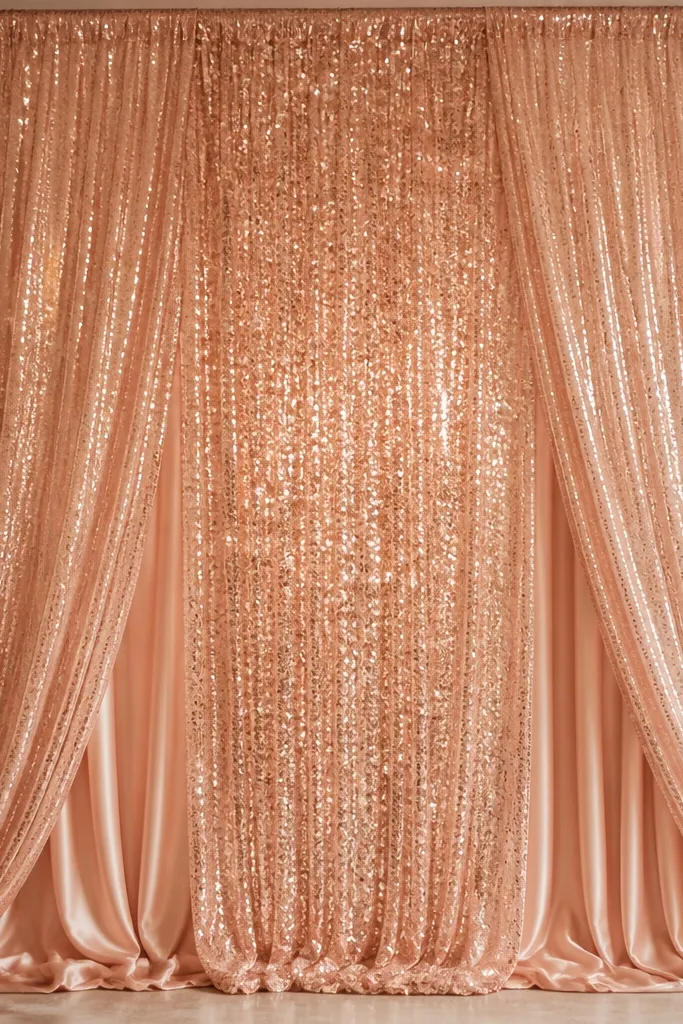
If you want haldi photos that look like a party, this is the move. Rose-gold sequins reflect warm light and create a soft sparkle, so your haldi doesn't look like powder on a plain wall. I layer sequins over satin so the background stays smooth and doesn't look see-through. This flatters most skin tones because the shimmer is warm, not icy. It also works well with outfits that have gold jewelry or rose undertones.
Start by hanging satin base fabric first, then add the sequin curtain in two overlapping panels so the center doesn't show gaps. Secure the top edge tightly to prevent sag; I use zip ties through the top seam. Keep the curtain width slightly wider than your frame so it drapes without tension pulling. For portraits, add a plain satin tie-back at shoulder height so the couple stands in front of a cleaner sparkle zone.
Try thisUse a lint roller on the sequins before setup; loose bits show on phones as tiny dark specks.
Common mistakeAvoid silver sequin curtains; they can make haldi look cool-toned and less flattering.
11. White and gold balloon + tulle hybrid
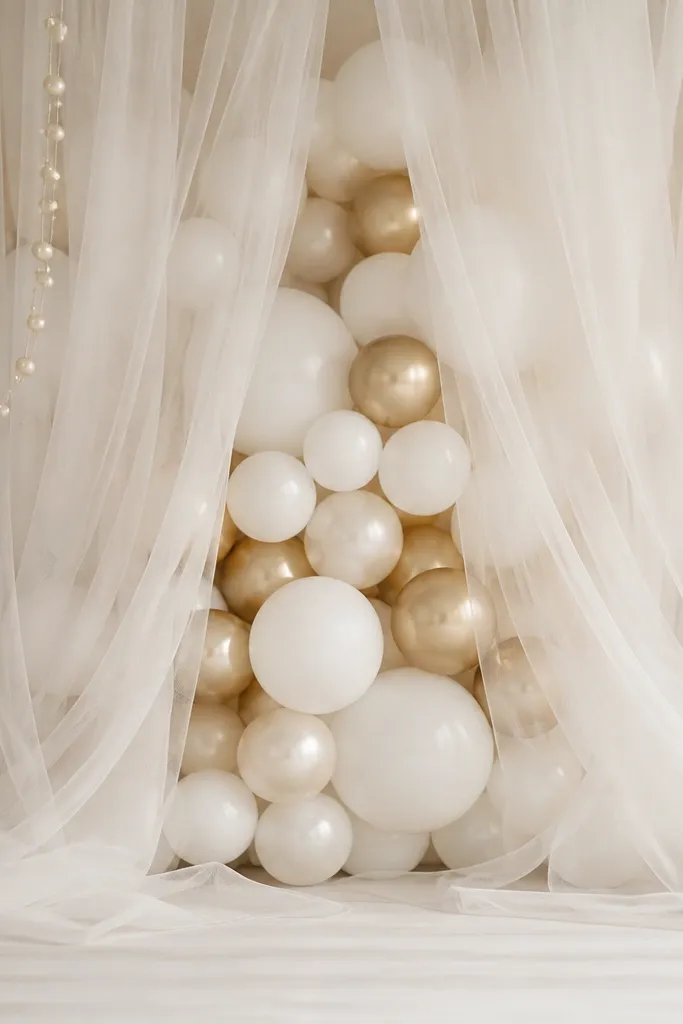
This hybrid gives you the best of both worlds: structure from balloons and softness from tulle. The balloons create a rounded center that frames faces, and the tulle prevents the background from looking too "party-store." I use mostly white and gold so the haldi yellow blends smoothly. This is great for couples who want a luxe look but don't want heavy floral work. It flatters wide shoulders because the balloon center adds height and balance.
Start by building a simple stand and attaching a tulle curtain panel in the center. Inflate white and champagne balloons - mix sizes like 16-inch and 12-inch - then anchor them behind the tulle so they push the fabric outward. Add a thin pearl garland around the outer edge of the tulle so the transition looks intentional. Keep the bottom 8 to 10 inches clear so your legs and outfit aren't blocked.
Try thisTie balloons to the frame with fishing line - it stays invisible and won't snap like cheap string.
Common mistakeDon't let balloons hang in front of the couple's face line; it blocks flattering angles.
12. Gold tassel fringe curtain with warm white uplights
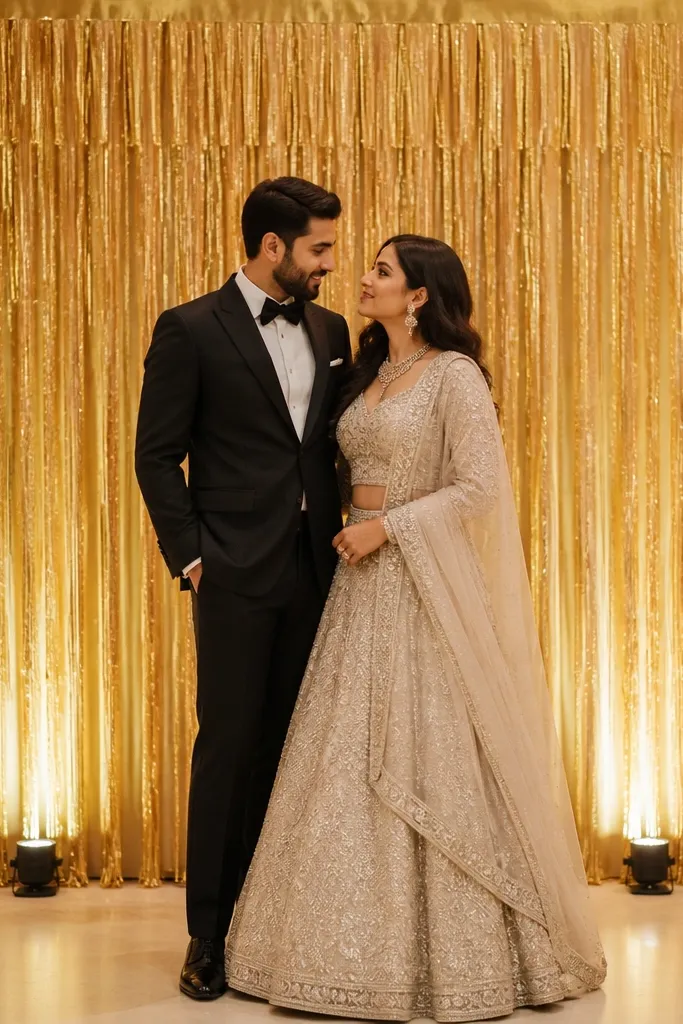
Tassel curtains look luxe because they move with the air and catch light in layers. When you pair them with warm white uplights, you get a glow that makes haldi look like it's part of the lighting design. I like gold tassels over yellow ones because yellow tassels blend with haldi and lose definition. This setup flatters people who wear sleeveless or off-shoulder outfits because the background adds vertical lines. It also looks great for video, not just photos, because the tassels sway slightly.
First, hang a satin header strip on a top bar and attach the tassel fringe to it, making sure strands are even. Aim uplights from both sides of the backdrop, angled upward so light hits the tassels from below. Keep the tassel density medium so the couple isn't swallowed by the shimmer. Finally, check the camera - if the shimmer is too bright, reduce the uplight intensity or move the lights farther back.
Try thisIf you're doing haldi outdoors, use slightly heavier tassels so wind doesn't blow them flat.
Common mistakeAvoid cool blue lights; they make gold tassels look greenish and skin look tired.
13. Ivory satin + folded pleat fan backdrop (behind head)
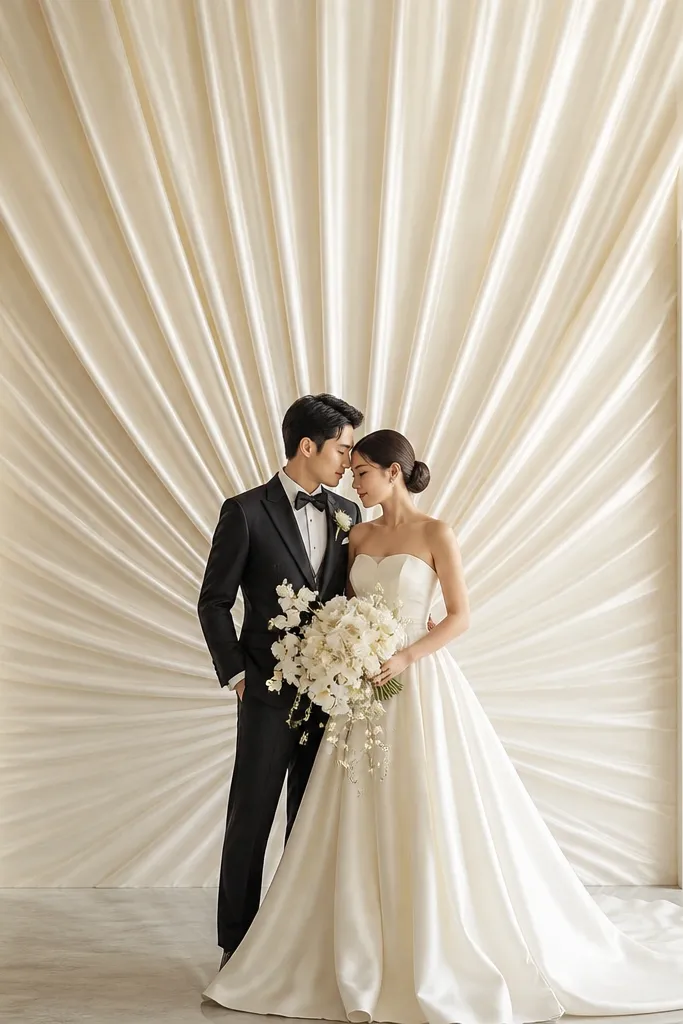
This is a styling hack I learned the hard way: pleats look expensive because they create pattern without needing flowers. A folded pleat fan behind the head gives a halo effect that makes faces look brighter, even when haldi powder is all over. I use ivory satin for smooth pleats that reflect light gently. It flatters round faces because the fan shape adds vertical structure. For longer faces, the halo effect balances the proportions by widening the area around the forehead.
Start by cutting or sourcing pleated satin panels - if you're making it, press pleats 1.5 to 2 inches wide for a clean look. Mount the pleat fan behind the couple at head height, centered, leaving the lower area plain so outfits aren't blocked. Secure the pleats at the center with a hidden pin or clip and let the pleats fan outward evenly. Finish by adding a thin satin border around the fan so edges don't look raw.
Try thisUse two fan sizes: one tighter behind the head and a wider, flatter pleat layer above shoulder level.
Common mistakeDon't use wrinkled satin pleats; creases read as cheap and ruin the halo effect.
14. Warm white faux pearl strings with draped chiffon arcs
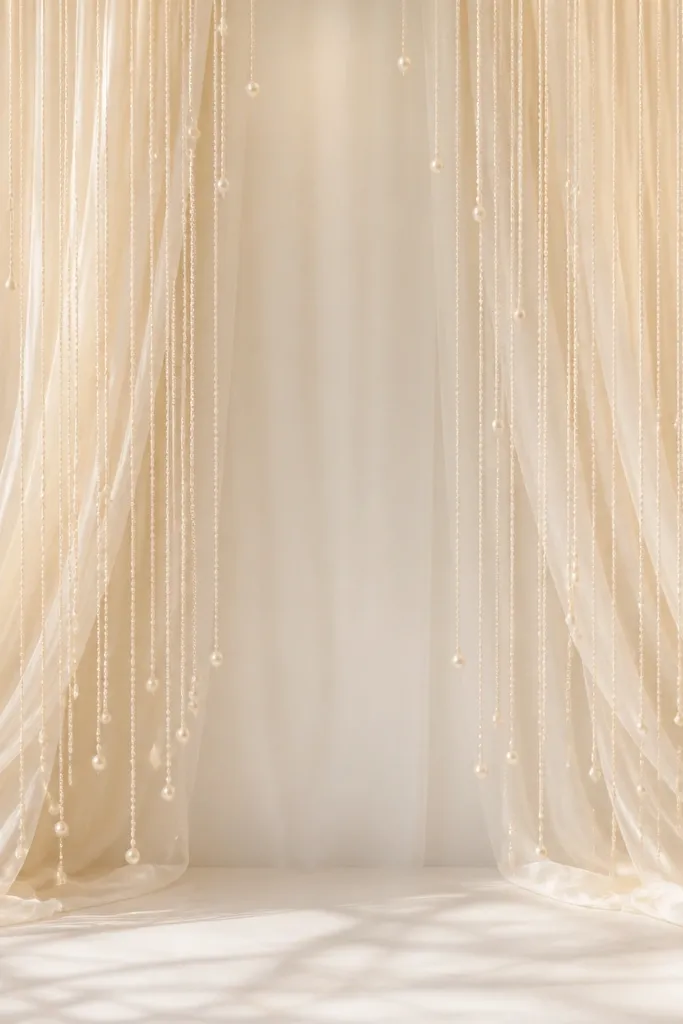
Pearl strings look luxe because they create fine highlights, and chiffon arcs make the shape feel designed. I like this when the couple's outfits are elaborate and you want the background to be romantic but not heavy. The warm white pearls don't clash with haldi yellow, and the chiffon arcs soften the edges so everything looks cohesive. This flatters petite frames because the arcs create gentle curves near the face without overwhelming height. It also works well for both men and women outfits because the palette is neutral.
First, hang chiffon arcs on both sides of the backdrop, each arc starting around shoulder height and curving toward the top bar. Drape a plain chiffon or satin base behind the arcs so the pearl strings have a clean background. Attach faux pearl strings vertically in the center area, leaving the outer edges less dense. Finally, tie the ends of the chiffon arcs with a small satin ribbon so the curves stay consistent for photos.
Try thisKeep pearls at least 6 inches behind the chiffon layer so they don't tangle and so the highlights look layered.
Common mistakeAvoid mixing pearl strings with big plastic beads; it reads costume-grade on camera.
15. Two-tone velvet drape with a warm gold top band
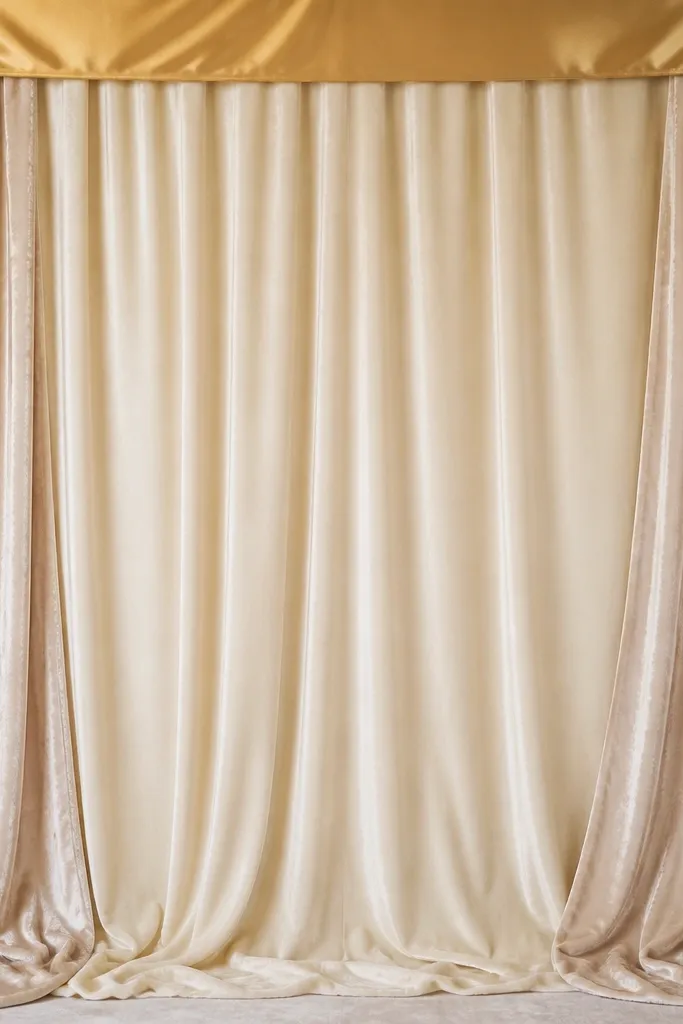
Velvet is the quickest way to make haldi look like a styled event, not a powder moment. Two-tone velvet adds depth because the pile texture changes how light hits the background. I use cream velvet at the center to keep the face area bright, and champagne velvet on the sides to frame without overpowering. The warm gold top band makes the whole thing look finished, like a proper stage. This flatters people with warmer undertones and also looks great with gold jewelry because the colors harmonize.
Start by hanging the top gold satin band at the exact height where you want the frame to end - usually around head height plus 6 inches. Drape cream velvet in the center with 8 to 10 inches overlap, then add champagne velvet on the sides with tighter folds so it looks structured. Secure the velvet at the top and midpoints with clips so it doesn't slump. Keep the bottom edges clean and straight by trimming excess length and pinning before you let it fall.
Try thisUse a soft garment brush to wake up velvet pile before the shoot; it makes the texture glow instead of look flat.
Common mistakeDon't use shiny satin as the main velvet substitute; it looks glossy but lacks that soft, expensive depth.