1. Cream Linen + Terracotta Napkin Ribbons
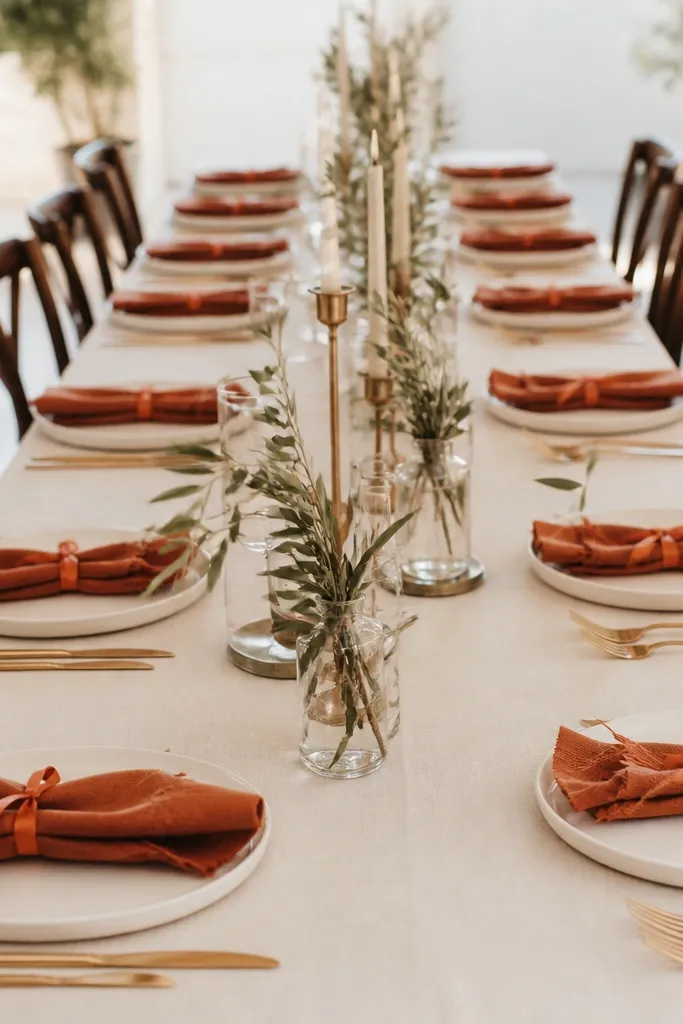
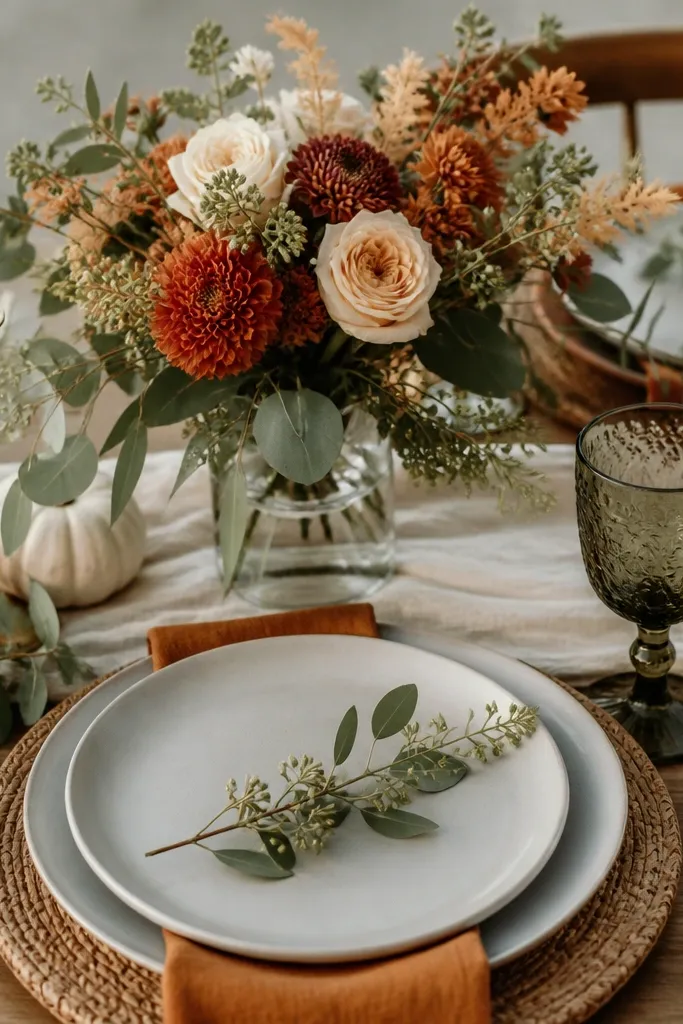
This setting leans warm and soft because the base is true cream linen, not bright white. Terracotta napkins add color without overpowering the food, and the ribbon tie keeps the napkin looking intentional at every seat. I like matte off-white plates here because they absorb light like terracotta clay - it looks cohesive in daylight and candlelight. Brass flatware makes the terracotta glow instead of turning flat. This works especially well for olive-skin tones and light to medium hair - it makes warm undertones look healthy and photo-ready.
Start by laying cream linen with a slight puddle (about 2-3 inches of drape) so the table looks dressed, not staged. Add matte off-white plates and place terracotta napkins folded into a simple rectangle, then tie with a 1/4-inch terracotta satin ribbon. Put brass flatware on a slight diagonal so it catches light when guests move. Center pieces should stay low: use small bud vases or squat glass holders with olive sprigs and a few dried wheat stems. Finish with a row of tea lights in clear glass cups spaced every 18 inches along the centerline.
Try thisUse terracotta ribbon from the same dye lot as the napkins so the undertone matches under warm bulbs.
Common mistakeAvoid bright white plates with this - the contrast makes terracotta look dirty instead of warm.
2. Antique Gold Cutlery + Saffron Terracotta Charger
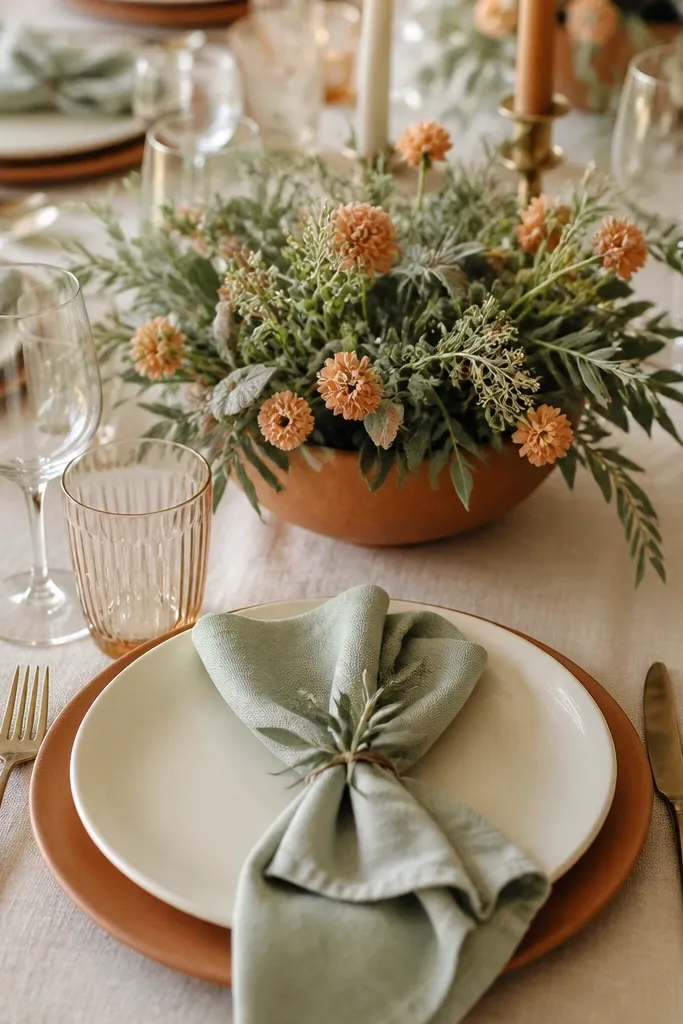
This one is for people who want terracotta to feel more styled than rustic. The charger layer gives the table depth, and terracotta chargers in a slightly darker shade (more burnt clay, less orange) look expensive next to cream dinner plates. Dusty sage napkins cool the palette just enough so terracotta doesn't dominate every photo. Antique gold cutlery adds warmth without the mirror shine of polished gold. It flatters medium and deep skin tones because the palette has enough contrast to frame faces without making them look washed out.
Begin with cream dinner plates and add terracotta chargers underneath - aim for a 1 to 1.5 inch reveal around the edge. Fold sage napkins into a "hotel" style (crease down the middle, then fold into thirds) and place them centered. Set antique gold forks and knives at 1 o'clock and 7 o'clock positions, aligned so the tines point toward the top third of the charger. For the centerpiece, choose one low ceramic bowl per every 8-10 seats and build it with sage leaves, a few dried seed heads, and small peach-orange flowers. Add a few matching terracotta tea light holders on the outer edges of the table for continuity.
Try thisIf your chargers are matte, keep your glassware also matte (smoked or amber tinted) so the textures match.
Common mistakeDon't use neon orange terracotta - it reads cheap next to sage and gold.
3. Terracotta and Olive Runner with Linen Napkins
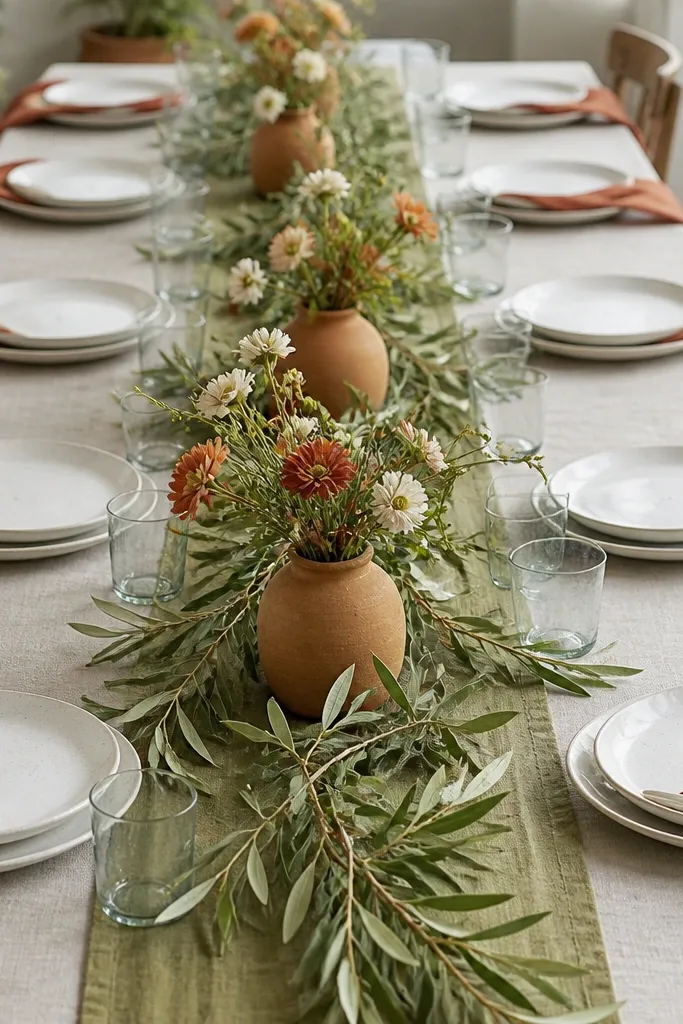
A narrow olive runner is my favorite way to make terracotta feel intentional instead of random. The runner anchors the table, and the terracotta napkins pop at each seat like little color blocks. I use speckled white plates here because the speckles mimic natural stone and keep the palette from looking flat. Olive greenery gives you the "garden" look without requiring big flower budgets. This combination is flattering for fair skin because the olive adds contrast and keeps faces from blending into cream.
Lay a linen runner in olive down the center, about 14-16 inches wide, with the edges straight and pressed. Place speckled white plates and keep the dinner plate centered under each napkin. Fold terracotta linen napkins into a simple fan by pinching the center and fanning the sides, then set them slightly off-center toward the fork. Build the centerpiece as a continuous row: olive branches laid end-to-end with small clusters of muted orange and white flowers tucked in every 12-14 inches. Add clay jars (small, 4-6 inches tall) at intervals so the heights vary but stay under 10 inches.
Try thisPress napkins with a warm iron and a cloth barrier - linen creases hold up in photos.
Common mistakeAvoid wide runners that swallow the place settings - you want each seat to read clearly.
4. Terracotta Clay Bowls for Fruit and Candlelight
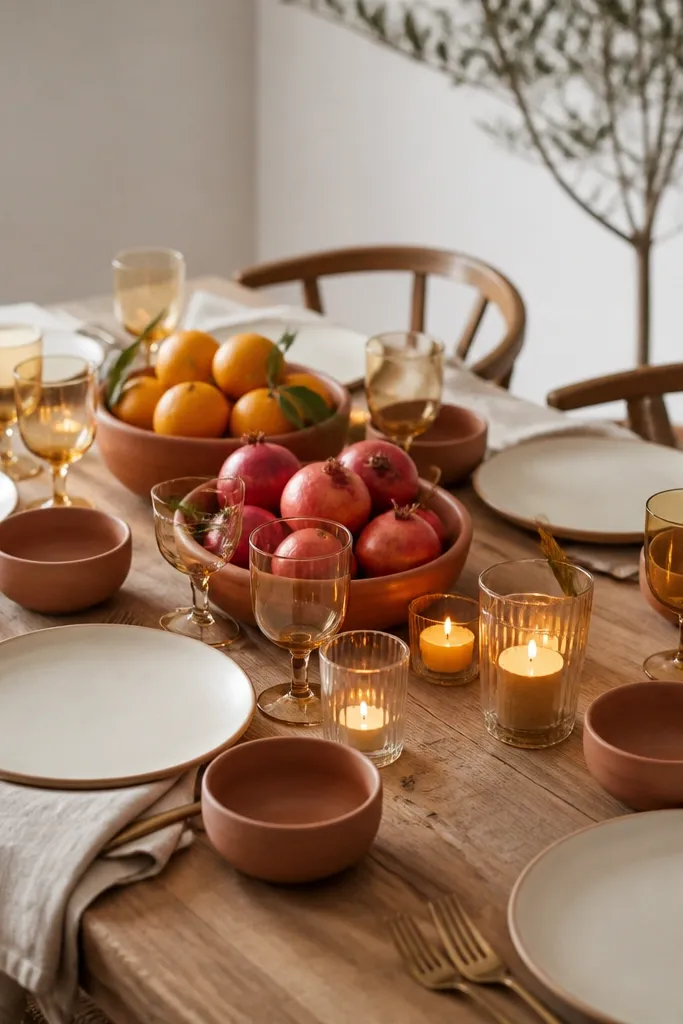
This setting is warm, edible, and camera-friendly. Terracotta clay bowls bring the color into the table without needing huge florals, and the fruit adds color variation that looks real in every shot. Oatmeal napkins keep the palette soft and prevent terracotta from looking too loud. I also like this for late afternoon weddings because candlelight bounces off the clay texture and makes the whole scene glow. It works well for nearly every skin tone because the fruit colors (orange and deep red) create natural contrast around guests' hands and plates.
Start with oatmeal napkins folded into a straight rectangle, placed to the left of the plate. Use matte cream plates and add a small terracotta clay bowl at the upper right of each place setting for a guest-facing moment. For the centerpiece, group 3-5 terracotta bowls down the centerline so they form a shallow pyramid - tallest bowl in the middle, smaller ones toward the ends. Fill bowls with oranges, pomegranates, and a few figs if you want darker notes. Nestle tea lights in clear glass cups inside the bowls so the flame stays protected and the wax doesn't stain the clay.
Try thisChoose fruit with similar sizes; mixed sizes look messy after 30 minutes if people start moving bowls.
Common mistakeSkip glossy ceramic bowls - they reflect harsh venue lighting and flatten the terracotta look.
5. Dusty Navy + Terracotta Place Cards in Kraft Envelopes
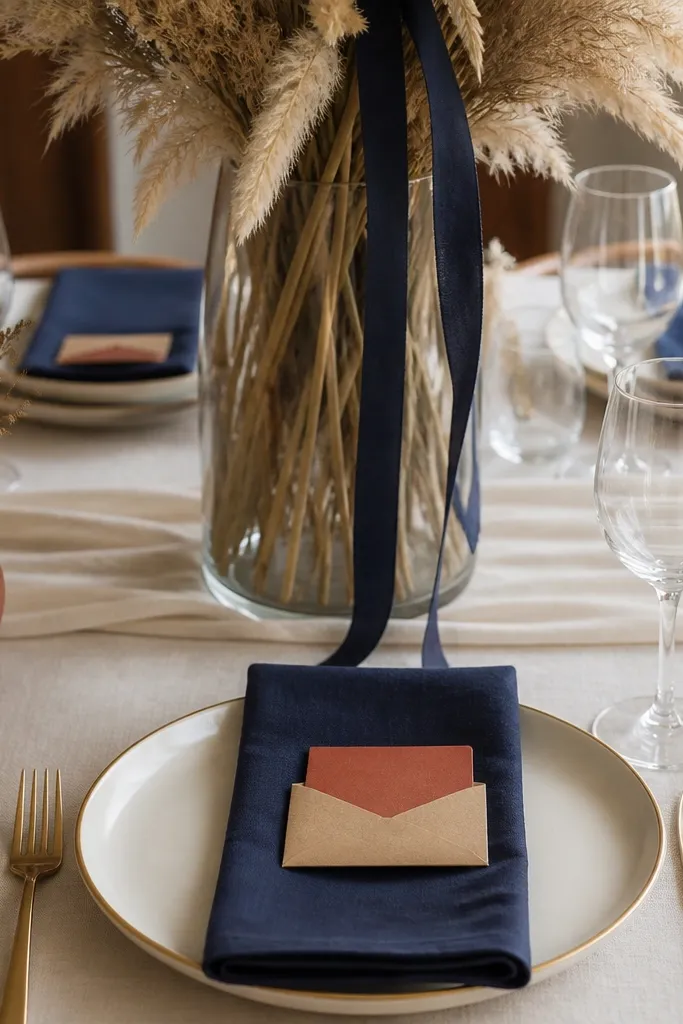
Terracotta and dusty navy is one of the most reliable "warm meets grounded" combos I've used. The navy gives you depth, so terracotta looks richer instead of just orange. Terracotta place cards in kraft envelopes make the setting feel handmade without looking sloppy, and the gold rim ties everything together with a clean line. This is great for couples who want a romantic but modern vibe - especially if your wedding has navy in invitations, bridesmaid dresses, or groomsmen ties. It flatters warm undertones because navy adds contrast without turning faces gray.
Use cream plates with a thin gold rim, then place navy napkins folded into a neat square. Make terracotta place cards on thick cardstock and slip them into kraft envelopes, then place the envelope under the napkin fold. For the centerpiece, use one tall vase per side of the table (not in the middle), filled with dried grasses and a few eucalyptus stems. Add navy ribbons wrapped around the vase neck, keeping them at about 6-8 inches above the arrangement. Finish with thin gold candlesticks in clear bases so the candle height matches the dried stems visually.
Try thisPrint place cards with a matte finish; glossy paper reflects candlelight and looks cheap fast.
Common mistakeDon't use bright royal navy - it fights terracotta and makes the palette look harsh.
6. Terracotta and Blush Florals in Low Glass Cylinders
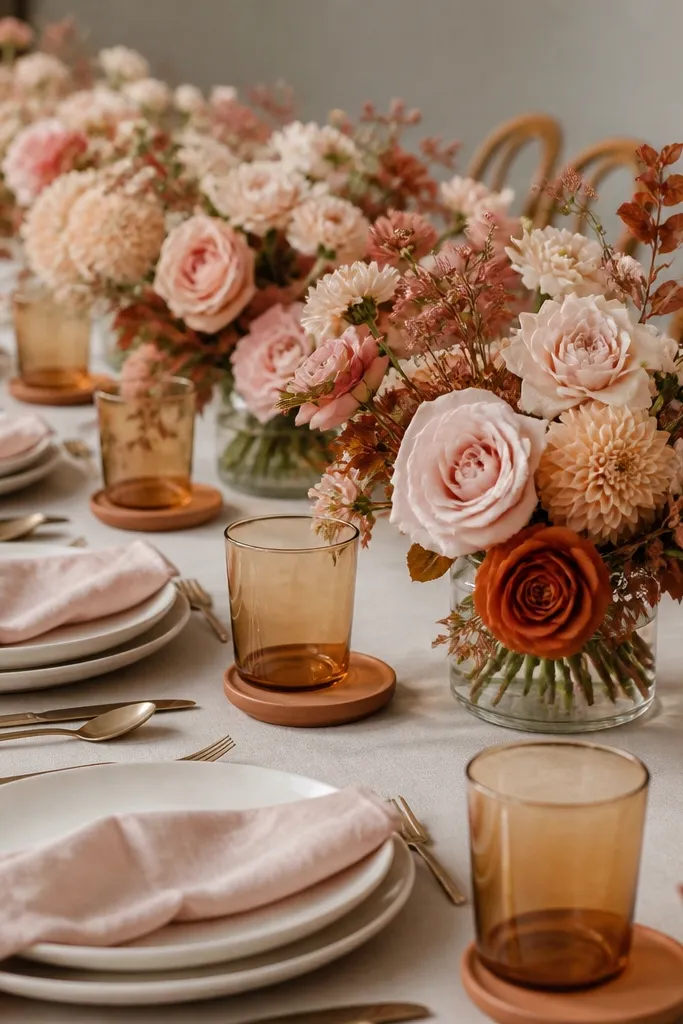
Low glass cylinders are my go-to for terracotta wedding table settings when you want florals to look airy but still styled. Blush linens soften the orange-brown, and the glass keeps the center from feeling heavy. Flowers in terracotta and blush shades look natural together because they share a warm undertone - you're not mixing cool pink with warm clay. I also love this for venues with lots of natural light because the glass catches sun and makes the table look "fresh" instead of heavy. This palette flatters fair skin and light hair because blush adds softness and terracotta adds warmth.
Lay matte ivory linens and set matte ivory plates. Fold blush linen napkins into a loose roll and tie with a thin twine in warm taupe. Place amber-tinted water glasses at each seat so the color repeats beyond the napkins. For the center, use low clear glass cylinders (about 6-8 inches tall) spaced every 16 inches, each filled with water and a short stem cluster. Use terracotta dahlias or faux terracotta blooms, plus blush roses and a few dusty sage leaves. Add terracotta ceramic coasters under each candle or small votive near the center.
Try thisTrim flower stems so the top of each arrangement sits at the same height across the table - guests notice when one cylinder is taller.
Common mistakeAvoid tall centerpieces with cylinders; they block faces and make photos look cluttered.
7. Matte Stoneware with Terracotta Napkin Rings
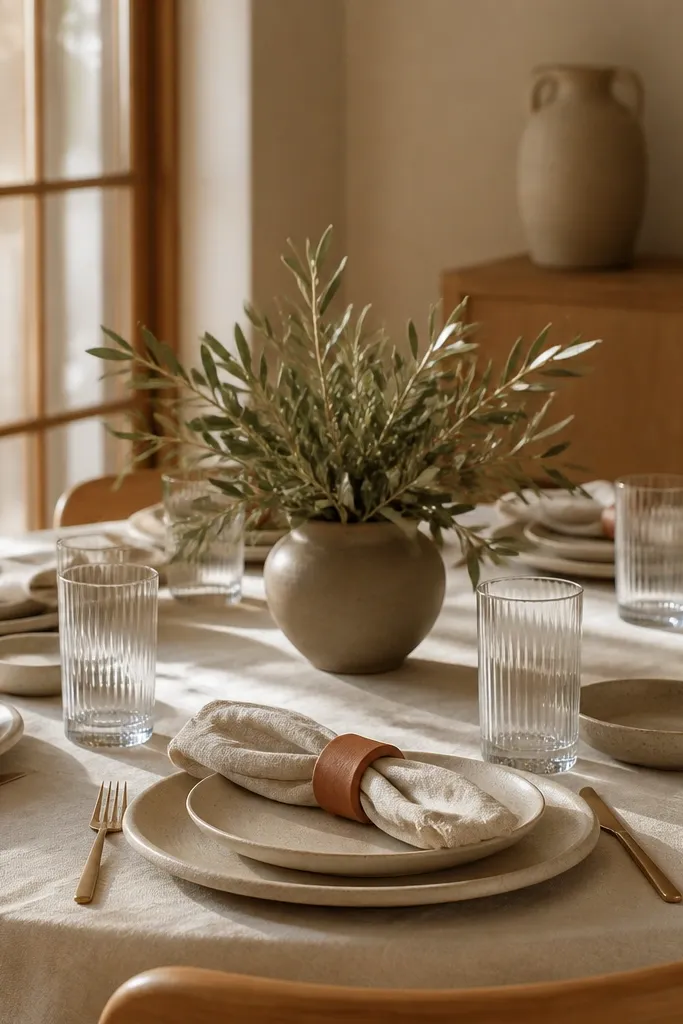
This is the "quiet luxury" version of terracotta that still looks handmade. Matte stoneware plates bring texture and hide tiny scratches from real use, which matters if you're doing a dinner with kids or lots of guests. Terracotta napkin rings turn a simple folded napkin into a deliberate design element. The taupe and off-white base keeps the palette cohesive even if you change flower types later. This works well for medium skin tones and darker hair because the warm neutrals frame faces without the harshness of bright white.
Set matte stoneware dinner plates and side plates in warm off-white, then place cutlery in brushed gold or antique gold. Fold napkins into a rectangle and slide them through terracotta ceramic rings so the ring sits about 2 inches above the plate rim. Keep the napkin color in a neutral like oat or light sand to let the ring do the color work. For the centerpiece, use a short taupe vase (10-12 inches tall) and fill with olive leaves, small white filler flowers, and one dried stem for height. Scatter a few extra terracotta rings as holders for small votives along the center line.
Try thisIf you're buying rings, choose ones with a slightly rough glaze - the tiny texture shows up beautifully in close-up photos.
Common mistakeSkip glossy napkins or shiny rings; the look turns plastic under warm lighting.
8. Terracotta Table Skirt with Woven Placemat Layers
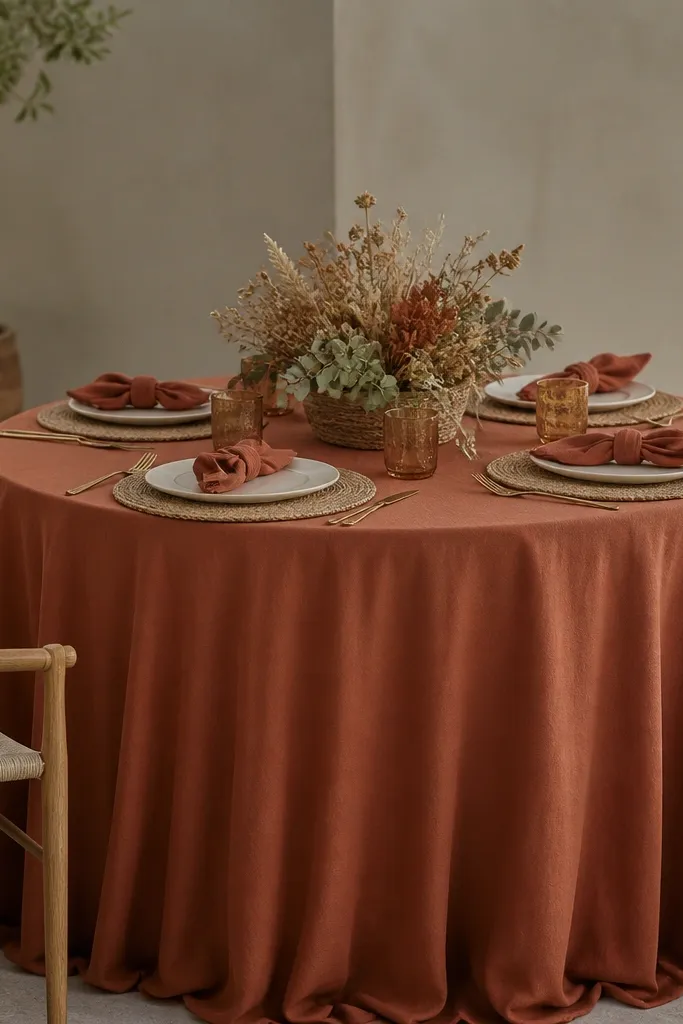
A terracotta table skirt makes the whole reception feel warmer before anyone sits down. Woven jute placemats add a grounded texture that terracotta loves, and they stop the table from looking too "color-blocked." I keep plates in cream and napkins in terracotta or terracotta-adjacent clay-orange, so every seat feels connected. Dried florals in a low basket keep the centerpiece from blocking conversation. This works best for outdoor weddings and rustic venues, and it flatters people with warm or neutral undertones because the palette is earthy, not sugary.
Hang a terracotta table skirt so it falls straight with minimal wrinkling, then place natural jute placemats centered under each plate. Add cream plates and keep the napkin folded in a simple triangle, placed on the left side. Use brass cutlery and add a small sprig of olive tucked into a napkin fold for a quick "finish." For the centerpiece, create one low basket arrangement per table section: use a wicker basket, line it with moss or floral foam, then add dried flowers and sage. Keep the basket height around 8-10 inches so guests can talk easily.
Try thisSteam the skirt lightly and press the placemats with a weight for 15 minutes so they lie flat.
Common mistakeAvoid mixing jute with slick satin napkins - the textures fight and look mismatched.
9. Terracotta and White Porcelain with Gold Rim
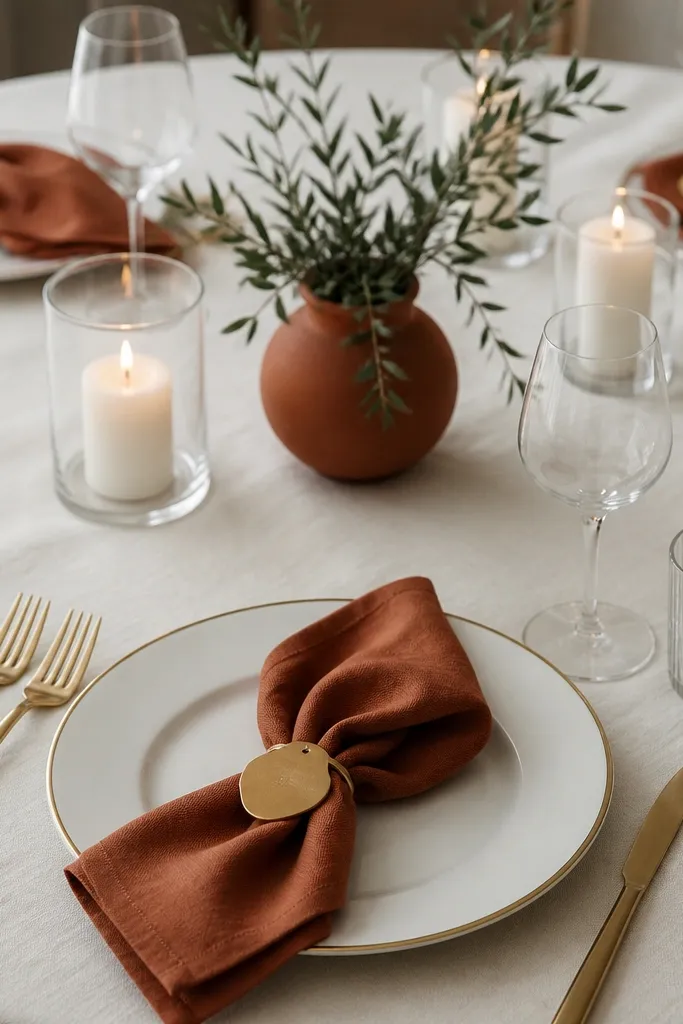
If you want terracotta wedding table settings that still feel formal, porcelain with a thin gold rim is the easiest path. Terracotta napkins look crisp against bright white porcelain, but the key is the gold being thin and consistent - it keeps the look clean. I add a small gold monogram tag or an engraved place card so the terracotta feels intentional, not random. A compact terracotta vase with greenery stays balanced because it matches the napkin color and doesn't compete with the plates. This is flattering for fair skin and light eyes because the gold detail adds warmth without making the scene look heavy.
Use cream linen and place white porcelain plates with a gold rim so the rim lines up visually across the table. Fold terracotta napkins into a classic rectangle and tie a thin gold string or clip on a small tag near the top fold. Add gold flatware and clear or amber-tinted wine glasses. For the centerpiece, set a row of white candles in glass holders along the centerline, then place one small terracotta vase in the middle between the candles. Fill the vase with fresh or faux greenery and a few white blooms for contrast.
Try thisChoose candles that are unscented; scented candles can overpower the floral scent and feel harsh in photos.
Common mistakeSkip thick, chunky gold chargers - they overpower terracotta instead of framing it.
10. Terracotta Macrame Napkin Ties and Boho Linen
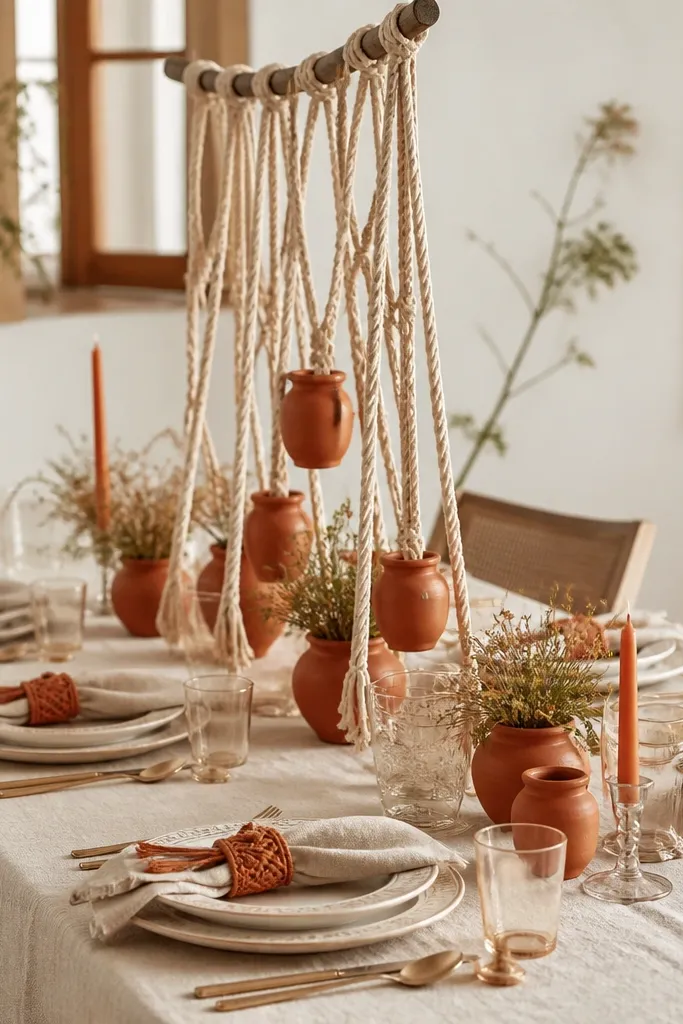
Macrame-style napkin ties make terracotta feel boho without going full festival. Beige linen keeps the palette calm, and the terracotta ties add a warm accent that reads beautifully in close-ups. I pair cream plates with subtle patterns because they look intentional next to macrame texture. For the centerpiece, terracotta jars with small stems give you the "collected" look, and it stays low enough for conversation. This setting flatters people who like a softer style - it looks good on warm skin tones and also works for cooler undertones because beige and terracotta bridge the gap.
Lay beige linen and place cream plates with a subtle raised or printed pattern. Fold napkins into a simple rectangle and attach a terracotta macrame tie around the center, leaving the ends about 3-4 inches long. Add antique gold cutlery and keep glassware clear or lightly tinted amber. For the centerpiece, place terracotta jars (4-7 inches tall) along the centerline at even intervals, then tuck small greenery and a few dried flowers inside. If you use a macrame loop overhead, keep it higher than 7 feet so it doesn't block photos from seated angles.
Try thisUse the same terracotta shade for ties and jars; different shades look like different collections.
Common mistakeDon't add too many boho elements at once, or terracotta turns into visual noise.
11. Terracotta and Sage Wedding Table with Wavy Chargers
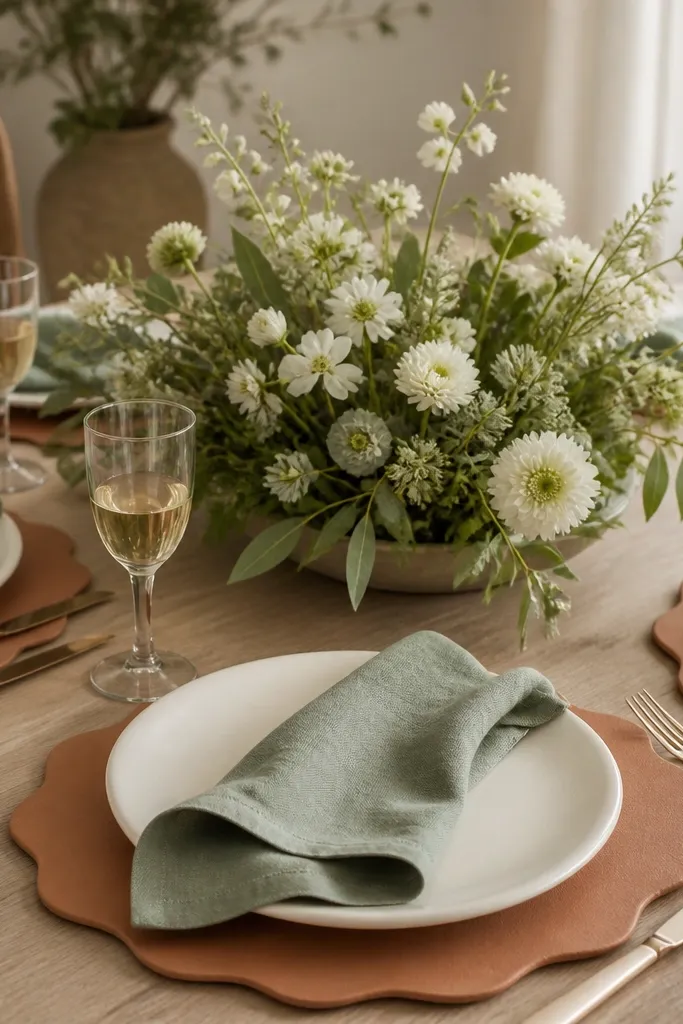
Wavy chargers are a small detail that makes terracotta wedding table settings look like you planned them. The wavy edge catches candle flicker and creates a soft rhythm across the table instead of flat color blocks. Sage green napkins keep the palette earthy and calm, and the shallow centerpiece dish keeps everything at an easy viewing height. I like this for weddings where you want a clean, modern look but still want warmth. It flatters most skin tones because the colors are muted and not too saturated.
Start by setting cream plates and add wavy terracotta chargers so the charger edge shows about 1 inch. Fold sage napkins with a slight wave by pressing gently along the fold line so the napkin doesn't sit perfectly flat. Place napkins to the right of the plate and keep the fold peak pointing toward the top of the charger. For the centerpiece, use one shallow dish per 6-8 seats and fill it with sage leaves, white blooms, and a few dried seed heads. Add a thin line of small votive candles at the dish edges so the dish doesn't look empty.
Try thisHold chargers at the same orientation - wavy rims look intentional when every one faces the same direction.
Common mistakeSkip neon terracotta chargers; they look harsh with sage and candlelight.
12. Terracotta Place Setting with Dried Orange Slices
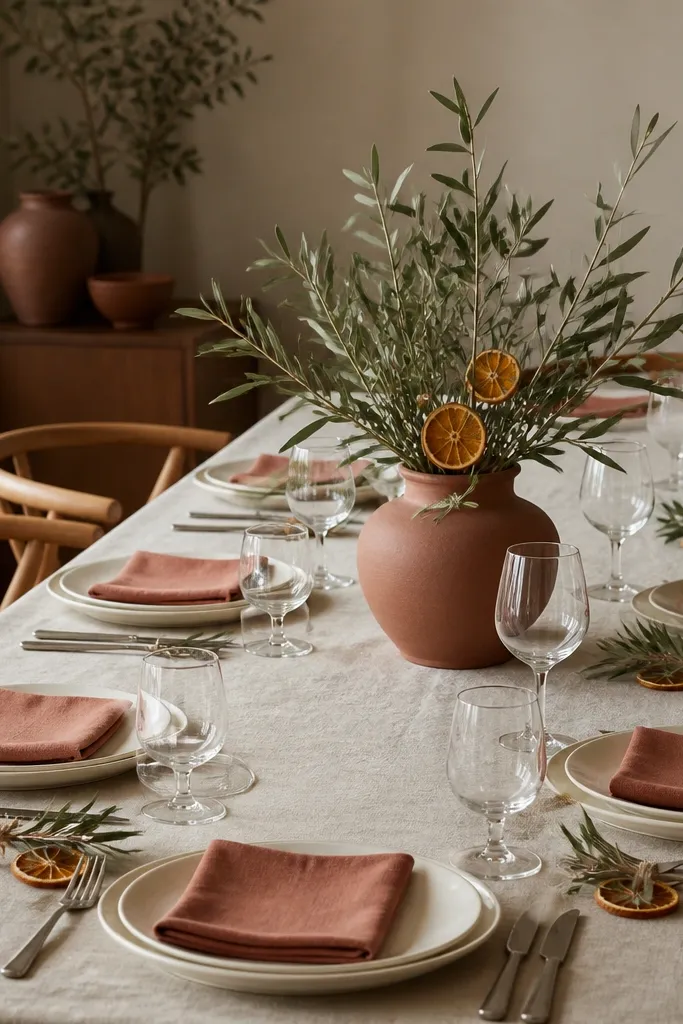
This is the setting I use when I want scent and color without spending on big florals. Dried orange slices add a warm terracotta echo, and they look great in photos because they have texture and tiny translucence. Terracotta napkins keep the palette consistent, while cream plates keep it clean. Olive sprigs bring that natural green note that makes orange-brown look fresh. This works for daytime weddings and fall evenings, and it flatters warm skin tones because the orange tones pull color back into the room.
Place cream plates and fold terracotta napkins into a simple square fold. Tie a small olive sprig with cotton twine and attach it to a dried orange slice, then place the slice near the fork so it frames the cutlery. For the center, use one terracotta vase or ceramic urn and fill it with olive branches plus a few dried orange halves tucked around the stems. Keep the centerpiece height around 12-14 inches so it appears tall in photos but doesn't block conversation. Add a few small tea lights in clear glass at the base of the vase.
Try thisUse dried oranges that are not sticky; wipe them with a dry cloth so they don't leave residue on linen.
Common mistakeAvoid fresh citrus - it gets messy fast and can stain napkins.
13. Terracotta and White Striped Linens
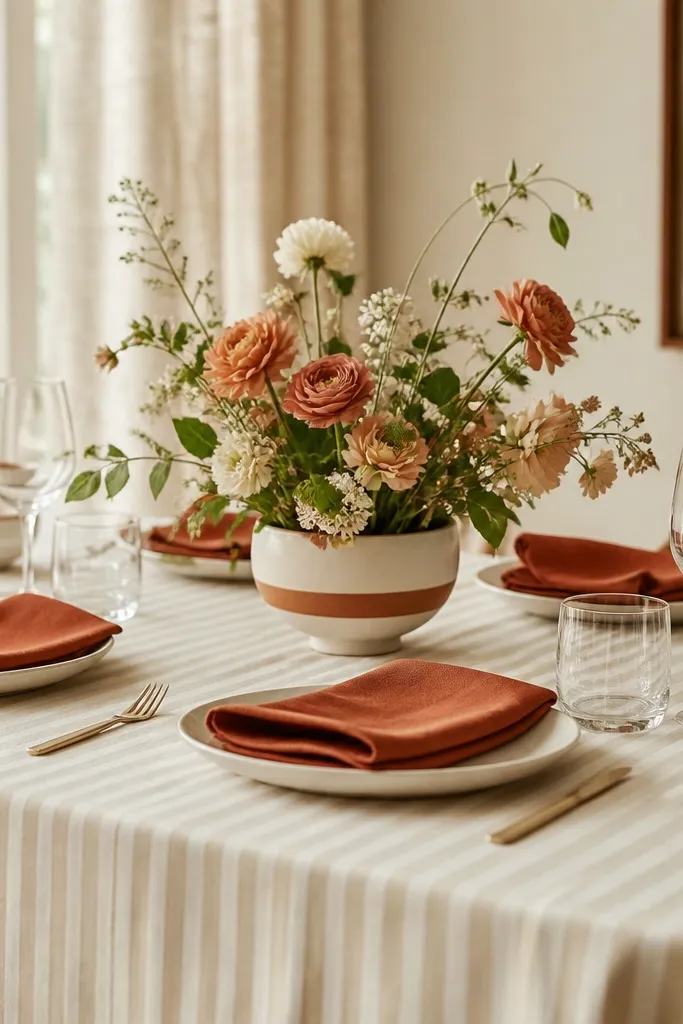
Stripes make terracotta wedding table settings feel crisp and summer-ready. The key is keeping the stripe color warm (cream and off-white), not cool gray. Terracotta napkins add the warmth anchor, and the plain cream plates prevent the stripes from competing. I use a white ceramic pot for the centerpiece so terracotta stays the highlight, not the base. This setting flatters anyone who looks good in clean neutrals because it gives a tidy frame around faces and hands.
Choose a tablecloth with narrow stripes (about 1-2 inches wide) in cream and white, then center it so the stripes line up. Fold terracotta napkins into a rolled rectangle and place them at the top left of each plate. Set cream plates and keep cutlery in brushed gold to avoid harsh contrast. For the centerpiece, use a white ceramic pot and build a low arrangement with white flowers, a few terracotta-toned blooms, and olive leaves. Add a short terracotta candle holder or small clay jar at each end of the pot so the color repeats.
Try thisPress the tablecloth flat before setting place cards; stripes show wrinkles immediately.
Common mistakeDon't add extra patterns (like patterned chargers) - the stripes already do the work.
14. Terracotta Candlesticks with Amber Glass Votives
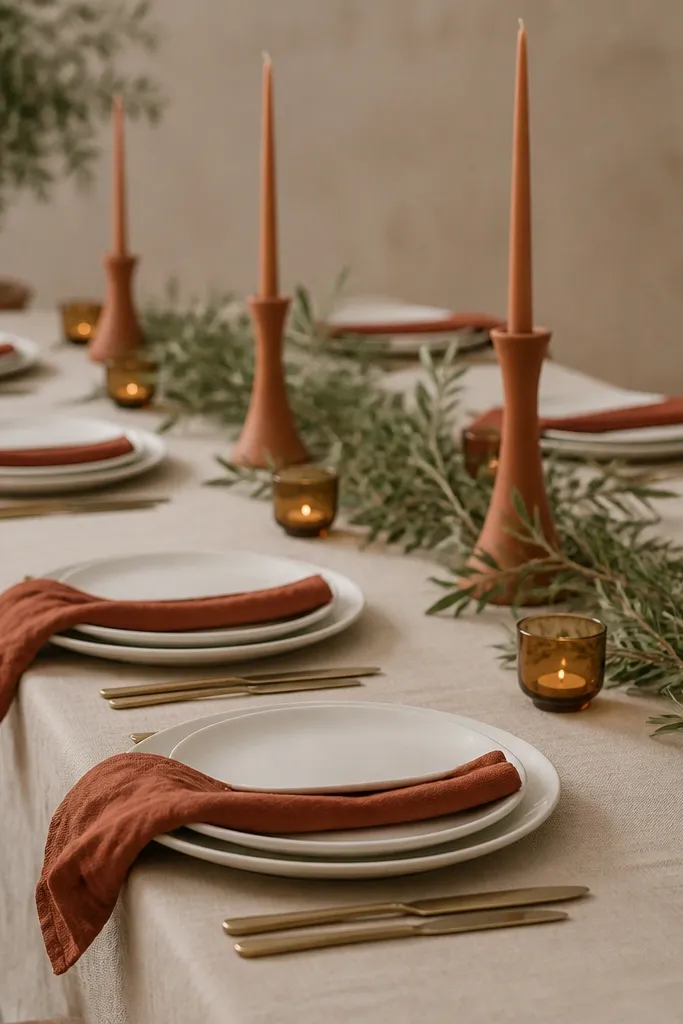
Candles change terracotta more than any other decor because the color turns from matte clay to warm glow. Amber glass votives make the light look golden, and terracotta candlesticks keep the palette consistent without relying on flowers. Matte plates in white and cream keep the candlelight from bouncing too much. I like low greenery between tall candles so guests can still see each other. This setting is perfect for evening receptions, and it flatters darker hair and deeper skin tones because candlelight adds warmth right where it's needed.
Lay cream linen and place matte white plates. Fold terracotta napkins into a classic rectangle and place them beside the plate, then add a small amber glass votive near the center of each place setting or along the table edge. For the center, set terracotta candlesticks in a line down the middle - keep them at 14-18 inches tall, then tuck low greenery around the base. Place tea lights or small votives between candlesticks so the middle looks full even when candles burn down. Keep glassware amber or clear; avoid cool blue glass.
Try thisTest candle height with a quick photo from seated distance so you don't block faces.
Common mistakeAvoid skinny candles without bases - they look uneven and cheap when the table is long.
15. Terracotta and Charcoal Modern Minimal
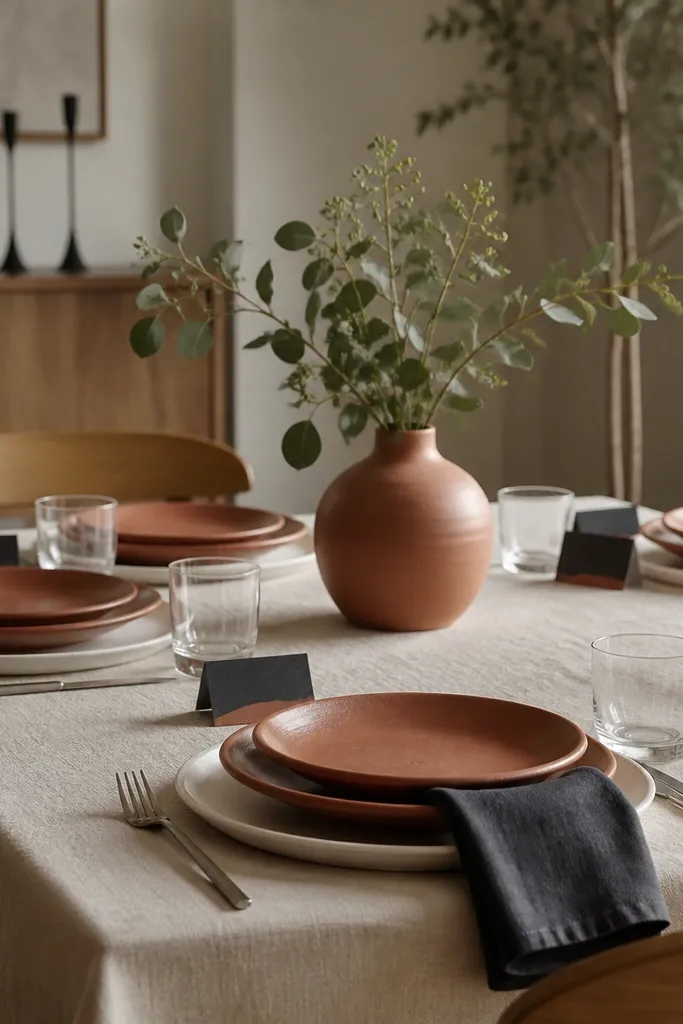
This is the modern, clean version of terracotta wedding table settings when you don't want flowers everywhere. Charcoal napkins add contrast so terracotta looks intentional instead of "rusty." Terracotta ceramic plates bring texture, and cream chargers keep the place setting from getting too dark. A single terracotta vase centerpiece keeps the line uncluttered and makes your table look designed, not decorated. This palette works extremely well for couples with black, charcoal, or deep brown in their outfits because it ties the look together.
Set cream chargers and place terracotta ceramic plates on top, leaving about 1 inch charger reveal. Fold charcoal napkins into a flat rectangle and place them to the right of the plate. Use terracotta ink on charcoal place cards and keep typography simple with no heavy fonts. For the centerpiece, use one terracotta vase per table section and fill with one type of greenery (like olive or ruscus) plus one tall stem for height. Keep everything under 18 inches so the table stays readable from across the room.
Try thisChoose charcoal fabric that has a matte finish; shiny charcoal looks like plastic next to terracotta.
Common mistakeAvoid adding too many small decor items - minimal palettes expose clutter fast.
16. Terracotta Watercolor Tablecloth with Solid Napkins
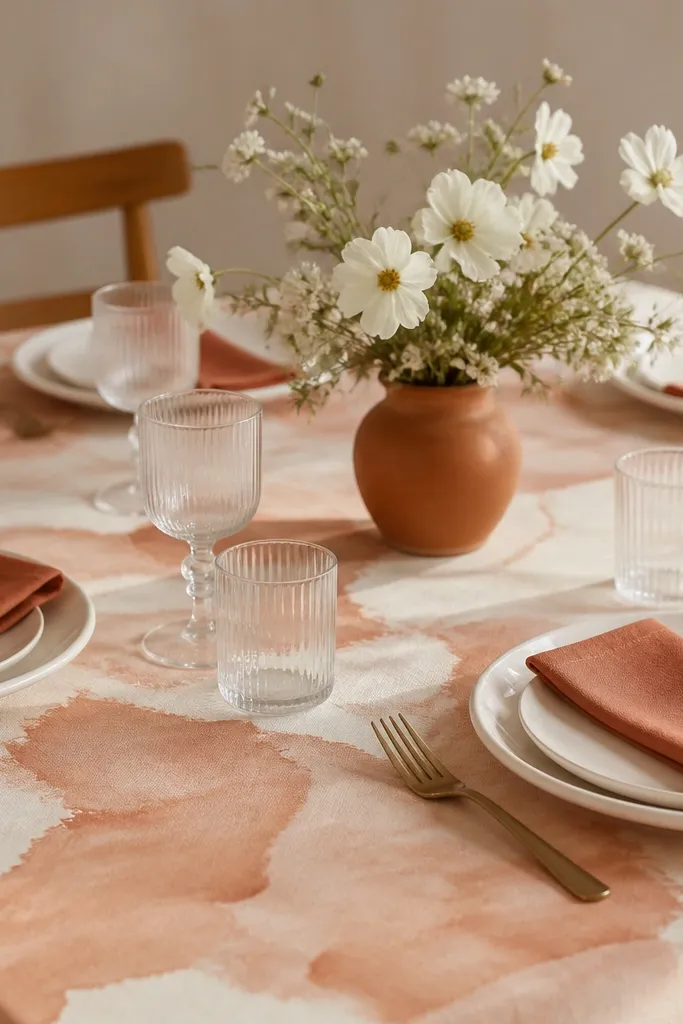
A watercolor terracotta tablecloth is a smart trick when you want color movement without extra centerpieces. The wash gives you variation, so solid terracotta napkins look crisp and intentional. Plain cream plates keep the look from turning busy. I like a small terracotta vase with white flowers here because white highlights the watercolor background and makes the centerpiece pop in photos. This setting flatters most skin tones because it's soft and not too saturated at the edges.
Lay the watercolor tablecloth so the terracotta wash runs consistently across the length of the table. Place plain cream plates and add terracotta solid napkins folded into a simple fan or half-fold. Keep flatware in gold tone and use clear glasses so reflections don't fight the watercolor pattern. For the centerpiece, use one terracotta vase per 6-8 seats and keep the bouquet compact - around 10-12 inches tall. Add a few olive leaves to tie the greenery to the watercolor palette, then leave the rest of the table clean so the cloth does the heavy lifting.
Try thisIf your tablecloth is patterned, skip patterned chargers and patterned placemats to keep everything readable.
Common mistakeAvoid dark place cards on this - they compete with the watercolor and make the table look crowded.
17. Terracotta and Cream Crochet Doilies Under Plates
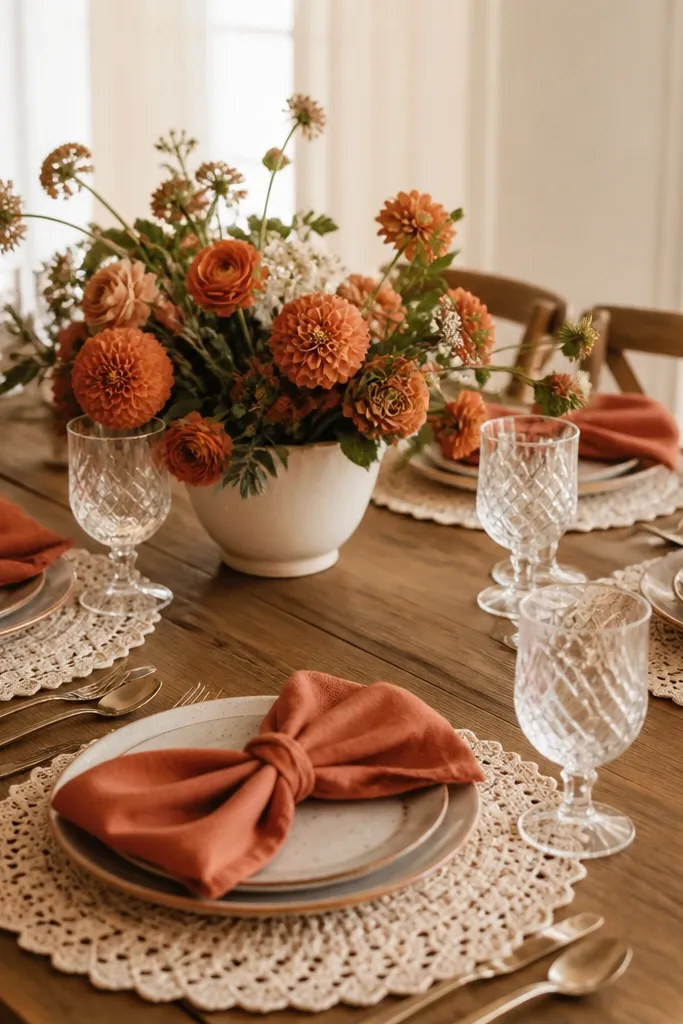
Crochet doilies are a small detail that makes terracotta wedding table settings look handcrafted. The cream crochet brings an airy texture that pairs well with matte terracotta napkins and warm cream plates. I like terracotta napkins folded into a small knot because the knot echoes the crochet loops and looks cute in close-up. Use a cream pitcher or jug for the centerpiece - it keeps the table feeling light. This works best for daytime weddings and for venues with vintage decor, and it flatters fair skin because the cream texture softens everything.
Place a cream crochet doily under each plate so it shows about 1-2 inches around the rim. Fold terracotta napkins into a simple knot at the center (pull the ends together and tie with thin twine), then place the knot slightly above the plate center. Keep flatware in antique gold and use clear glassware. For the centerpiece, choose a cream pitcher or jug and fill with small terracotta-toned blooms and white filler flowers, keeping it under 10 inches tall. Add one sprig of olive tucked behind the bouquet so the greens aren't just clustered at the bottom.
Try thisUse doilies that are thick enough not to sag; thin crochet looks messy once guests move chairs.
Common mistakeAvoid placing doilies under heavy plates that slide - they wrinkle and look untidy.
18. Terracotta Lanterns + Olive Branch Runner
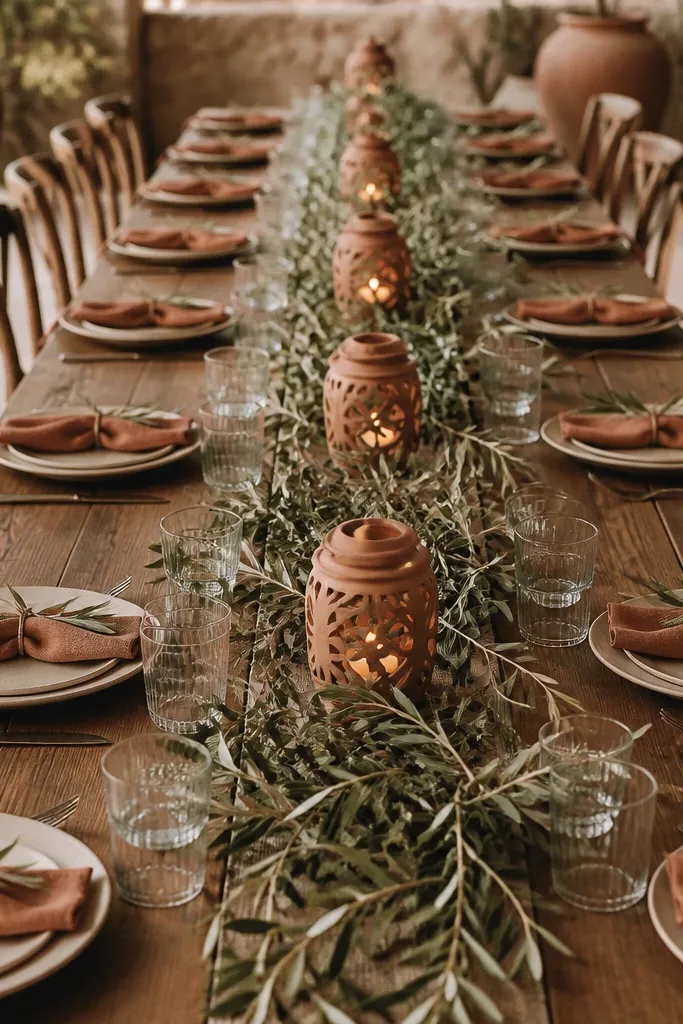
Lanterns give terracotta an evening glow that looks intentional, not improvised. Olive branch runner keeps the palette grounded and ties the lanterns to greenery so the centerline doesn't look like random candles. Terracotta napkins repeat the color and make every place setting feel part of the same story. I like cream plates and simple flatware because lanterns already add visual weight. This setting flatters guests because warm light reflects off faces and hands, especially in indoor receptions with low ambient lighting.
Lay cream linen and place cream plates at each seat. Fold terracotta napkins into a straight fold and add a small olive leaf tucked at the fold edge. For the center, lay an olive branch runner across the middle, then place small terracotta lanterns on top of the runner at even intervals - about one every 20-24 inches. Inside lanterns, use battery candles or real tea lights if your venue allows, but test for heat and stability. Add a few small flower sprigs (white or muted orange) tucked into the runner so the greens look fresh and not just leafy.
Try thisIf you use real candles, weigh the lantern bases with a small hidden weight so they don't tip if someone bumps the table.
Common mistakeSkip oversized lanterns; they block faces and make the table feel cramped.
19. Terracotta and Cream Tiered Dessert Table Setting
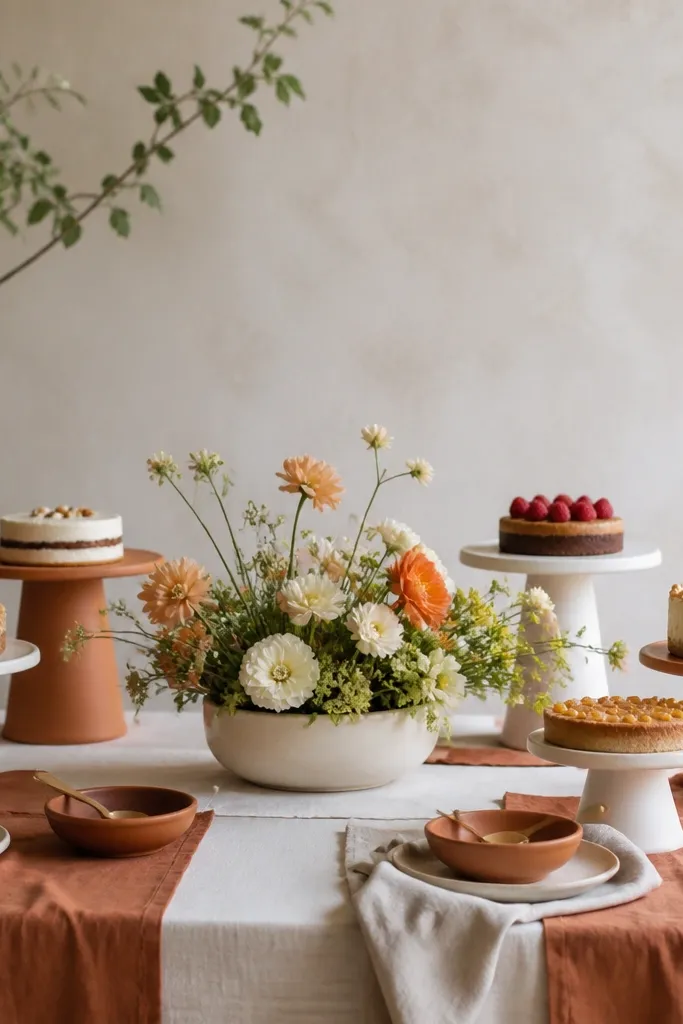
Even if you're mainly decorating the dinner table, dessert table settings pull the whole wedding palette together. Terracotta runners make the dessert area warm and inviting, and cream plates keep the presentation clean. Small terracotta bowls for spoons are a practical detail that also looks good in photos - guests grab without searching. I keep the floral arrangement low and in cream ceramic because dessert tables get busy fast, and you don't want tall stems blocking the view of cake tiers. This palette flatters almost every skin tone because it's warm and bright without being neon.
Set a terracotta runner across the dessert table and add cream plates on the serving side, not the guest side. Place terracotta bowls with dessert spoons near the cake stands so spoons are visible and easy to grab. Add a low centerpiece in a cream ceramic bowl - use white flowers and a few terracotta accents, plus olive leaves. Use tiered stands in white or cream with gold accents so the terracotta doesn't clash with the cake colors. Keep napkins in terracotta folded into a simple triangle and set them near the serving utensils, not spread across the entire table.
Try thisMatch your cake stand height to your runner: if the runner is low, keep tiers slightly shorter so the table looks balanced.
Common mistakeAvoid placing tall floral arrangements next to cakes; guests bump them and the look falls apart fast.
20. Terracotta and Eucalyptus with Linen Napkin Pockets
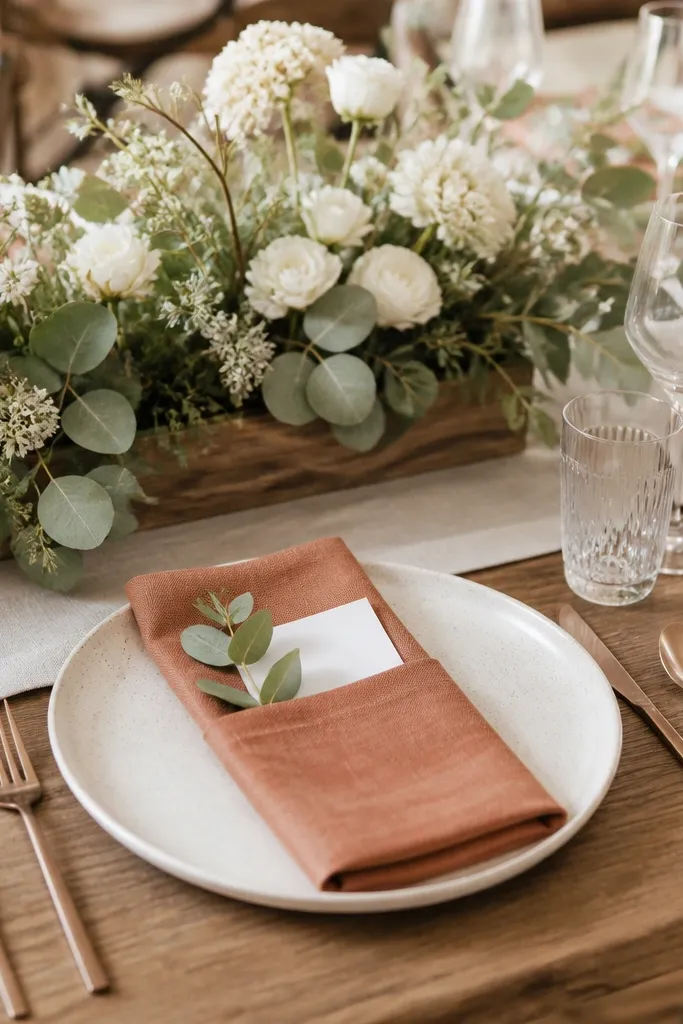
Napkin pockets are one of those details that makes terracotta wedding table settings feel personal. Terracotta linen holds the pocket shape well, and eucalyptus sprigs add a pale green that looks clean next to orange-brown. Speckled cream plates keep the table textured without adding extra color. A low wooden tray centerpiece gives you a rustic-modern base, and eucalyptus looks sharp even in sparse arrangements. This works especially well for couples who want guests to feel cared for at the table, not like they're standing in front of decor.
Start with terracotta linen napkins and fold them into pockets by folding the napkin into thirds and tucking the ends so it stands upright slightly. Place a eucalyptus sprig and a small card inside each pocket, then set the pocket upright next to the plate. Use cream speckled plates and brushed gold cutlery. For the centerpiece, use a shallow wooden tray and arrange eucalyptus sprigs and a few white blooms in a low line, keeping the highest point under 10 inches. Add a few small candles in clear glass cups at the tray corners so the tray doesn't look empty at night.
Try thisUse eucalyptus with thinner stems; thick stems make the pocket bulky and awkward at the seat.
Common mistakeAvoid floppy pockets made from thin napkins - they collapse after 10 minutes.