1. Warm ivory linen suit with a matte silk pocket square
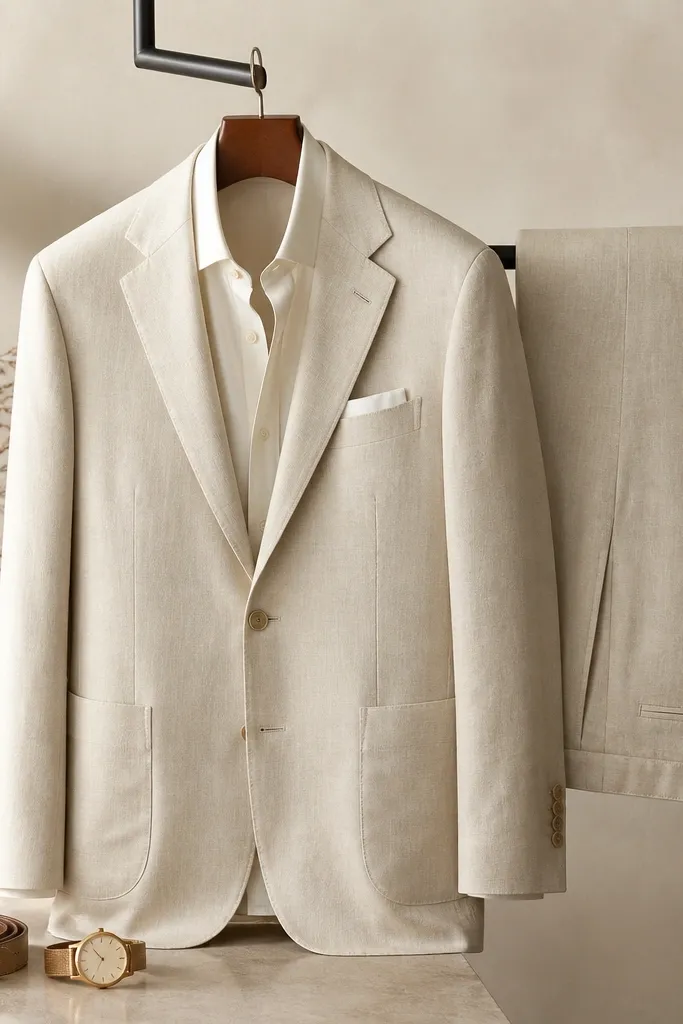
This look works because ivory linen has a natural, slightly wrinkled texture that reads "relaxed luxury" in close-up photos. Choose a jacket with a clean two-button front and a breast pocket that sits flat - it keeps the silhouette sharp even with a casual fabric. I like pairing it with a cream crew-neck or a light off-white button-down for a smooth color line. It's flattering on most body types because linen breathes and the lighter tone visually lengthens without looking flashy.
Start by buying a linen suit in warm ivory, not bright white, and keep the jacket length around mid-hip. Wear it with a cream shirt that has a matte finish, then add a pocket square in silk with a subtle sheen - think white-on-ivory or a pale champagne print. Skip a loud tie so the fabric texture does the work. Finish with tan suede loafers or light brown leather derby shoes and a slim belt that matches the shoe color.
Try thisSteam the jacket lightly before photos but leave the fabric's natural texture. If you iron it too flat, it looks stiff and more costume-like than wedding-ready.
Common mistakeAvoid bright white - it can wash out skin and makes the suit look like a costume rental.
2. Blush satin camisole under a cropped lace overlay
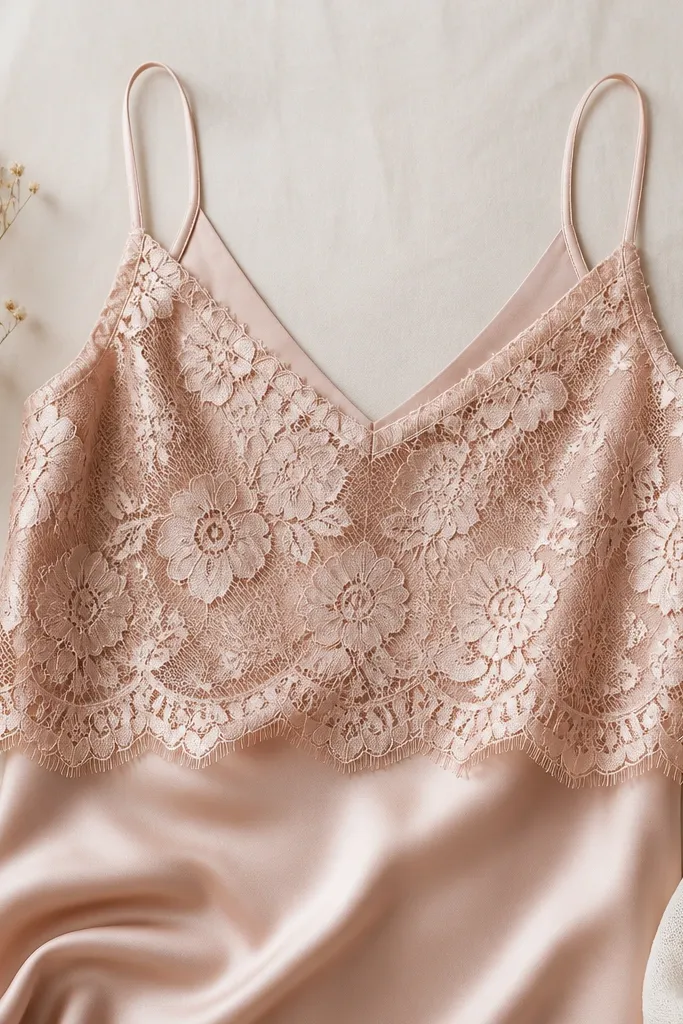
This is a small-wedding-friendly bridal option when you want something feminine but not heavy. Blush satin gives you that candlelight glow, and the cropped lace overlay adds depth without swallowing your frame. I've seen this look shine on petite brides because the overlay ends at the waist, which visually shortens the torso less than long lace. For deeper skin tones, blush reads romantic instead of washed-out when you choose a satin that's slightly peachy rather than pink.
Start by choosing a blush satin camisole with adjustable straps so the neckline sits cleanly. Add a cropped lace overlay that aligns at your natural waist - pin it on a mirror first so it doesn't ride up during photos. Pair with a high-waisted skirt in ivory crepe or a soft champagne satin so the lace stays the focal point. Wear delicate drop earrings and keep your makeup warm - peach blush and a satin lip - so the top's glow matches your face.
Try thisPick lace with a consistent pattern and avoid super-sheer lace that pulls at the satin. You want it structured enough to sit flat when you move.
3. Sage green chiffon bridesmaid dress with a one-shoulder drape
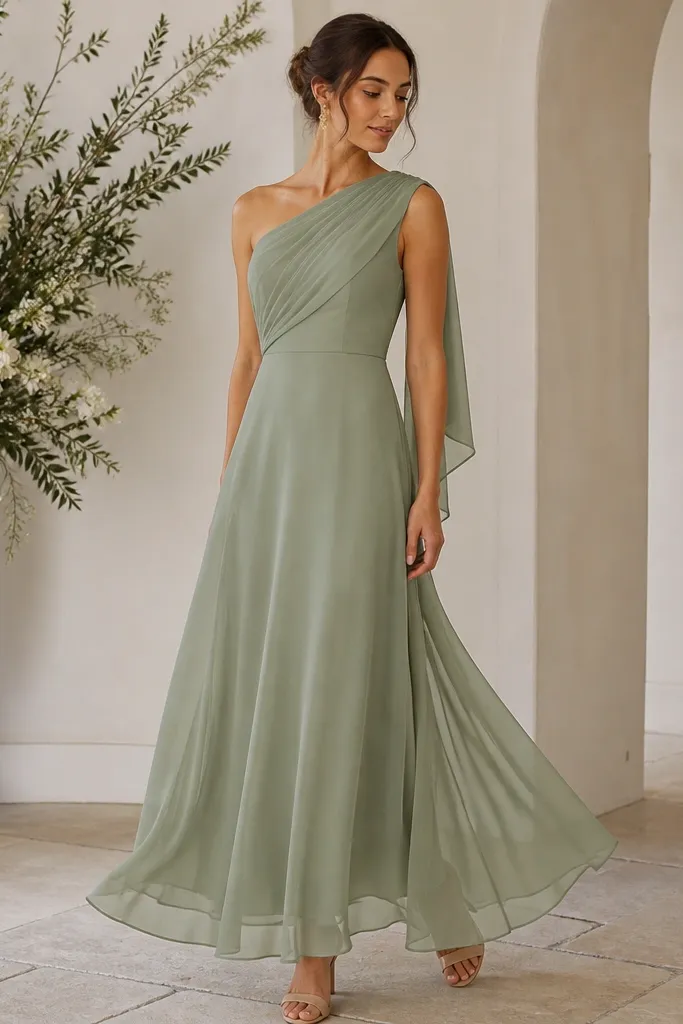
Chiffon is the cheat code for small weddings because it looks romantic in motion without needing a lot of extra decor around it. Sage green is also forgiving - it flatters neutral and warm undertones, and it photographs well against greenery. The one-shoulder drape draws the eye upward, which is great if you want to highlight collarbones or balance a fuller hip. I've used this color in backyard ceremonies and it always looks "planned," not random.
Start with a one-shoulder silhouette that has a lined bodice so the neckline sits smooth. Choose chiffon in sage with a slightly muted tone, not neon. Style with nude or champagne heels and a thin gold bracelet. Keep hair simple - a low bun or soft waves - so the drape is visible in photos.
Try thisBring a small steamer for the day. Chiffon creases fast when packed, and a quick steam makes it look brand new.
4. Black crepe tea-length dress with a waist bow belt
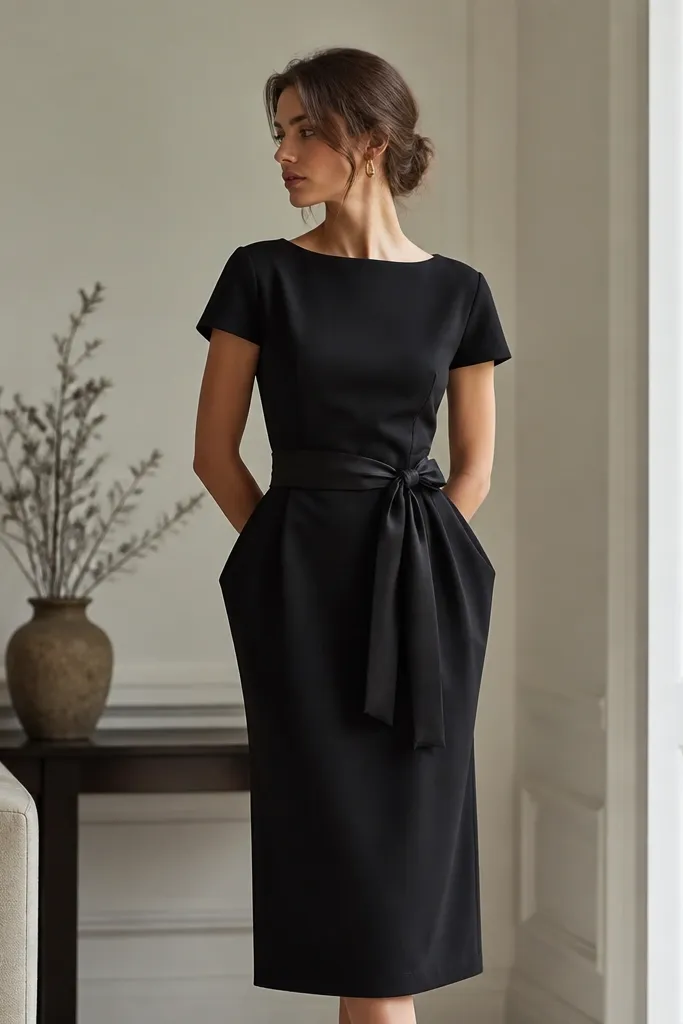
If your wedding is small and the vibe is modern, a black crepe tea-length dress looks polished without trying too hard. Crepe has enough structure to smooth the torso and hide minor bumps, and the tea-length hem makes it feel wedding-appropriate even with flats. The waist bow adds femininity and gives you a photo focal point at center frame. This works especially well for guests who want to feel dressed up but still comfortable for mingling.
Start with a tea-length dress that hits mid-calf or just below the thickest part of your calf. Add a black satin belt with a bow that ties at your natural waist - not too high. Pair with pointed-toe heels in black or deep espresso and small gold studs. For accessories, choose a structured clutch in matte leather and a light shawl if the venue runs cool.
Try thisDo a quick "bow check" in mirror photos. If the bow sits off-center, it reads messy fast in close-ups.
Common mistakeSkip shiny satin belts - they can look like party wear next to crepe.
5. Ivory mock-neck column dress with pearl-studded cuffs
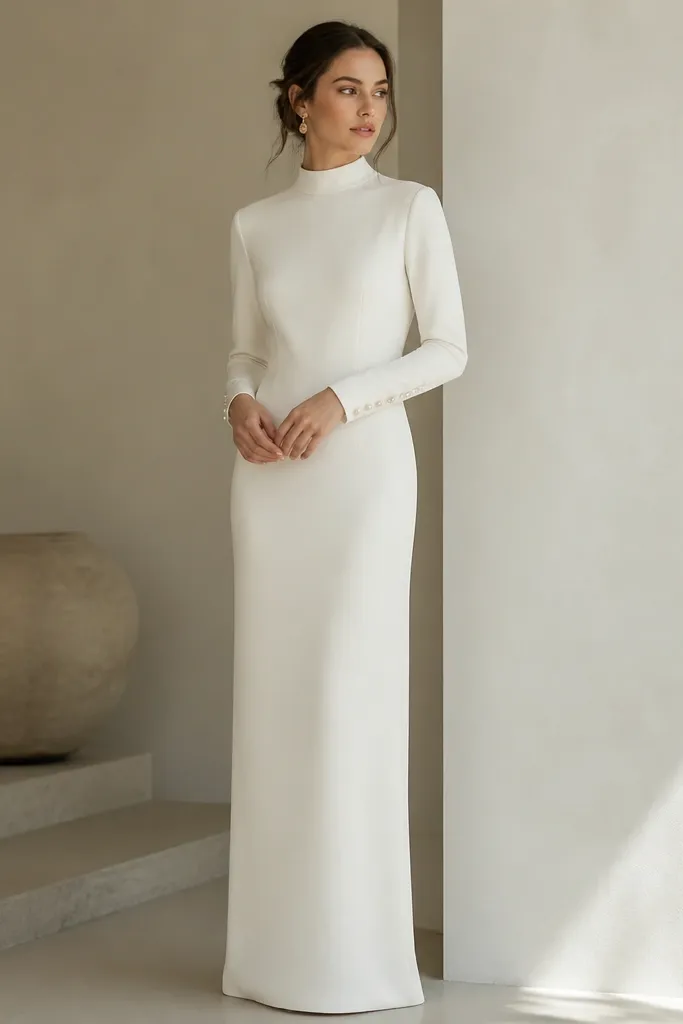
A mock-neck column dress makes a small wedding feel intentional because the lines are clean and the details are concentrated at the cuffs. Ivory looks soft on a wide range of skin tones, and the mock neck frames the face without needing a dramatic necklace. The pearl-studded cuffs add "bridal energy" without the weight of an all-over beaded bodice. I've worn similar styling for mini ceremonies where the lighting is mixed - it still holds up because the pearls catch highlights.
Start with an ivory column dress that skims the body, not one that clings tightly. Choose long sleeves or fitted sleeves so the pearls sit on a defined cuff line. Add matching pearl studs or small drops, then keep the rest minimal. Wear nude-to-ivory heels and a simple hair accessory like a small comb or pearl pins.
Try thisHem it so the dress just grazes the top of your heel. If it pools, it steals attention from the cuff detail.
6. Men's navy wool-silk blend blazer with a light blue shirt
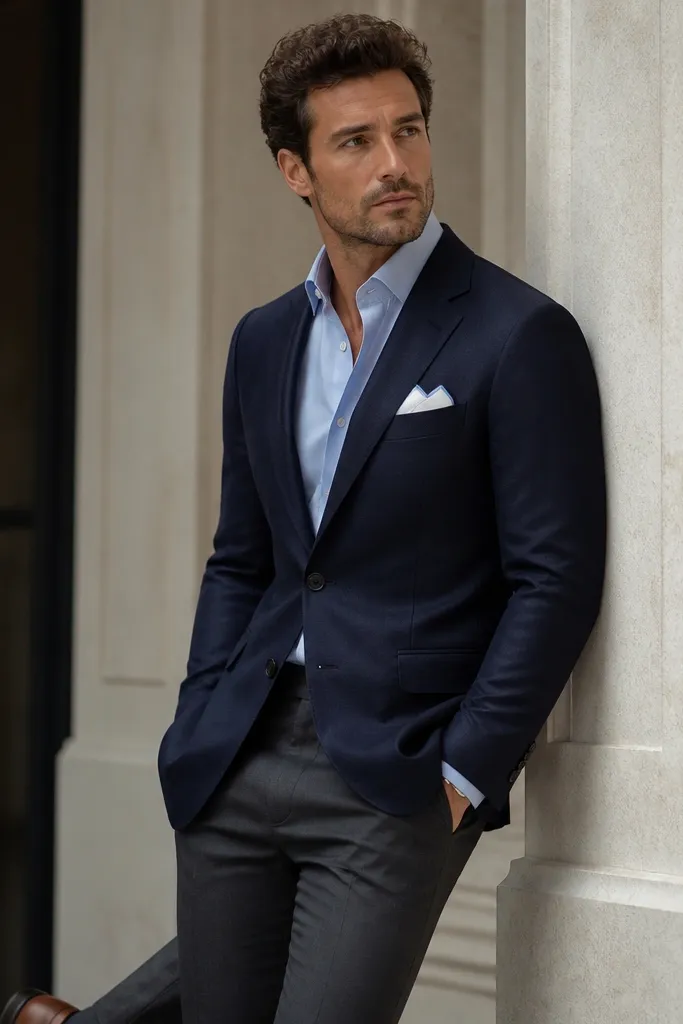
This is my go-to "safe but special" look for small wedding photos because navy reads rich without being loud. A wool-silk blend catches light in a flattering way, especially when you're standing near windows or outdoor shade. Pair it with a light blue shirt to create contrast that looks crisp in daylight. It's flattering for most builds because the blazer structure gives shape while the darker color visually streamlines.
Start with a blazer in deep navy, ideally with a two-button front and a slightly higher armhole for a modern fit. Wear a light blue shirt with a collar that stands cleanly, then add a white pocket square with a hint of blue. Keep the trousers a dark charcoal or matching navy for a long line. Finish with brown leather shoes and a belt that matches the shoe tone.
Try thisRoll the sleeves once and stop at the wrist - it looks relaxed but still sharp in candid photos.
7. Champagne satin slip dress with a lace-trim hem
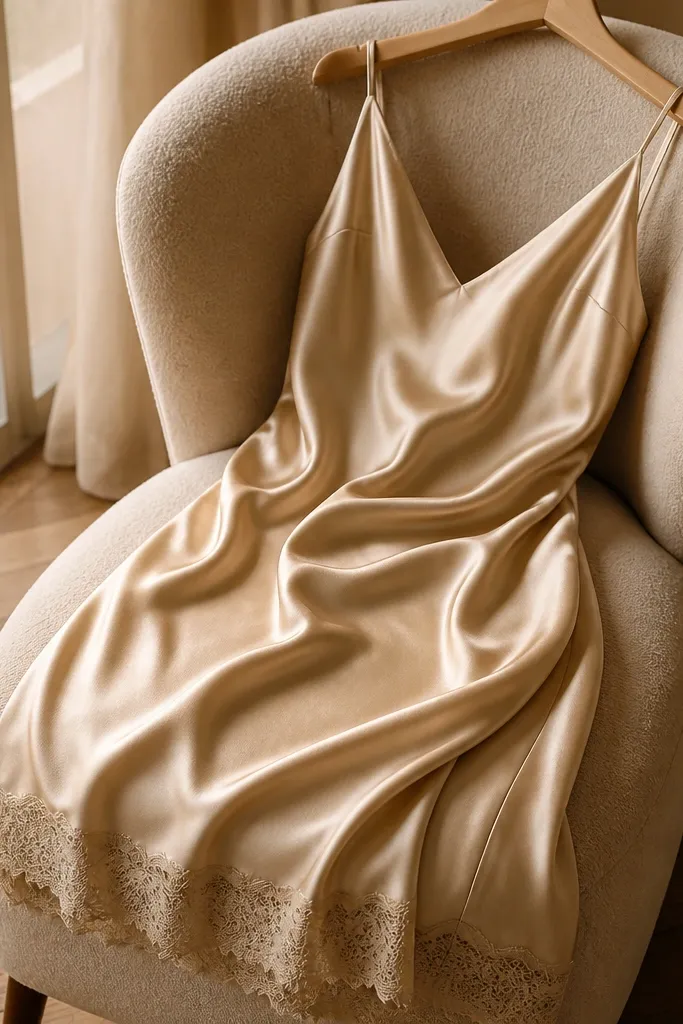
A champagne slip dress is a small wedding dream when you want "soft glam" instead of full-on bridal. The satin reflects light in a controlled way, and the lace-trim hem adds texture at the point where eyes naturally rest - near your feet in many photos. Champagne also pairs beautifully with warm wood venues and candle setups. This works well for athletic and pear shapes because the slip drapes through the torso without clinging, and the V neckline elongates the neck.
Start with a slip dress that fits at the bust and skims the hips. Choose champagne satin with a warm undertone, not yellow-gold. Add a strapless or low-back supportive bra if needed so the neckline stays smooth. Style with strappy heels in nude or champagne and a delicate pendant necklace; keep hair either sleek or in a low braid so the satin line stays uninterrupted.
Try thisHang it overnight before the wedding. Satin creases show up as shiny lines, and a good hang fixes a lot.
8. Blazer + midi skirt set in oatmeal bouclé
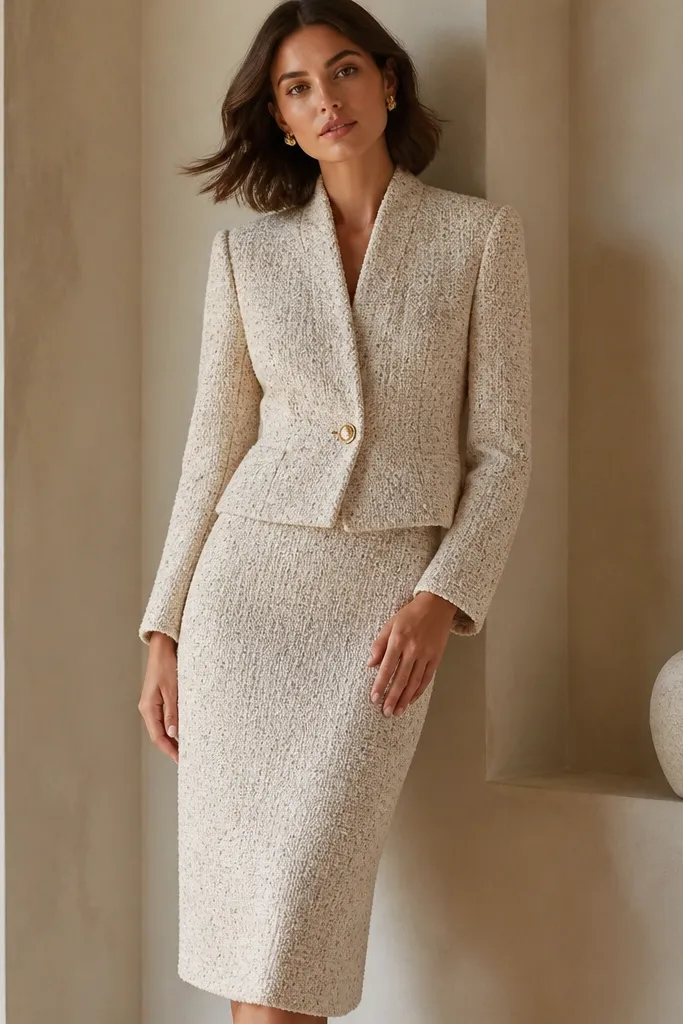
Bouclé reads expensive in a small space because it creates a visible texture layer that doesn't require extra jewelry. Oatmeal tones look flattering on fair to medium skin when you choose a creamier base rather than gray-beige. The midi skirt adds modest coverage and makes the outfit feel ceremony-ready. I've used this set for courthouse-style weddings where the bride wanted "warm and cozy" photos without wearing a full gown.
Start by choosing a blazer with a fitted waist and clean lapels, then match it to a midi skirt that hits mid-calf. Wear a fitted knit top underneath in cream or light ivory so the bouclé doesn't bunch. Add simple gold hoops and a structured bag in tan leather. Keep shoes neutral - cream pumps or tan ankle boots depending on weather.
Try thisSteam the fabric carefully and use a garment brush. Bouclé lifts nicely when you brush it the right direction.
9. Pearl cardigan over a satin dress for a second-look moment
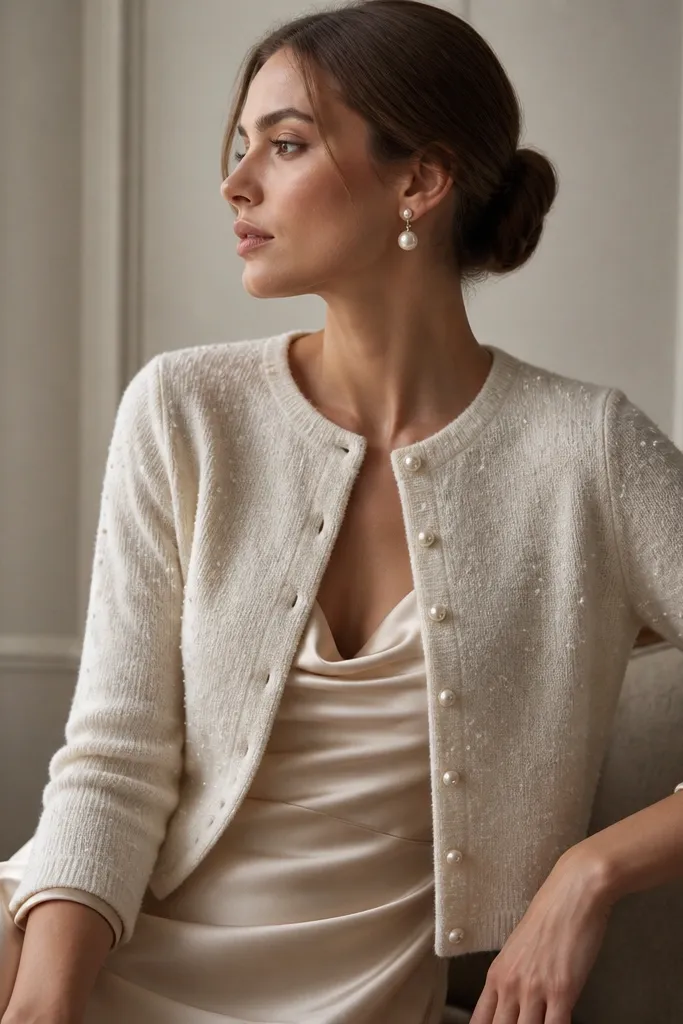
This is the easiest way to create a "second look" during a small wedding without changing your whole outfit. A pearl cardigan softens the silhouette and makes the outfit feel more bridal when you step into ceremony photos. It's also practical - you get warmth for evenings and you can keep your arms covered for religious or cultural spaces. This works on nearly every body type because it adds shape at the waist and smooths the upper torso.
Start with a satin dress in ivory, blush, or champagne. Choose a cardigan that buttons cleanly and sits at your natural waist or slightly below. Wear it open for candids and buttoned for formal portraits. Add pearl studs and a small clutch, then keep your shoes simple so the cardigan stays the visual anchor.
Try thisIf the cardigan is heavy, size up one notch for better buttoning and less pulling across the bust.
10. White eyelet blouse with a high-waist satin midi
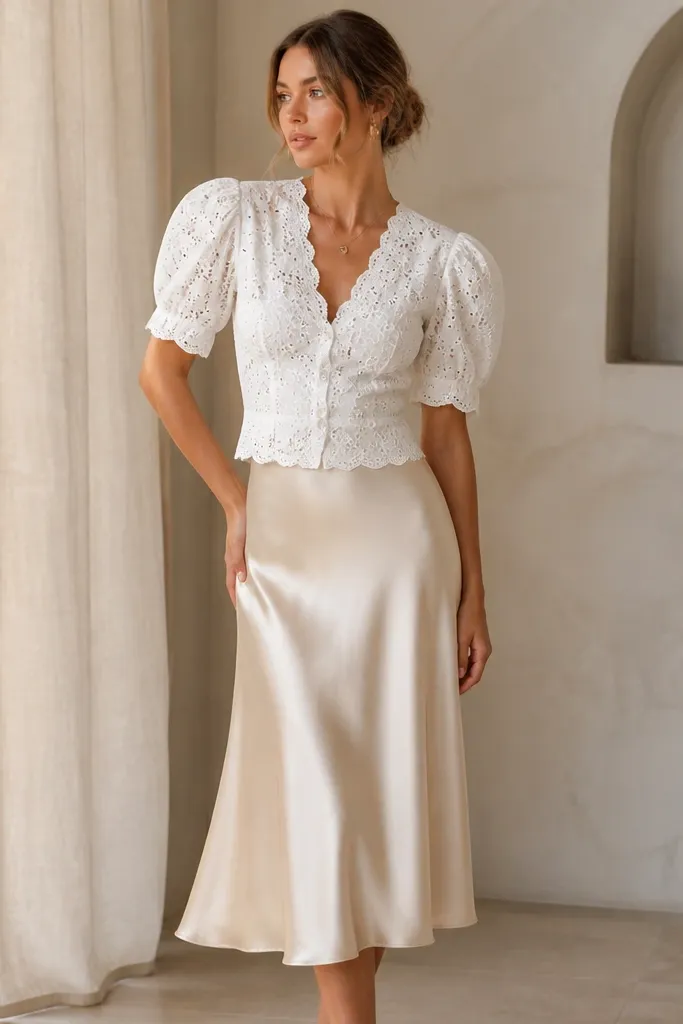
Eyelet fabric looks crisp and airy, which is perfect for outdoor small weddings where wind and sun create movement. The high-waist satin midi gives you a clean midsection line, so the look feels intentional even when it's two pieces. I've seen this style flatter both petite and curvy frames because the waist is clearly defined and the skirt drapes smoothly. It also photographs well because the eyelet pattern catches light without looking glittery.
Start by tucking the blouse fully into the satin waistband so the line stays sharp. Choose an eyelet with a small pattern scale - large eyelet can look too casual in close photos. Pick a skirt in ivory or soft champagne and keep the hem at mid-calf. Add a belt only if the skirt needs it - otherwise let the waistline do the work. Finish with nude heels and a small hair accessory like a white ribbon clip.
Try thisIron the waistband area lightly. Satin creases show up fast and ruin the clean line.
11. Men's white cotton shirt with a textured knit tie in dusty rose
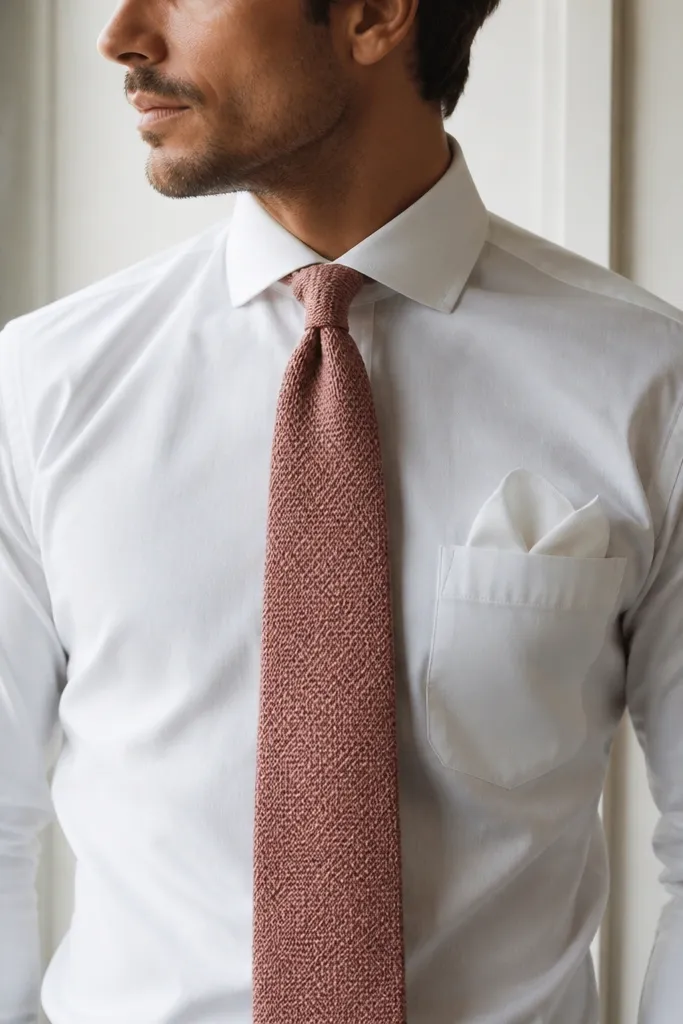
A knit tie adds warmth and texture without needing a full suit upgrade. Dusty rose looks romantic in small weddings because it sits between red and pink, and it doesn't overpower neutral palettes like ivory and wood. The white shirt keeps the tie from looking costume-y, and the tie's matte finish photographs better than shiny satin. This is a flattering option for many skin tones because dusty rose softens sharp undertones and adds color near the face.
Start with a crisp white shirt with a collar that holds its shape. Choose a knit tie in dusty rose with a medium thickness so it drapes neatly. Add a simple pocket square in white - keep it flat, not fluffy. Pair with a navy or charcoal blazer for contrast and wear brown or oxblood shoes depending on your belt. Keep the watch metal either gold or mixed - never a bright silver if your palette is warm.
Try thisMatch the tie to your wedding palette using a swatch. If your flowers are more peach than pink, pick a dusty rose with a slight peach note.
12. Sage boutonniere with olive leaves and a single ranunculus bloom
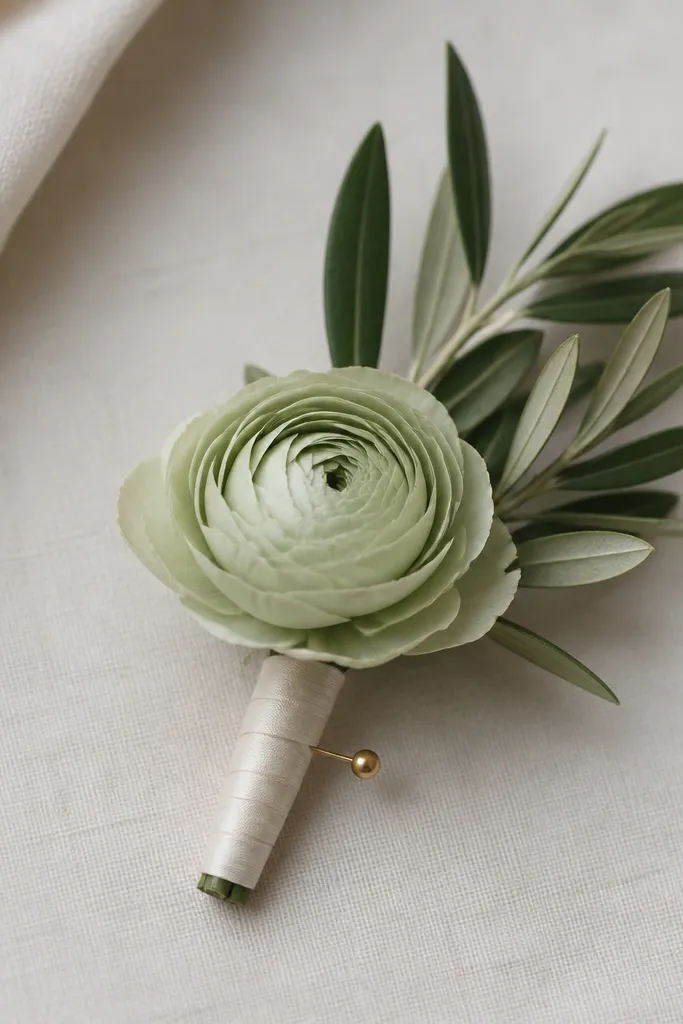
A boutonniere like this looks expensive because it stays minimal and has clear structure. Olive leaves provide a natural frame, and one ranunculus bloom gives you that photo-ready round shape. It works for both men and women because it's compact and sits cleanly on lapels and cuffs. I like this for small weddings because it makes the party look coordinated without turning the whole room into a flower shop.
Start by buying ranunculus or a similar small round bloom in pale sage or cream with green undertones. Add 3-5 olive leaves around it - keep them short so the boutonniere stays flat. Wrap stems with ivory ribbon and secure with floral tape before pinning. Pin on the left lapel at mid-height, then adjust once you see the suit in front of a mirror. For photos, keep a small pocket square in white so the boutonniere doesn't have to compete.
Try thisMist the bloom lightly in the morning, then transport in a small container so it doesn't crush.
13. Tiny bud vase clusters on the table with one taller stem
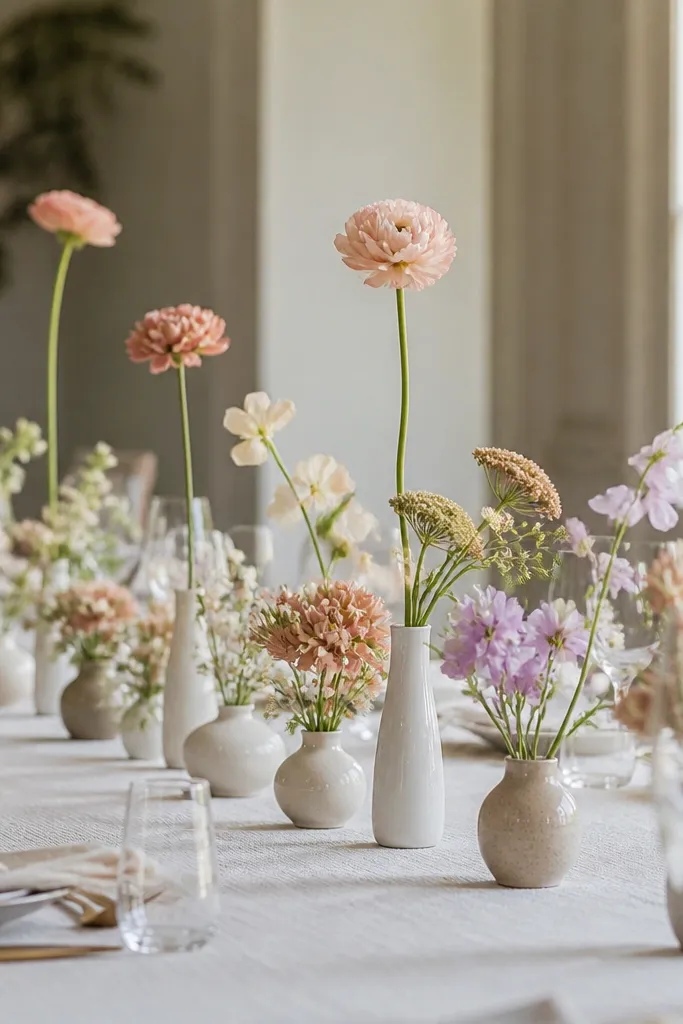
Small bud vases look more intentional than one big arrangement when you have fewer tables and shorter sightlines. The cluster gives guests a sense of abundance, while the single taller stem creates a rhythm in photos. I've used this for 30-person weddings because it's easy to set up and it doesn't block conversation. Choose a tight palette - like ivory, soft blush, and sage - and let the vase glass do the rest.
Start by setting out bud vases in a line or a triangle per table centerpiece. Fill each with water and trim stems so they sit at two heights: short vases around 3-4 inches and the taller one around 6-7 inches. Use one focal flower in each - ranunculus, garden rose, or a white daisy-like bloom - and fill gaps with baby's breath or small greenery. Add a linen runner in warm ivory and place the vases on top. Keep the tallest stem centered so your table photos look balanced.
Try thisDry-fit stems before cutting. You want height variation without making anyone's face disappear behind flowers.
14. Linen napkins folded into a fan with a thin twine bow
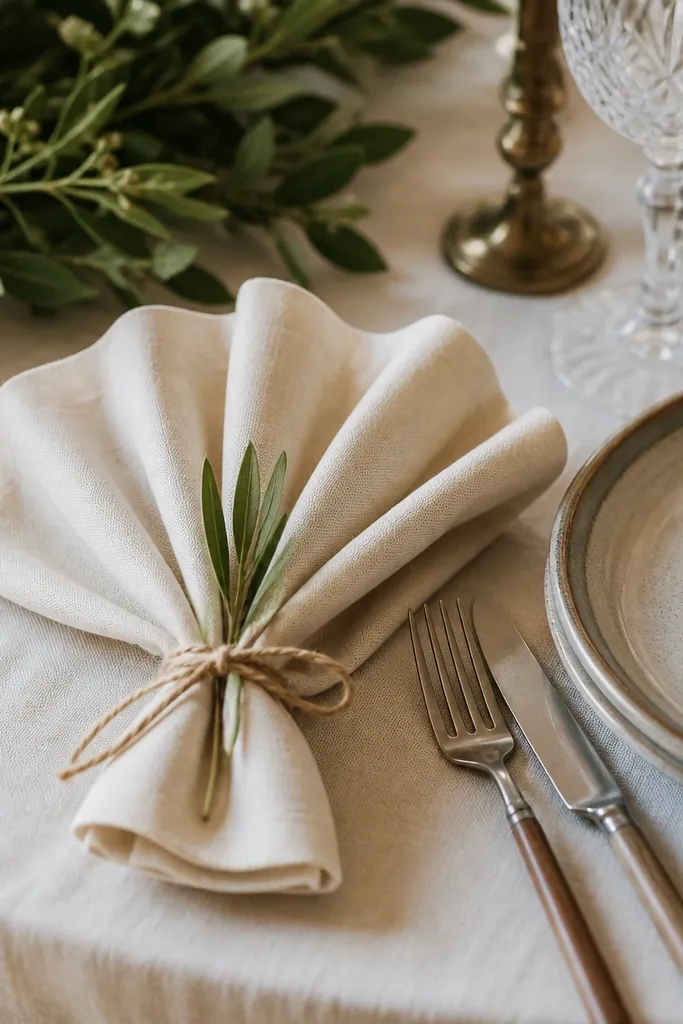
This fold makes a small wedding feel styled because it creates a visible shape at every place setting. Linen adds texture that reads well in bright daylight, and the twine bow feels grounded and natural. It's flattering to the eye because it's centered and repeats across the table. I've done this for backyard dinners where the decor budget was tight, and the photos still look "designed."
Start with linen napkins that are stiff enough to hold a fold. Fold each napkin into a fan by making small accordion pleats, then secure the center with thin twine. Trim a tiny sprig of eucalyptus or olive and tuck it under the twine for one small green accent. Place the napkin fan on the plate so the fan points upward. Match twine color to your metal - use natural twine for gold or champagne details.
Try thisPractice one napkin fold the night before. The second you get the pleat spacing consistent, the whole table looks cohesive.
15. Candle clusters in clear glass with a matte label band
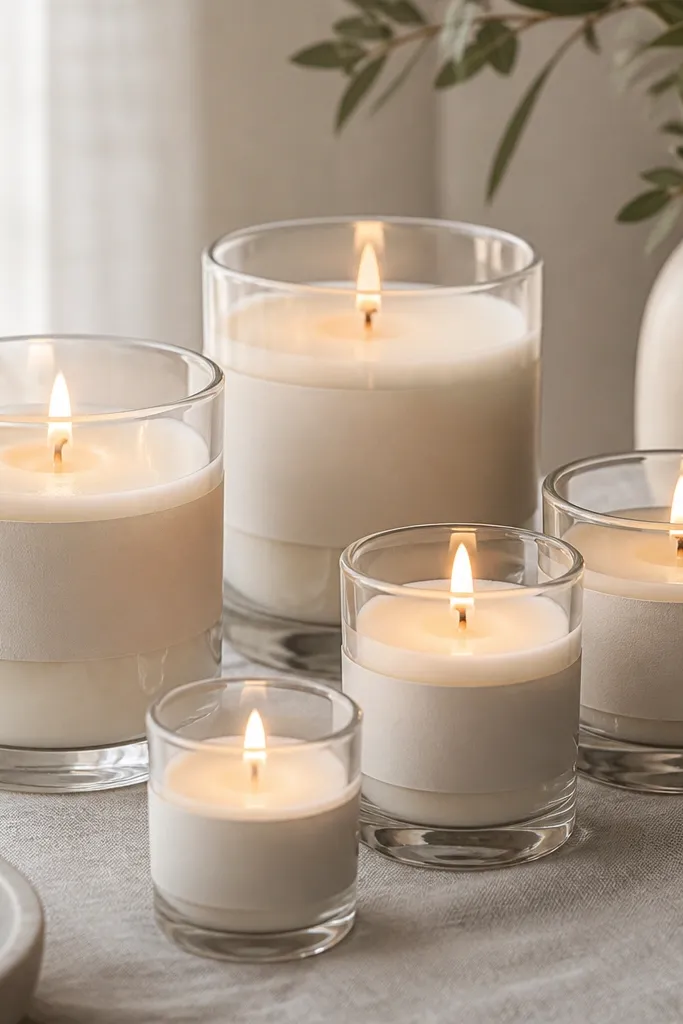
Clear glass candles look clean in small spaces and keep the focus on the light. The matte label band makes each candle feel intentional without adding bulky decor. In low light, the flame glow turns your table into a soft, flattering background for photos. This idea works for both indoor and patio weddings because it's easy to position and doesn't block sightlines like tall centerpieces.
Start by grouping 3-5 clear glass candle holders into one cluster per table. Use pillar candles in unscented white or cream, and keep the flame height similar across the group. Wrap a matte ivory label band around the glass with a simple printed date or guest name. Place clusters on a linen runner, spaced so guests can still see each other. Turn off overhead lights 15 minutes before portraits so candles become the main light source.
Try thisTest your candle height. If the flame is too tall, it looks uneven and can flicker into faces in photos.
16. Ceremony arch made from a single curtain rail and fabric panels
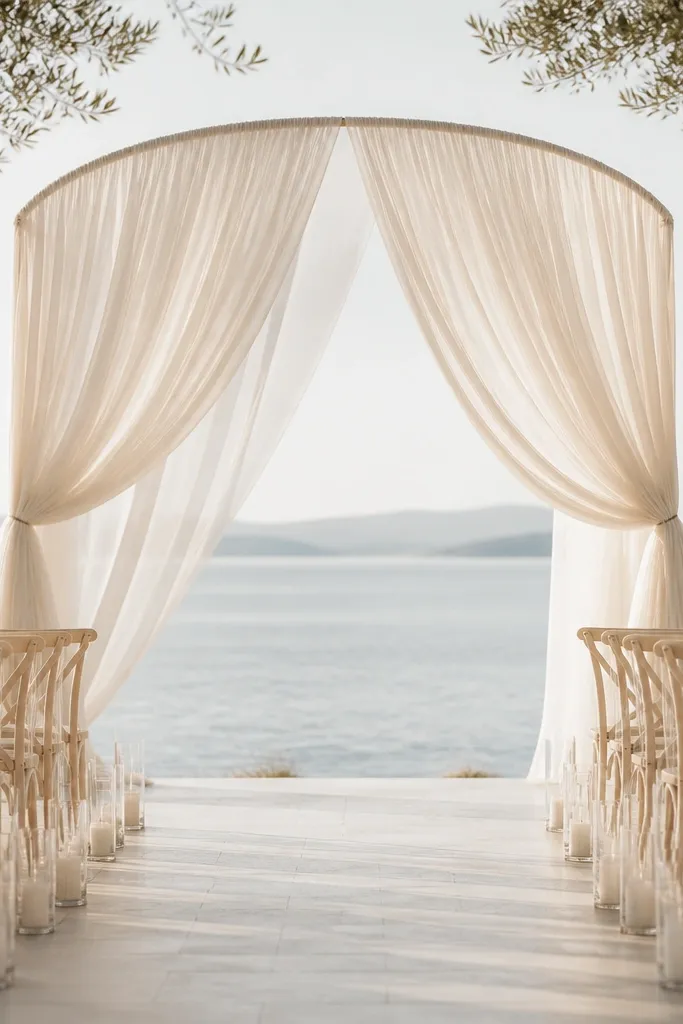
A fabric arch is the fastest way to make a small ceremony feel like a real venue upgrade. Fabric panels create a smooth background that looks good even when the camera focuses on faces. Ivory fabric also works across seasons - linen for daytime, matte satin for evenings. I've used this in small gardens where the existing scenery was busy, and the arch instantly gave photos a calm, intentional frame.
Start by using a sturdy curtain rail or lightweight arch frame with secure bases. Hang 2-3 panels of ivory fabric so they overlap slightly and pool just a little at the bottom. Tie the fabric back at shoulder height with ribbon in champagne or blush. Add greenery only at the base - a small strip of olive or eucalyptus - so the top stays clean. Place a simple aisle marker in the center, like a low lantern or a small wooden stand with a sign.
Try thisPick fabric that drapes, not fabric that floats. If it's too thin, it snaps in wind and ruins the smooth look.
17. Framed family photo table with a guest book on top
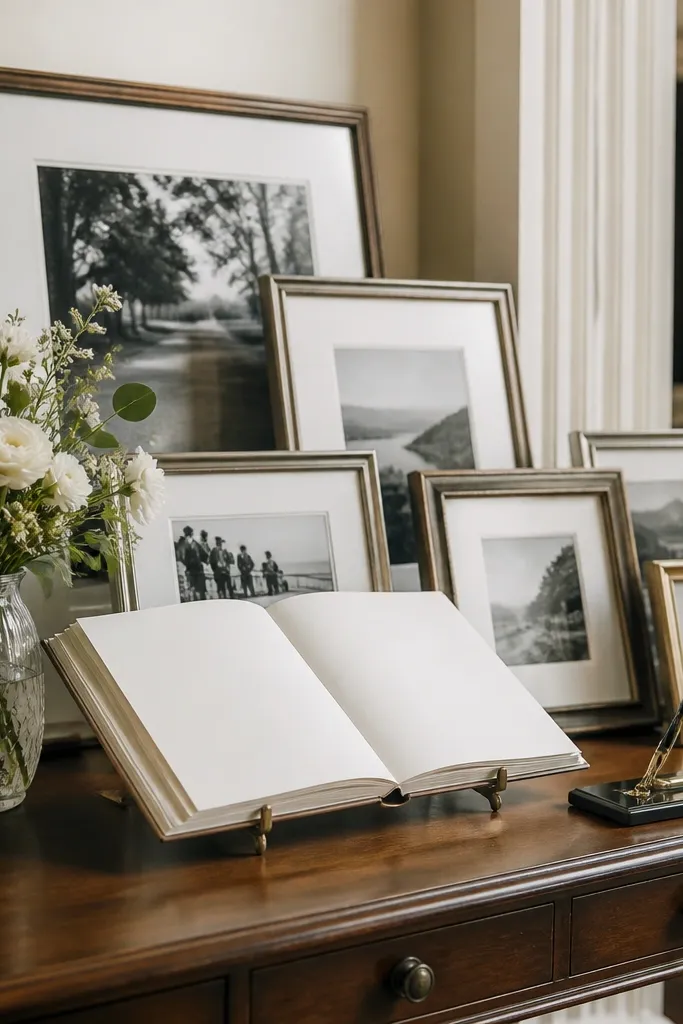
A framed photo table makes small weddings feel personal without cluttering the room. It also gives guests something to look at while they sign the book, which keeps the moment relaxed. I like black-and-white photos because they don't compete with your floral palette. This idea works for beginners because frames are easy to source and you can set it up in one hour.
Start by choosing 8-12 frames in matching or coordinated finishes - black, gold, or natural wood. Print photos at a consistent size and avoid mixed mat colors. Lean frames into a cluster and place the guest book on a small riser so it's visible from the entry. Add a pen tray and one small bouquet in a simple vase. Keep the table styling minimal: one flower bunch, one sign, and the frames.
Try thisUse painter's tape to label the back of each frame with the order. You'll set it up faster and prevent crooked stacks.
18. Place cards on mini wooden rounds with a linen ribbon loop
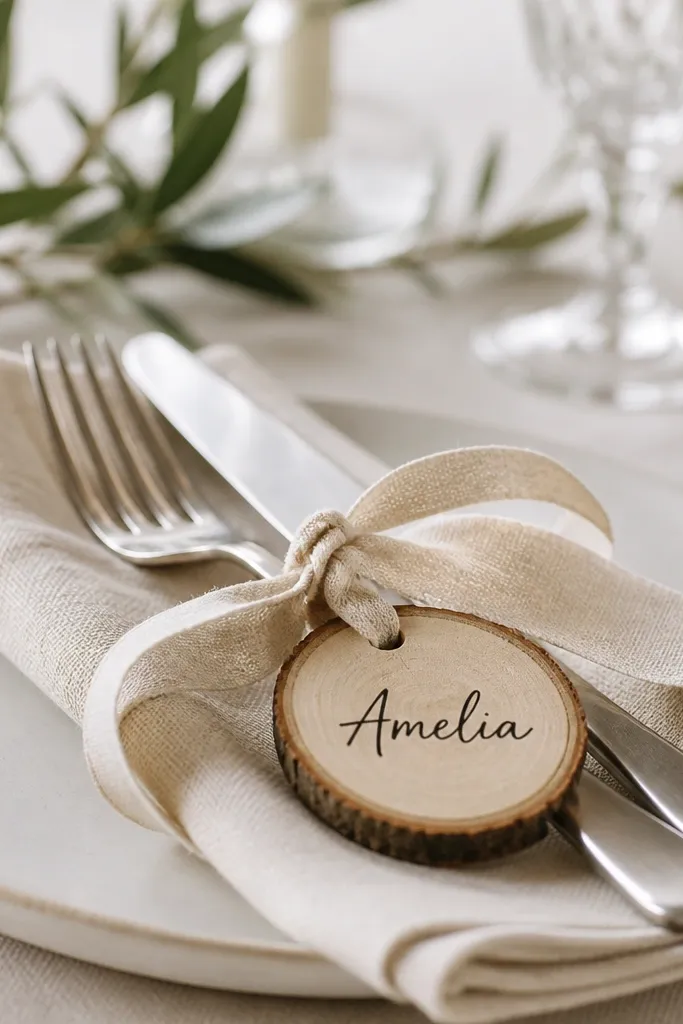
Mini wooden rounds look warm and modern at the same time, and they fit small wedding budgets because you can reuse the base year after year. Linen ribbon ties also feel tactile in photos - you see the texture, not just the text. This works well for rustic venues and also for clean modern spaces when you keep the font simple. It's a beginner-friendly idea because writing names is straightforward and the cards are easy to place.
Start with mini wood slices about 2.5-3 inches wide, sanded smooth. Write names using a fine-tip black marker or a stamp pad with a steady hand. Tie each card with a short linen ribbon loop to the napkin ring or directly to the napkin. Place cards on top of the plate so they're visible without reaching. Match ribbon color to your palette - warm ivory for champagne and black for cooler palettes.
Try thisMake three spares for emergencies. One smudge or cracked wood slice happens, and having backups saves you stress.
19. Simple dessert table in three heights with a single color ribbon
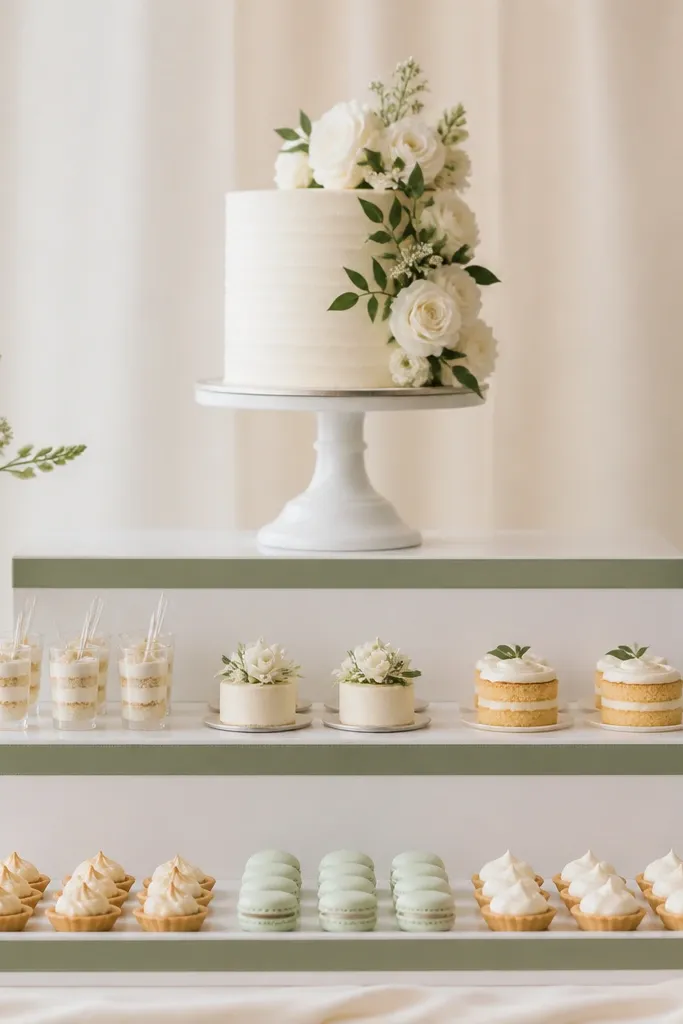
Small wedding dessert tables look best when they have height variation and one repeated styling detail. The three-level setup gives you depth in photos, and the ribbon unifies pieces that would look mismatched. I like choosing ribbon because it's cheap, fast, and you can adjust it when you change the dessert arrangement. This is especially good for beginners because you can build it with thrifted stands and store-bought treats.
Start by placing a flat tray at the bottom level for cookies or cupcakes. Add a mid-level stand for cake pops or macarons, then place the main cake on the highest stand centered. Wrap a ribbon around each tier front edge using double-sided tape on the underside so it doesn't slide. Keep the desserts in a tight palette - cream frosting, blush berries, and one accent flavor like lemon. Add one small sign in the same color as the ribbon so it reads clearly in pictures.
Try thisTake one test photo from guest height. If the ribbon isn't visible, move it slightly higher on the tier.
20. Bridal hair: low bun with a thin pearl comb and soft face-framing pieces
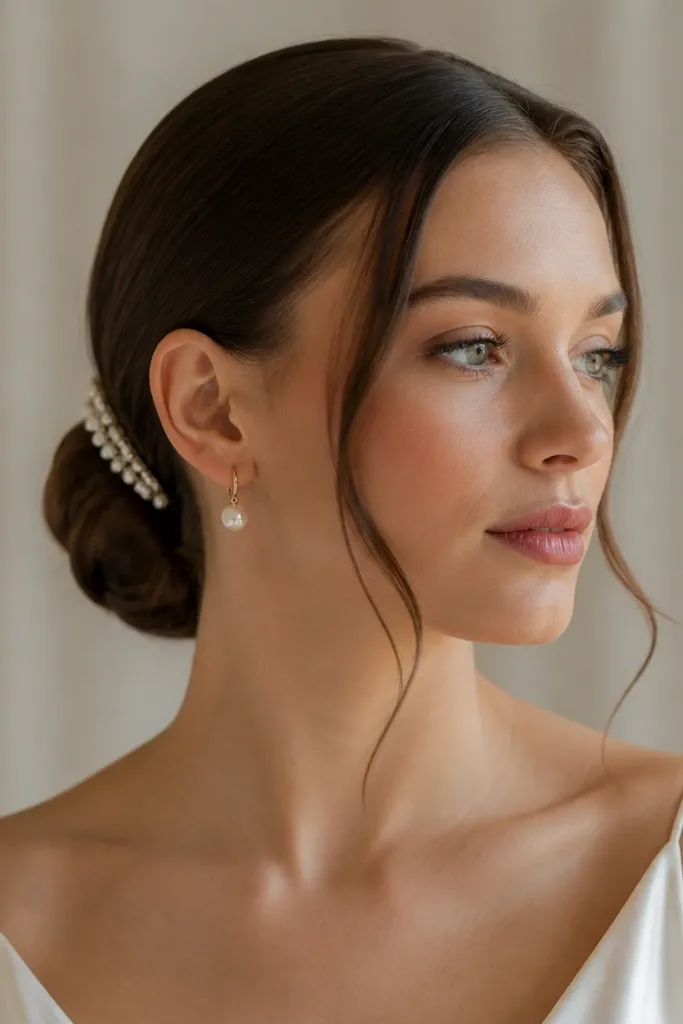
This hairstyle looks polished in small weddings because it keeps your face clear for portraits and it doesn't fight wind. A low bun is more forgiving than a tight updo if you're nervous about hair staying perfect all day. The thin pearl comb adds just enough bridal detail without making your hair look heavy. It suits most face shapes, and it's especially flattering on oval and heart faces because the face-framing pieces soften the jaw line.
Start by blow-drying or smoothing hair so it lays flat at the crown. Create a low ponytail, then twist into a bun and pin with U-pins. Leave two small face-framing sections and curl them lightly so they fall forward. Insert a thin pearl comb near the bun base, not on top, so it sits like jewelry. Finish with hairspray and a light shine spray only on the face-framing strands.
Try thisPin the pearl comb last. If you place it too early, you'll fight it while adjusting the bun.
21. Makeup for small venues: satin skin base with a peachy lip liner
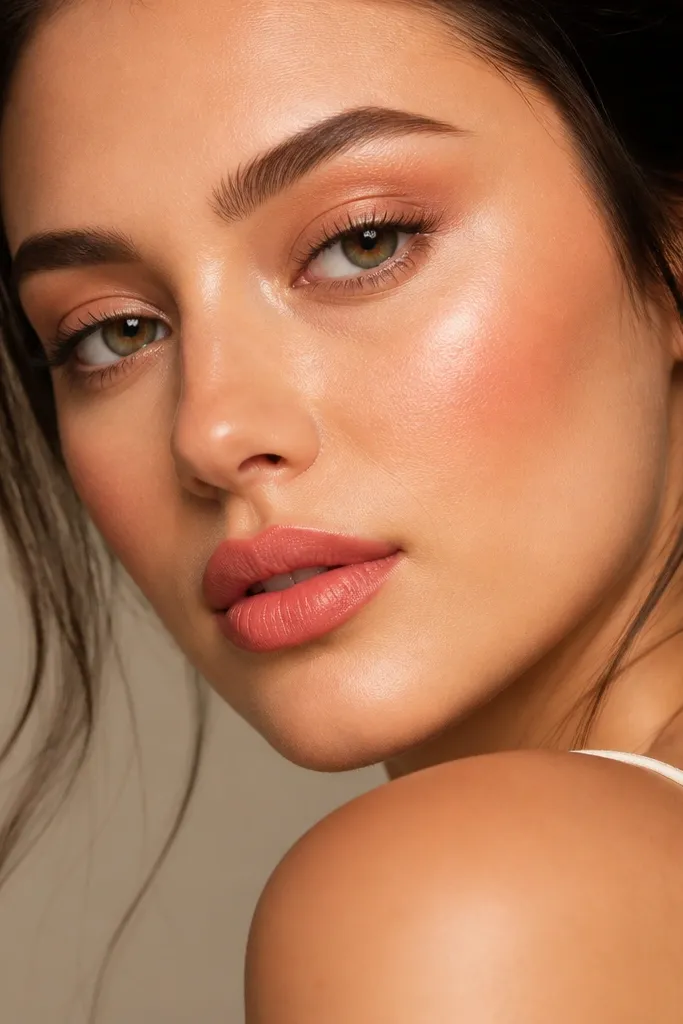
Small venues mean your makeup is seen up close, so the finish matters more than the shade. I stick to a satin skin base because it photographs like "healthy" instead of flat powder or oily shine. Peachy lip liner keeps the lip looking full even if you eat cake, and it works across undertones. If you're doing indoor candlelight, this approach keeps your face warm without turning orange. It's beginner-friendly because you can build it in layers and stop when it looks right.
Start by applying a thin moisturizer and letting it sink in for 5 minutes. Use a satin foundation or tinted base, then set only the T-zone with a light powder. Add peach blush on the apples and blend upward toward the temples. Line your lips with a peachy liner and fill with a satin lipstick in the same family. Finish with mascara and a soft highlight on the cheekbone - keep it small so it doesn't look like glitter in photos.
Try thisBlot once mid-day with a tissue, then reapply lipstick only. Refreshing foundation over and over makes it look heavy.
22. Men's matching knit vest and bow tie in oatmeal texture
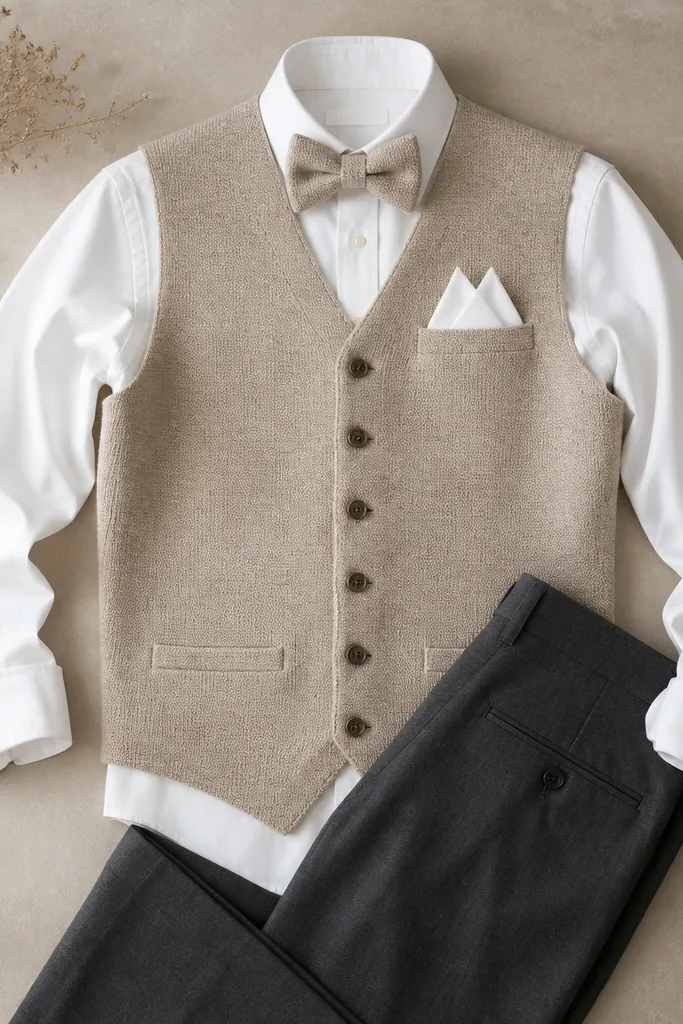
A knit vest with a matching knit bow tie makes a small wedding feel coordinated without requiring a full patterned suit. The oatmeal texture looks warm against ivory and wood, and it gives you depth in photos without shiny fabric. I like this for beginners because you can build the rest of the outfit with basics - white shirt, tailored trousers, and simple shoes. It flatters a wide range of sizes because the vest draws the eye to the waistline and keeps the torso visually balanced.
Start with a white dress shirt and choose a knit vest in oatmeal with a clean V shape. Add matching knit bow tie so the texture repeats across your upper body. Pair with charcoal trousers and a belt in dark brown or black depending on your shoe color. Put a white pocket square in the breast pocket to keep the look crisp. Finish with leather loafers or oxfords in dark brown and keep your watch minimal.
Try thisIf your bow tie looks too long, shorten it at the knot before the wedding day. A long bow shows instantly in close-ups.
23. Wedding party socks in matching palette for photo-ready feet
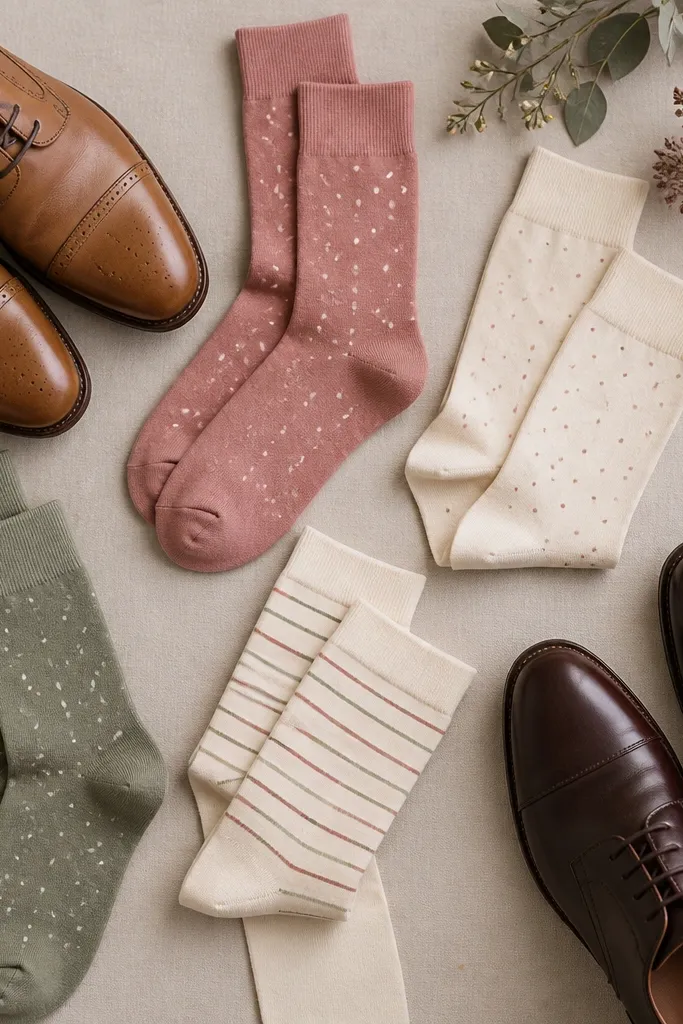
Feet photos happen way more than people expect at small weddings. Guests gather around, everyone steps onto the dance floor, and the camera catches shoe details. Matching socks give you a hidden layer of cohesion that still feels fun instead of formal. I've used this trick for a 28-guest wedding where the venue had a plain floor - the socks added color without cluttering the tables. It works best when you keep the pattern small and the colors tied to your palette.
Start by picking one palette color and one neutral for socks - like dusty rose with cream or sage with ivory. Buy crew or ankle socks that match your shoe tone - tan socks with tan shoes. Assign a sock color per person based on the wedding palette and have everyone wear them under tailored trousers or with cropped pant hems. Take a quick photo of everyone's shoes in the same light before ceremony. Then store the socks in a small bag so you don't scramble later.
Try thisChoose socks that don't slip. Sliding socks look messy fast in candid photos.
24. Signature drink menu cards with watercolor sprigs and bold drink names
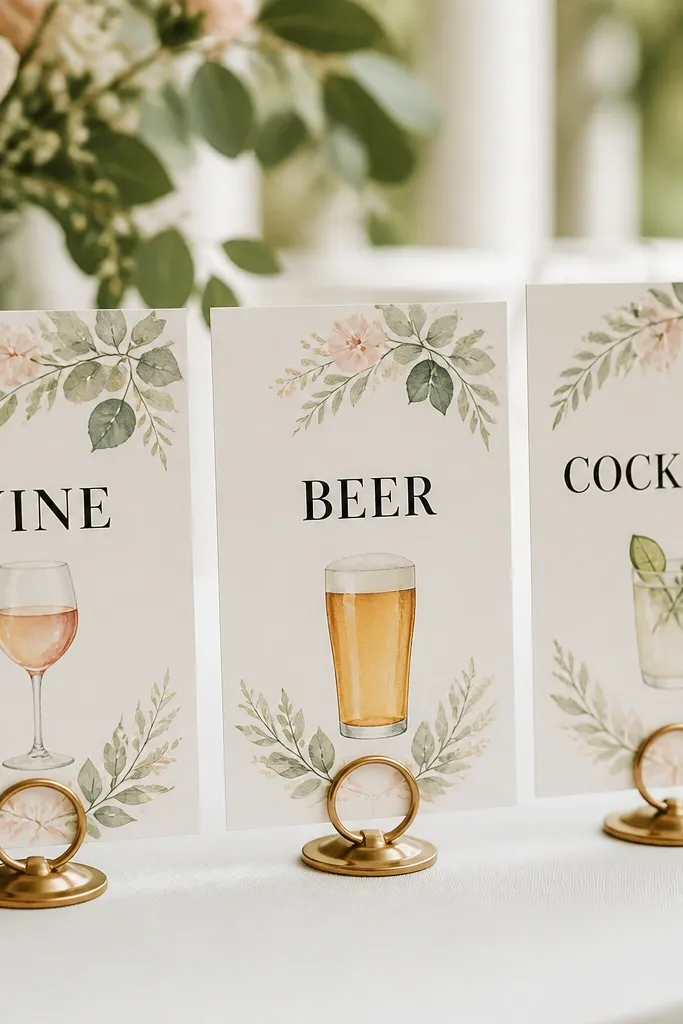
Menus are one of the easiest places to make small weddings look designed. Guests notice the drink name, and your photographer gets a clean, readable detail in the background. Watercolor sprigs keep it soft, and bold black text keeps it legible in daylight. I like tying the sprig style to your florals - if you're doing sage and olive, mirror that in the art. This idea works for beginners because you can print cards from a local shop or online print service and assemble them in minutes.
Start by choosing two drink names and one non-alcohol option so the table isn't crowded. Write the bold names in a large font and keep the rest smaller. Add watercolor sprigs in sage and cream accents around the corners. Print on matte paper so light doesn't glare. Place the menus on a clear acrylic stand at eye level near the drink station and add small labels at the bottles.
Try thisTest readability from 6 feet away. If you squint, the font is too small for wedding photos.
25. Mini welcome signs on easels with one photo strip behind
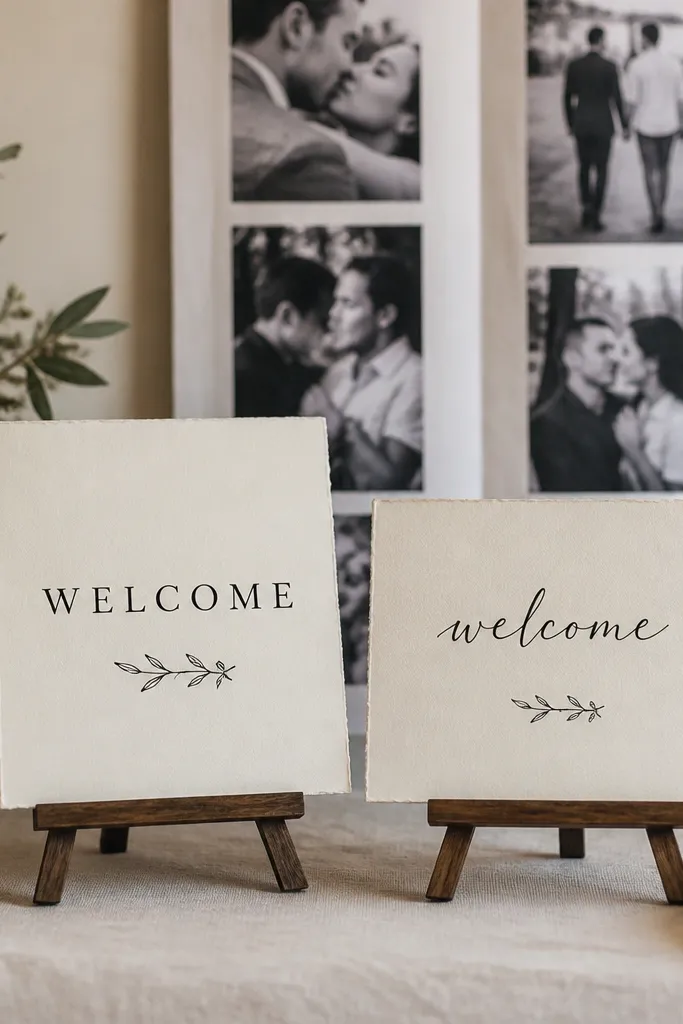
Welcome signs look better in small weddings when they're compact and placed at the entry point, not stretched across a wall. A tabletop easel keeps the sign readable and gives the photographer a clean angle. The photo strip adds personality without needing heavy decor. I like black-and-white strips because they match everything and don't fight your florals. This setup is also beginner-friendly since you can build it from a few materials and adjust placement quickly.
Start by printing a warm ivory sign with names and a short line like "Welcome" or the couple's date. Put it on a small tabletop easel and place it at the entry where guests naturally stop. Add a photo strip banner behind the easel using mini clips or double-sided tape on a clean wall. Choose 6-8 photos with consistent cropping and black-and-white tones. Keep the rest of the station minimal - one vase or candle cluster only.
Try thisAngle the easel slightly toward the path. If the sign faces the wall, it looks decorative but nobody can read it.